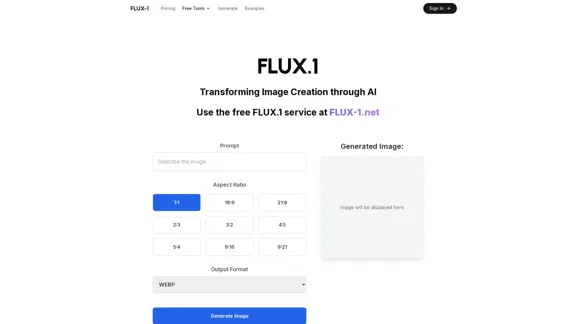
FLUX.1 is an innovative AI-powered image generation tool that transforms text prompts into high-quality visuals. Available at FLUX-1.net, this free service offers users the ability to create unique images for various purposes, from personal projects to professional applications.
Free Flux.1 | Flux | flux image generator | FLUX-1.net
Free FLUX.1, online FLUX, FLUX ai image generator, FLUX-1.net
Introduction
Feature
-
Text-to-Image Generation
- Users input text descriptions to generate corresponding images
- Supports various image styles and concepts
-
Customizable Output
- Adjustable aspect ratios (1:1, 16:9, 21:9, 2:3, 3:2, 4:5, 5:4, 9:16, 9:21)
- Multiple output formats (WEBP, JPEG, PNG)
-
Multiple Model Versions
- FLUX.1 [pro]: High-quality image generation with excellent prompt adherence
- FLUX.1 [dev]: Open-weight model for non-commercial use
- FLUX.1 [schnell]: Fastest model for local development and personal projects
-
Advanced AI Technology
- Uses multimodal and parallel diffusion transformer blocks
- Scaled to 12 billion parameters for enhanced performance
-
User-Friendly Interface
- Simple three-step process: input prompt, wait for generation, download image
- Clear instructions provided for ease of use
-
Open-Source Availability
- Weights available on Hugging Face
- Inference code accessible on GitHub for FLUX.1 [schnell] and [dev] versions
How to Use?
- Be specific and detailed in your text prompts to get the best results.
- Experiment with different aspect ratios to find the best fit for your intended use.
- Consider the output format based on your needs (e.g., WEBP for web use, PNG for higher quality).
- For complex scenes, break down your description into key elements and attributes.
- Utilize the FLUX.1 [schnell] version for quick iterations and concept testing.
- Explore the open-source code to understand the model's capabilities and potential customizations.
- Keep an eye on future updates, especially the potential text-to-video capabilities.
FAQ
What sets FLUX.1 apart from other AI image generators?
FLUX.1 stands out with its high-quality output, excellent prompt adherence, and flexibility in size and aspect ratios. It outperforms well-known models like Midjourney v6.0 and DALL·E 3 in key areas such as visual quality, typography, and output variety.
Can FLUX.1 be used for commercial purposes?
While FLUX.1 [dev] is designed for non-commercial use, the availability of different versions suggests that commercial use may be possible with certain models. It's best to check the specific terms of use for each version.
How can developers contribute to FLUX.1's development?
Developers can contribute by accessing the model's code on GitHub, testing it, providing feedback, and potentially contributing through pull requests or discussions in the community forums.
What are the system requirements for running FLUX.1?
Running FLUX.1 requires significant computational power, typically with high-performance GPUs. Specific requirements can be found in the documentation on GitHub or Hugging Face.
Evaluation
-
FLUX.1 demonstrates impressive capabilities in AI-powered image generation, offering high-quality outputs and a user-friendly interface. Its ability to outperform established competitors in key areas is particularly noteworthy.
-
The availability of multiple model versions (pro, dev, schnell) provides flexibility for different use cases and user needs, from high-quality professional applications to quick personal projects.
-
The open-source nature of certain versions encourages community engagement and potential for further development, which is a significant advantage in the rapidly evolving field of AI.
-
While the tool shows great promise, it may face challenges in very specific or complex image requests, as is common with many AI image generators. Continued development and fine-tuning will be crucial to address these limitations.
-
The potential for future text-to-video capabilities is exciting and could significantly expand FLUX.1's applications across various industries.
-
To further improve, FLUX.1 could benefit from more comprehensive tutorials and resources for users, especially as the community grows and diverse applications emerge.
-
As with any AI tool, ethical considerations and responsible use guidelines should be clearly communicated to users to ensure appropriate application of the technology.
Related Websites
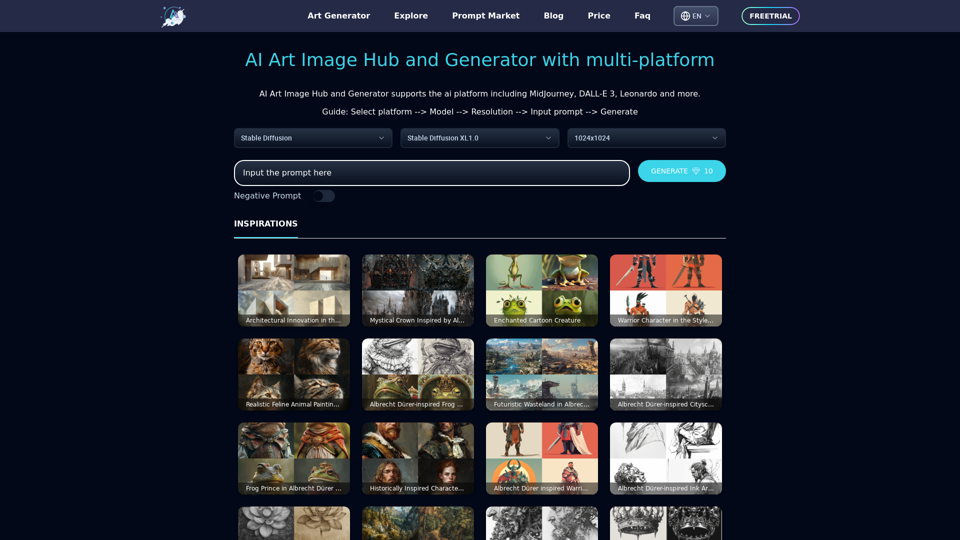
Unleash your creativity with ArtiverseHub's online AI art generator. Enjoy support for multiple platforms including DALL-E (ChatGPT), Leonardo.ai, Stability.ai, and several others.
823
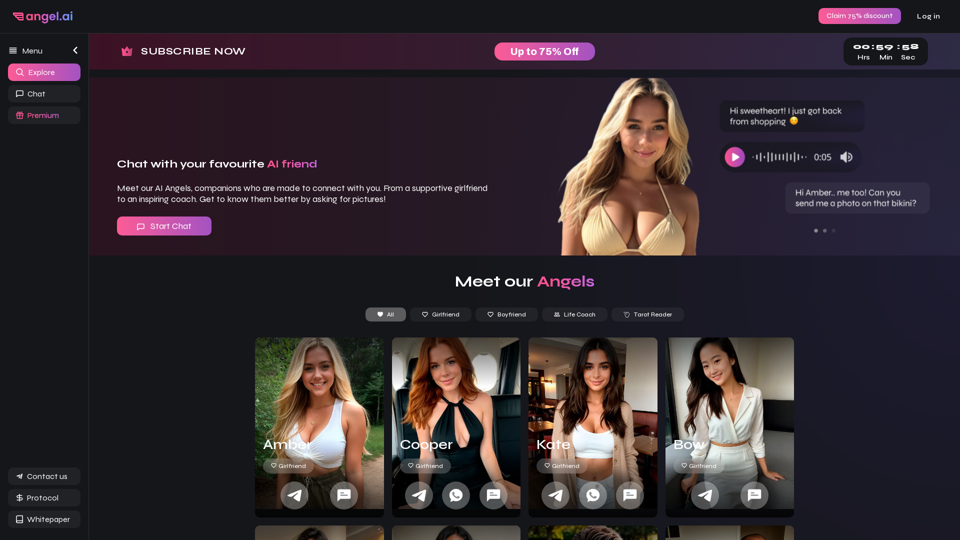
Angel AI is an innovative platform that offers a unique AI-driven experience, allowing users to interact with AI companions that feel real.
13.97 K
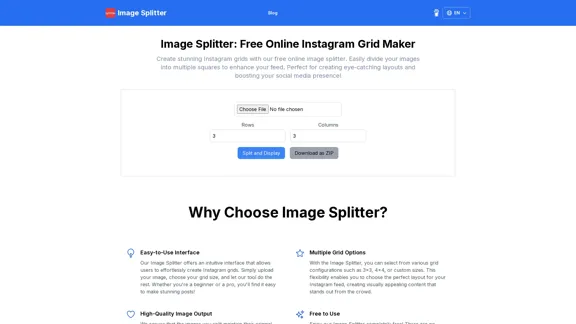
Create stunning Instagram grids with our free online image splitter. Easily divide your images into multiple squares to enhance your feed. Perfect for creating eye-catching layouts and boosting your social media presence!
0

2. Understanding the Basics
* `/imagine` Command: This is the core command for generating images.
* Prompt: A text description of the artwork you want to create. Be specific and descriptive!
* Parameters: Options that control aspects like image size, aspect ratio, and style.
3. Crafting Your Journey Prompt
Think about the story you want to tell with your artwork.
* Setting: Where does your journey take place? (e.g., a mystical forest, a futuristic city, a desolate wasteland)
* Characters: Who is on this journey? (e.g., a lone traveler, a group of adventurers, mythical creatures)
* Mood: What feeling do you want to evoke? (e.g., adventurous, mysterious, hopeful, melancholic)
* Style: What artistic style appeals to you? (e.g., photorealistic, painterly, abstract)
4. Putting it Together
Combine these elements into a clear and concise prompt.
Example:
`/imagine A lone traveler journeys through a mystical forest at sunset, bathed in golden light. The path ahead is shrouded in mist, hinting at unknown wonders. Style: painterly, ethereal`
5. Experiment and Refine
* Midjourney is all about experimentation! Try different prompts, parameters, and styles.
* Use the "upscale" command to enlarge your favorite images and reveal more detail.
* Don't be afraid to iterate and refine your prompts based on the results.](https://static.right-ai.com/tools/2024/7/4/chromewebstore-google-com-detail-journey-artprompt-with-mi-pfjhhefanfhdijppdppillliedgaehko-thumbnail-1720092379.png "Journey ArtPrompt with Midjourney
This guide will walk you through creating stunning artwork using Midjourney, a powerful AI art generator.
1. Accessing Midjourney
* You'll need a Discord account to use Midjourney.
* Join the official Midjourney server: [https://discord.gg/midjourney](https://discord.gg/midjourney)
2. Understanding the Basics
* `/imagine` Command: This is the core command for generating images.
* Prompt: A text description of the artwork you want to create. Be specific and descriptive!
* Parameters: Options that control aspects like image size, aspect ratio, and style.
3. Crafting Your Journey Prompt
Think about the story you want to tell with your artwork.
* Setting: Where does your journey take place? (e.g., a mystical forest, a futuristic city, a desolate wasteland)
* Characters: Who is on this journey? (e.g., a lone traveler, a group of adventurers, mythical creatures)
* Mood: What feeling do you want to evoke? (e.g., adventurous, mysterious, hopeful, melancholic)
* Style: What artistic style appeals to you? (e.g., photorealistic, painterly, abstract)
4. Putting it Together
Combine these elements into a clear and concise prompt.
Example:
`/imagine A lone traveler journeys through a mystical forest at sunset, bathed in golden light. The path ahead is shrouded in mist, hinting at unknown wonders. Style: painterly, ethereal`
5. Experiment and Refine
* Midjourney is all about experimentation! Try different prompts, parameters, and styles.
* Use the \"upscale\" command to enlarge your favorite images and reveal more detail.
* Don't be afraid to iterate and refine your prompts based on the results.")
Journey ArtPrompt with Midjourney This guide will walk you through creating stunning artwork using Midjourney, a powerful AI art generator. 1. Accessing Midjourney * You'll need a Discord account to use Midjourney. * Join the official Midjourney server: [https://discord.gg/midjourney](https://discord.gg/midjourney) 2. Understanding the Basics * `/imagine` Command: This is the core command for generating images. * Prompt: A text description of the artwork you want to create. Be specific and descriptive! * Parameters: Options that control aspects like image size, aspect ratio, and style. 3. Crafting Your Journey Prompt Think about the story you want to tell with your artwork. * Setting: Where does your journey take place? (e.g., a mystical forest, a futuristic city, a desolate wasteland) * Characters: Who is on this journey? (e.g., a lone traveler, a group of adventurers, mythical creatures) * Mood: What feeling do you want to evoke? (e.g., adventurous, mysterious, hopeful, melancholic) * Style: What artistic style appeals to you? (e.g., photorealistic, painterly, abstract) 4. Putting it Together Combine these elements into a clear and concise prompt. Example: `/imagine A lone traveler journeys through a mystical forest at sunset, bathed in golden light. The path ahead is shrouded in mist, hinting at unknown wonders. Style: painterly, ethereal` 5. Experiment and Refine * Midjourney is all about experimentation! Try different prompts, parameters, and styles. * Use the "upscale" command to enlarge your favorite images and reveal more detail. * Don't be afraid to iterate and refine your prompts based on the results.
Journey ArtPrompt with Midjourney This guide will walk you through creating stunning artwork using Midjourney, a powerful AI art generator. 1. Accessing Midjourney * You'll need a Discord account to use Midjourney. * Join the official Midjourney server: [https://discord.gg/midjourney](https://discord.gg/midjourney) 2. Understanding the Basics * `/imagine` Command: This is the core command for generating images. * Prompt: A text description of the artwork you want to create. Be specific and descriptive! * Parameters: Options that control aspects like image size, aspect ratio, and style. 3. Crafting Your Journey Prompt Think about the story you want to tell with your artwork. * Setting: Where does your journey take place? (e.g., a mystical forest, a futuristic city, a desolate wasteland) * Characters: Who is on this journey? (e.g., a lone traveler, a group of adventurers, mythical creatures) * Mood: What feeling do you want to evoke? (e.g., adventurous, mysterious, hopeful, melancholic) * Style: What artistic style appeals to you? (e.g., photorealistic, painterly, abstract) 4. Putting it Together Combine these elements into a clear and concise prompt. Example: `/imagine A lone traveler journeys through a mystical forest at sunset, bathed in golden light. The path ahead is shrouded in mist, hinting at unknown wonders. Style: painterly, ethereal` 5. Experiment and Refine * Midjourney is all about experimentation! Try different prompts, parameters, and styles. * Use the "upscale" command to enlarge your favorite images and reveal more detail. * Don't be afraid to iterate and refine your prompts based on the results.New backgrounds with Midjourney on new tabs
193.90 M
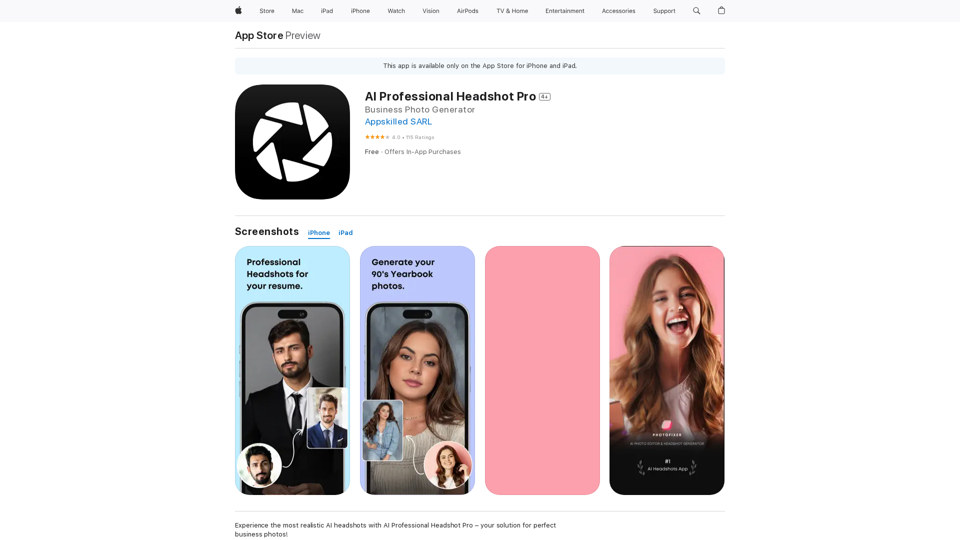
Introducing AI Professional Headshot Pro, the ultimate AI headshot generator designed to create stunning AI headshots and business photos effortlessly.
124.77 M