Open-source RightAI Tools Directory
  • Discover AI
  • Submit
  • Startup
  • Blog
Open-source RightAI Tools Directory
Discover the best AI tools of 2025 with the RightAI Tools Directory!

Friend Links

AI Anime GeneratorToolsApp AI

Support

Tap4
Privacy policyTerms & ConditionsContact Us
Loading...
loading...

Free Flux.1 | Flux | flux image generator | FLUX-1.net

Free FLUX.1, online FLUX, FLUX ai image generator, FLUX-1.net
Visit Website
Free Flux.1 | Flux | flux image generator | FLUX-1.net
Visit Website

Introduction

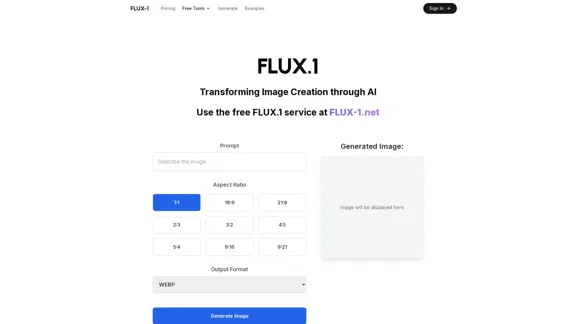
FLUX.1 is an innovative AI-powered image generation tool that transforms text prompts into high-quality visuals. Available at FLUX-1.net, this free service offers users the ability to create unique images for various purposes, from personal projects to professional applications.

Feature

  1. Text-to-Image Generation

    • Users input text descriptions to generate corresponding images
    • Supports various image styles and concepts
  2. Customizable Output

    • Adjustable aspect ratios (1:1, 16:9, 21:9, 2:3, 3:2, 4:5, 5:4, 9:16, 9:21)
    • Multiple output formats (WEBP, JPEG, PNG)
  3. Multiple Model Versions

    • FLUX.1 [pro]: High-quality image generation with excellent prompt adherence
    • FLUX.1 [dev]: Open-weight model for non-commercial use
    • FLUX.1 [schnell]: Fastest model for local development and personal projects
  4. Advanced AI Technology

    • Uses multimodal and parallel diffusion transformer blocks
    • Scaled to 12 billion parameters for enhanced performance
  5. User-Friendly Interface

    • Simple three-step process: input prompt, wait for generation, download image
    • Clear instructions provided for ease of use
  6. Open-Source Availability

    • Weights available on Hugging Face
    • Inference code accessible on GitHub for FLUX.1 [schnell] and [dev] versions

How to Use?

  1. Be specific and detailed in your text prompts to get the best results.
  2. Experiment with different aspect ratios to find the best fit for your intended use.
  3. Consider the output format based on your needs (e.g., WEBP for web use, PNG for higher quality).
  4. For complex scenes, break down your description into key elements and attributes.
  5. Utilize the FLUX.1 [schnell] version for quick iterations and concept testing.
  6. Explore the open-source code to understand the model's capabilities and potential customizations.
  7. Keep an eye on future updates, especially the potential text-to-video capabilities.

FAQ

What sets FLUX.1 apart from other AI image generators?

FLUX.1 stands out with its high-quality output, excellent prompt adherence, and flexibility in size and aspect ratios. It outperforms well-known models like Midjourney v6.0 and DALL·E 3 in key areas such as visual quality, typography, and output variety.

Can FLUX.1 be used for commercial purposes?

While FLUX.1 [dev] is designed for non-commercial use, the availability of different versions suggests that commercial use may be possible with certain models. It's best to check the specific terms of use for each version.

How can developers contribute to FLUX.1's development?

Developers can contribute by accessing the model's code on GitHub, testing it, providing feedback, and potentially contributing through pull requests or discussions in the community forums.

What are the system requirements for running FLUX.1?

Running FLUX.1 requires significant computational power, typically with high-performance GPUs. Specific requirements can be found in the documentation on GitHub or Hugging Face.

Evaluation

  1. FLUX.1 demonstrates impressive capabilities in AI-powered image generation, offering high-quality outputs and a user-friendly interface. Its ability to outperform established competitors in key areas is particularly noteworthy.

  2. The availability of multiple model versions (pro, dev, schnell) provides flexibility for different use cases and user needs, from high-quality professional applications to quick personal projects.

  3. The open-source nature of certain versions encourages community engagement and potential for further development, which is a significant advantage in the rapidly evolving field of AI.

  4. While the tool shows great promise, it may face challenges in very specific or complex image requests, as is common with many AI image generators. Continued development and fine-tuning will be crucial to address these limitations.

  5. The potential for future text-to-video capabilities is exciting and could significantly expand FLUX.1's applications across various industries.

  6. To further improve, FLUX.1 could benefit from more comprehensive tutorials and resources for users, especially as the community grows and diverse applications emerge.

  7. As with any AI tool, ethical considerations and responsible use guidelines should be clearly communicated to users to ensure appropriate application of the technology.

Latest Traffic Insights

  • Monthly Visits

    149

  • Bounce Rate

    55.91%

  • Pages Per Visit

    1.01

  • Time on Site(s)

    0.00

  • Global Rank

    3252535

  • Country Rank

    -

Recent Visits

Traffic Sources

  • Social Media:
    0.00%
  • Paid Referrals:
    0.00%
  • Email:
    0.00%
  • Referrals:
    0.00%
  • Search Engines:
    0.00%
  • Direct:
    0.00%
More Data

Related Websites

Bing search
View Detail

Bing search

Bing search

Upgrade your browsing with the Bing Search extension. Optimize your SEO with Bing's AI-powered search engine.

193.90 M
MusicHero.ai: Free AI Music Generator from Text Online
View Detail

MusicHero.ai: Free AI Music Generator from Text Online

MusicHero.ai: Free AI Music Generator from Text Online

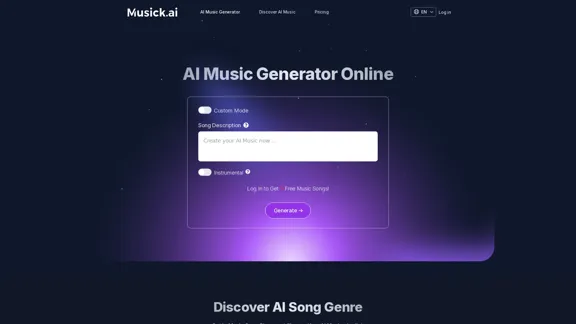
Generate high-quality music quickly with the advanced AI music generator. Platforms like MusicHero.ai, powered by Suno V3.5 technology, offer AI music generator free online services. Create music from text or lyrics effortlessly with this versatile text to music AI tool.

577.73 K
SEO All Stars tools: in 1 place ⭐️
View Detail

SEO All Stars tools: in 1 place ⭐️

SEO All Stars tools: in 1 place ⭐️

A Free AI-Powered SEO Toolkit. Analyze your website from a crawler's perspective, comparing metadata, server responses, headlines, content, and links.

193.90 M
Course Decode
View Detail

Course Decode

Course Decode

Here is the translation into English: See which degrees are actually used by their graduates. Based on analysis of 349,996 LinkedIn profiles.

0
Baidu AI Partner
View Detail

Baidu AI Partner

Baidu AI Partner

Baidu AI Partner is your personal AI assistant on any page, helping you read quickly, providing creative inspiration, and answering your questions in chat conversations.

193.90 M
FluxImage | Free Flux AI Image Generator with Flux.1 Models
View Detail

FluxImage | Free Flux AI Image Generator with Flux.1 Models

FluxImage | Free Flux AI Image Generator with Flux.1 Models

Flux AI is a state-of-the-art text-to-image Flux.1 AI model created by Black Forest Labs. It includes Flux.1 Pro, Flux.1 Dev, and Flux.1 Schnell versions.

0
Odyssey: Imagine. Create. Automate.
View Detail

Odyssey: Imagine. Create. Automate.

Odyssey: Imagine. Create. Automate.

Odyssey is a native Mac app for creating remarkable art, getting work done, and automating repetitive tasks with the power of AI.

12.13 K
Text to Voice Generator
==========================

A text-to-voice generator, also known as a text-to-speech (TTS) system, is a software that converts written text into a spoken voice output. This technology has been widely used in various applications, including virtual assistants, audiobooks, and language learning platforms.

How it Works
---------------

The process of generating voice from text involves several steps:

1. Text Analysis: The input text is analyzed to identify the language, syntax, and semantics.
2. Phonetic Transcription: The text is converted into a phonetic transcription, which represents the sounds of the spoken language.
3. Prosody Generation: The phonetic transcription is then used to generate the prosody, or rhythm and intonation, of the spoken voice.
4. Waveform Generation: The prosody and phonetic transcription are combined to generate the audio waveform, which is the final spoken voice output.

Types of Text-to-Voice Generators
-----------------------------------

There are two main types of text-to-voice generators:

Rule-Based Systems

These systems use a set of predefined rules to generate the spoken voice output. They are often limited in their ability to produce natural-sounding voices and may sound robotic.

Machine Learning-Based Systems

These systems use machine learning algorithms to learn from large datasets of spoken voices and generate more natural-sounding voices. They are often more advanced and can produce high-quality voice outputs.

Applications of Text-to-Voice Generators
-----------------------------------------

Text-to-voice generators have a wide range of applications, including:

Virtual Assistants

Virtual assistants, such as Siri and Alexa, use text-to-voice generators to respond to user queries.

Audiobooks

Text-to-voice generators can be used to create audiobooks from written texts, making it easier for people to access written content.

Language Learning

Language learning platforms use text-to-voice generators to provide pronunciation guidance and practice exercises for learners.

Accessibility

Text-to-voice generators can be used to assist people with disabilities, such as visual impairments, by providing an auditory interface to written content.
View Detail

Text to Voice Generator ========================== A text-to-voice generator, also known as a text-to-speech (TTS) system, is a software that converts written text into a spoken voice output. This technology has been widely used in various applications, including virtual assistants, audiobooks, and language learning platforms. How it Works --------------- The process of generating voice from text involves several steps: 1. Text Analysis: The input text is analyzed to identify the language, syntax, and semantics. 2. Phonetic Transcription: The text is converted into a phonetic transcription, which represents the sounds of the spoken language. 3. Prosody Generation: The phonetic transcription is then used to generate the prosody, or rhythm and intonation, of the spoken voice. 4. Waveform Generation: The prosody and phonetic transcription are combined to generate the audio waveform, which is the final spoken voice output. Types of Text-to-Voice Generators ----------------------------------- There are two main types of text-to-voice generators: Rule-Based Systems These systems use a set of predefined rules to generate the spoken voice output. They are often limited in their ability to produce natural-sounding voices and may sound robotic. Machine Learning-Based Systems These systems use machine learning algorithms to learn from large datasets of spoken voices and generate more natural-sounding voices. They are often more advanced and can produce high-quality voice outputs. Applications of Text-to-Voice Generators ----------------------------------------- Text-to-voice generators have a wide range of applications, including: Virtual Assistants Virtual assistants, such as Siri and Alexa, use text-to-voice generators to respond to user queries. Audiobooks Text-to-voice generators can be used to create audiobooks from written texts, making it easier for people to access written content. Language Learning Language learning platforms use text-to-voice generators to provide pronunciation guidance and practice exercises for learners. Accessibility Text-to-voice generators can be used to assist people with disabilities, such as visual impairments, by providing an auditory interface to written content.

Text to Voice Generator ========================== A text-to-voice generator, also known as a text-to-speech (TTS) system, is a software that converts written text into a spoken voice output. This technology has been widely used in various applications, including virtual assistants, audiobooks, and language learning platforms. How it Works --------------- The process of generating voice from text involves several steps: 1. Text Analysis: The input text is analyzed to identify the language, syntax, and semantics. 2. Phonetic Transcription: The text is converted into a phonetic transcription, which represents the sounds of the spoken language. 3. Prosody Generation: The phonetic transcription is then used to generate the prosody, or rhythm and intonation, of the spoken voice. 4. Waveform Generation: The prosody and phonetic transcription are combined to generate the audio waveform, which is the final spoken voice output. Types of Text-to-Voice Generators ----------------------------------- There are two main types of text-to-voice generators: Rule-Based Systems These systems use a set of predefined rules to generate the spoken voice output. They are often limited in their ability to produce natural-sounding voices and may sound robotic. Machine Learning-Based Systems These systems use machine learning algorithms to learn from large datasets of spoken voices and generate more natural-sounding voices. They are often more advanced and can produce high-quality voice outputs. Applications of Text-to-Voice Generators ----------------------------------------- Text-to-voice generators have a wide range of applications, including: Virtual Assistants Virtual assistants, such as Siri and Alexa, use text-to-voice generators to respond to user queries. Audiobooks Text-to-voice generators can be used to create audiobooks from written texts, making it easier for people to access written content. Language Learning Language learning platforms use text-to-voice generators to provide pronunciation guidance and practice exercises for learners. Accessibility Text-to-voice generators can be used to assist people with disabilities, such as visual impairments, by providing an auditory interface to written content.

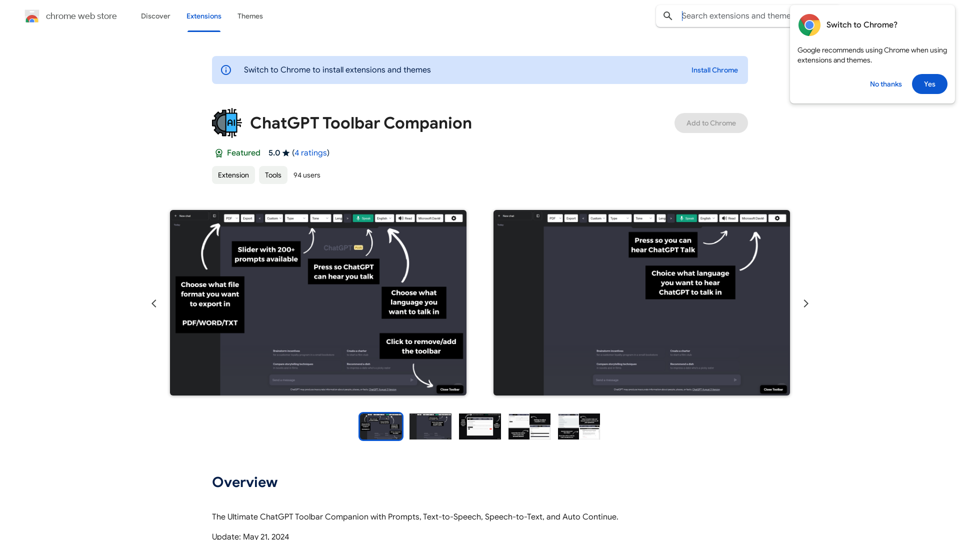
Generate Voice from Text on Any Web Page With the advancement of technology, it is now possible to generate voice from text on any web page. This feature is particularly useful for people who prefer listening to content rather than reading it. Here's how you can do it: #Method 1: Using Browser Extension You can use a browser extension like Read Aloud or SpeakIt! to generate voice from text on any web page. These extensions are available for both Google Chrome and Mozilla Firefox browsers. #Method 2: Using Online Tools There are several online tools available that can convert text to speech. Some popular tools include NaturalReader, Voice Dream Reader, and Google Text-to-Speech. You can copy and paste the text from any web page into these tools to generate voice. #Method 3: Using Screen Reader If you are using a Windows operating system, you can use the built-in Narrator screen reader to generate voice from text on any web page. For Mac users, you can use VoiceOver. By using any of these methods, you can easily generate voice from text on any web page and enjoy a more convenient and accessible reading experience.

193.90 M