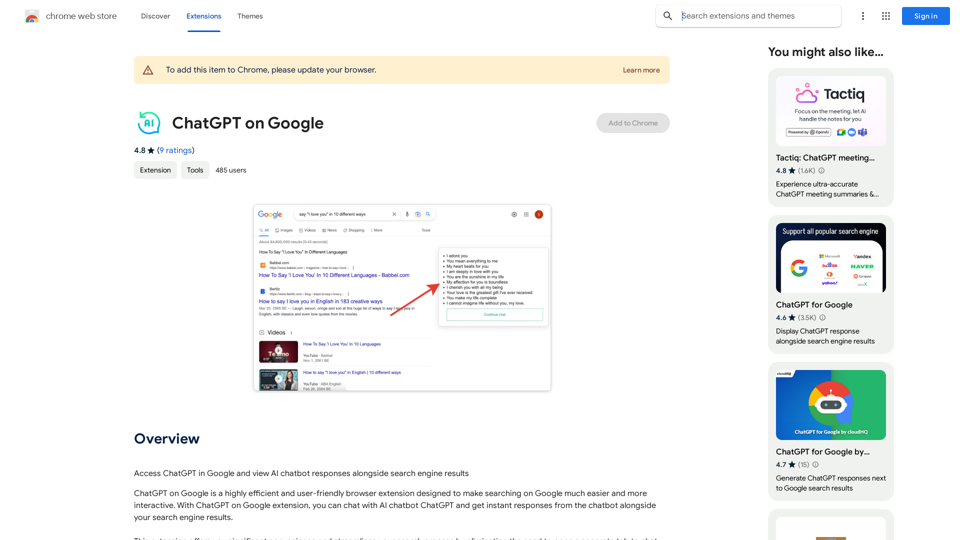
ChatGPT on Google is a browser extension that integrates the AI chatbot ChatGPT directly into Google search results. This innovative tool allows users to interact with ChatGPT while browsing, providing instant AI-generated responses alongside traditional search engine results. The extension streamlines the search process by eliminating the need to switch between tabs, making information retrieval more efficient and interactive.
ChatGPT on Google
Use Google to access ChatGPT and see the AI chatbot's answers next to regular search results.
Introduction
Feature
Seamless Integration with Google Search
ChatGPT on Google embeds the AI chatbot directly into the Google search interface, allowing users to view AI-generated responses alongside standard search results.
Multi-Browser Compatibility
The extension is compatible with the latest versions of popular browsers:
- Google Chrome
- Microsoft Edge
User-Friendly Interface
ChatGPT on Google boasts an intuitive design, making it easy for users to interact with the AI chatbot while searching.
One-Click Access
Users can quickly access ChatGPT by clicking the extension icon in the top right corner of their browser, streamlining the search and chat process.
Free to Use
The extension is completely free to install and use, with no hidden costs or subscription fees.
Multi-Device Support
Users can install and use ChatGPT on Google across multiple devices, ensuring a consistent experience across platforms.
FAQ
How do I start using ChatGPT on Google?
To begin using ChatGPT on Google:
- Install the extension
- Restart your browser
- Perform a Google search
- Click the ChatGPT icon in the top right corner of your browser
- Start chatting with the AI while viewing your search results
Is ChatGPT on Google compatible with all web browsers?
No, currently ChatGPT on Google is only compatible with:
- Google Chrome
- Microsoft Edge
Are there any costs associated with using ChatGPT on Google?
No, ChatGPT on Google is completely free to install and use. There are no subscription fees or hidden costs.
Can I use ChatGPT on Google on multiple devices?
Yes, you can install and use the extension on multiple devices separately, allowing for a consistent experience across your various platforms.
Related Websites
An independent research laboratory investigating novel modes of thinking and enhancing the creative capabilities of humanity.
17.37 M
Scientific Paper Advisor This is a tool to help you write a scientific paper. Features: * Generate a paper outline: Provide a topic and get a structured outline to guide your writing. * Suggest relevant literature: Find recent research papers related to your topic. * Check for plagiarism: Ensure your work is original and properly cited. * Improve grammar and style: Polish your writing for clarity and conciseness. * Format your paper: Adhere to standard scientific paper formatting guidelines. Let me know how I can help you with your scientific paper!
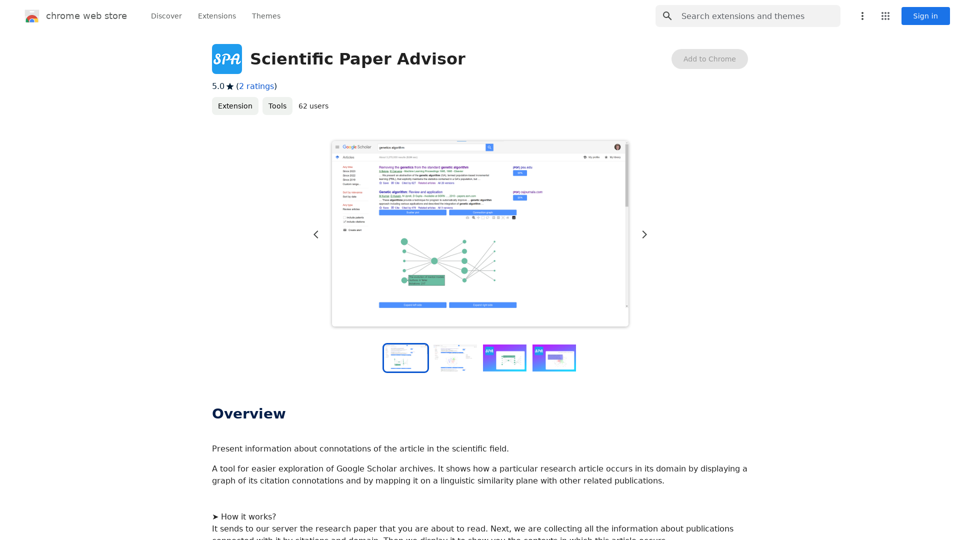
Scientific Paper Advisor This is a tool to help you write a scientific paper. Features: * Generate a paper outline: Provide a topic and get a structured outline to guide your writing. * Suggest relevant literature: Find recent research papers related to your topic. * Check for plagiarism: Ensure your work is original and properly cited. * Improve grammar and style: Polish your writing for clarity and conciseness. * Format your paper: Adhere to standard scientific paper formatting guidelines. Let me know how I can help you with your scientific paper!Please provide me with the article so I can analyze its connotations in the scientific field.
193.90 M
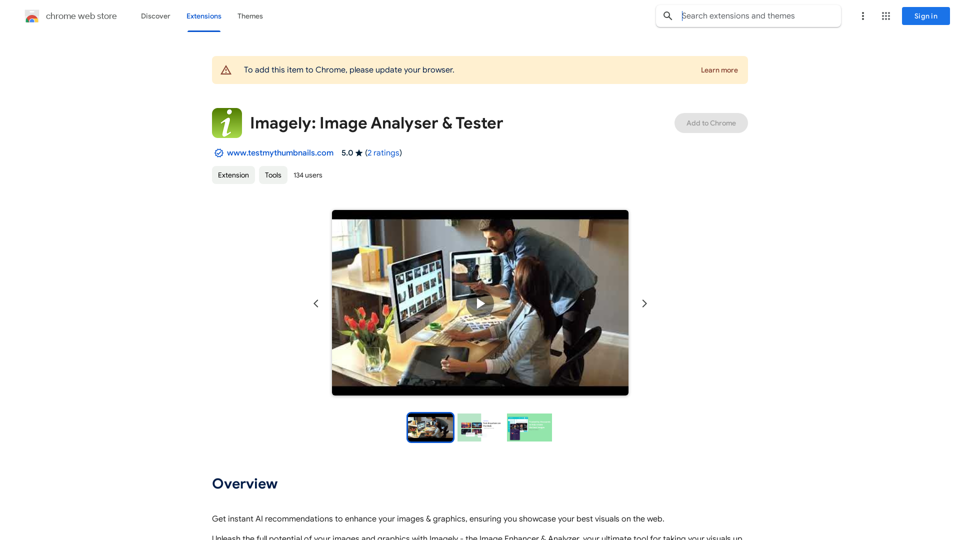
Get instant AI-powered recommendations to improve your images and graphics, so you can display your best visuals online.
193.90 M
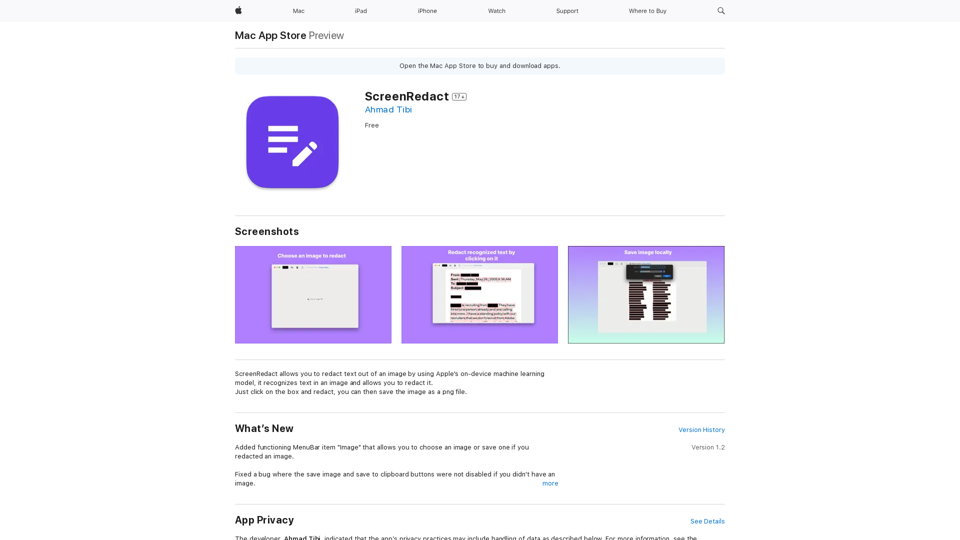
ScreenRedact on the Mac App Store #Description ScreenRedact is a powerful and easy-to-use screenshot editing tool that allows you to quickly and easily remove sensitive information from your screenshots. With its intuitive interface and advanced features, ScreenRedact is the perfect solution for anyone who needs to share screenshots online or with others. #Features * Easy to use: ScreenRedact's intuitive interface makes it easy to get started, even if you're not tech-savvy. * Advanced editing tools: ScreenRedact offers a range of advanced editing tools, including blur, pixelate, and redact, to help you remove sensitive information from your screenshots. * Customizable: ScreenRedact allows you to customize the appearance of your redactions, including the color, opacity, and style. * Support for multiple file formats: ScreenRedact supports a range of file formats, including JPEG, PNG, and TIFF. * Share easily: ScreenRedact makes it easy to share your edited screenshots with others, either by saving them to your computer or sharing them directly to social media or email. #What's New * Improved performance: ScreenRedact is now faster and more efficient, making it easier to edit your screenshots. * New editing tools: ScreenRedact now includes new editing tools, including a magic wand and a lasso tool, to make it even easier to remove sensitive information from your screenshots. * Enhanced customization options: ScreenRedact now offers even more customization options, including the ability to change the color and opacity of your redactions. #Ratings and Reviews * 4.5/5 stars: ScreenRedact has an average rating of 4.5 out of 5 stars on the Mac App Store. * "Easy to use and effective": One reviewer praised ScreenRedact's ease of use and effectiveness, saying "I was able to quickly and easily remove sensitive information from my screenshots." * "A must-have for anyone who shares screenshots online": Another reviewer called ScreenRedact "a must-have for anyone who shares screenshots online," citing its ease of use and advanced features.
ScreenRedact on the Mac App Store #Description ScreenRedact is a powerful and easy-to-use screenshot editing tool that allows you to quickly and easily remove sensitive information from your screenshots. With its intuitive interface and advanced features, ScreenRedact is the perfect solution for anyone who needs to share screenshots online or with others. #Features * Easy to use: ScreenRedact's intuitive interface makes it easy to get started, even if you're not tech-savvy. * Advanced editing tools: ScreenRedact offers a range of advanced editing tools, including blur, pixelate, and redact, to help you remove sensitive information from your screenshots. * Customizable: ScreenRedact allows you to customize the appearance of your redactions, including the color, opacity, and style. * Support for multiple file formats: ScreenRedact supports a range of file formats, including JPEG, PNG, and TIFF. * Share easily: ScreenRedact makes it easy to share your edited screenshots with others, either by saving them to your computer or sharing them directly to social media or email. #What's New * Improved performance: ScreenRedact is now faster and more efficient, making it easier to edit your screenshots. * New editing tools: ScreenRedact now includes new editing tools, including a magic wand and a lasso tool, to make it even easier to remove sensitive information from your screenshots. * Enhanced customization options: ScreenRedact now offers even more customization options, including the ability to change the color and opacity of your redactions. #Ratings and Reviews * 4.5/5 stars: ScreenRedact has an average rating of 4.5 out of 5 stars on the Mac App Store. * "Easy to use and effective": One reviewer praised ScreenRedact's ease of use and effectiveness, saying "I was able to quickly and easily remove sensitive information from my screenshots." * "A must-have for anyone who shares screenshots online": Another reviewer called ScreenRedact "a must-have for anyone who shares screenshots online," citing its ease of use and advanced features.ScreenRedact allows you to remove sensitive text from an image by utilizing Apple's on-device machine learning model, which identifies text within an image and enables you to redact it with ease.
124.77 M