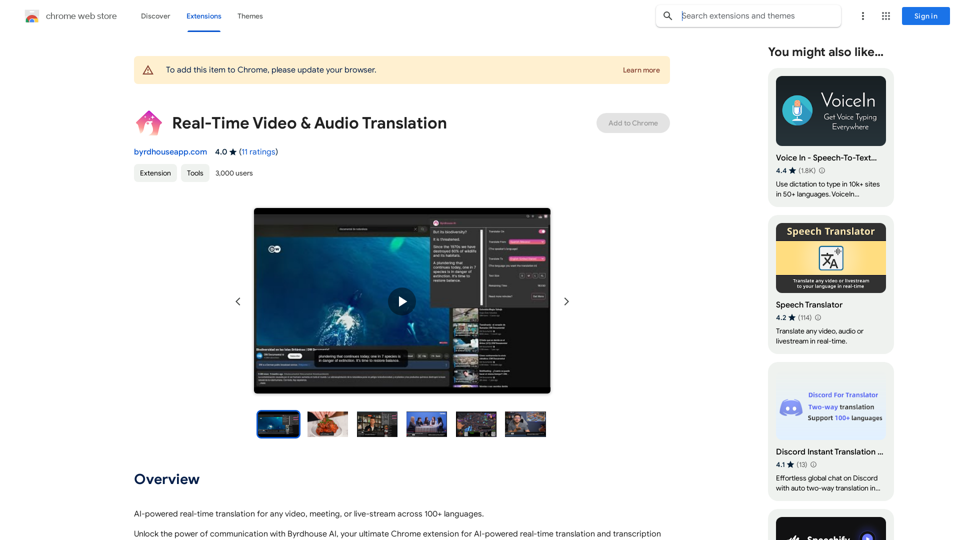
Trovy für Threads ist eine Chrome-Erweiterung, die entwickelt wurde, um Ihre Erfahrung im sozialen Netzwerk Threads zu verbessern. Sie bietet eine umfassende Suite von Tools zur Verwaltung, Analyse und Verbesserung Ihres digitalen Engagements. Mit Funktionen wie Lesezeichen, sofortigen Profilstatistiken und KI-gestützter Beitragserstellung integriert sich Trovy nahtlos in Threads, um Benutzern zu helfen, ihr Wachstum zu verfolgen, Inhalte zu verwalten und überzeugende Beiträge zu erstellen.
Trovy für Threads
Verwalten Sie Ihre Inhalte und verfolgen Sie Ihre Threads-Statistiken.
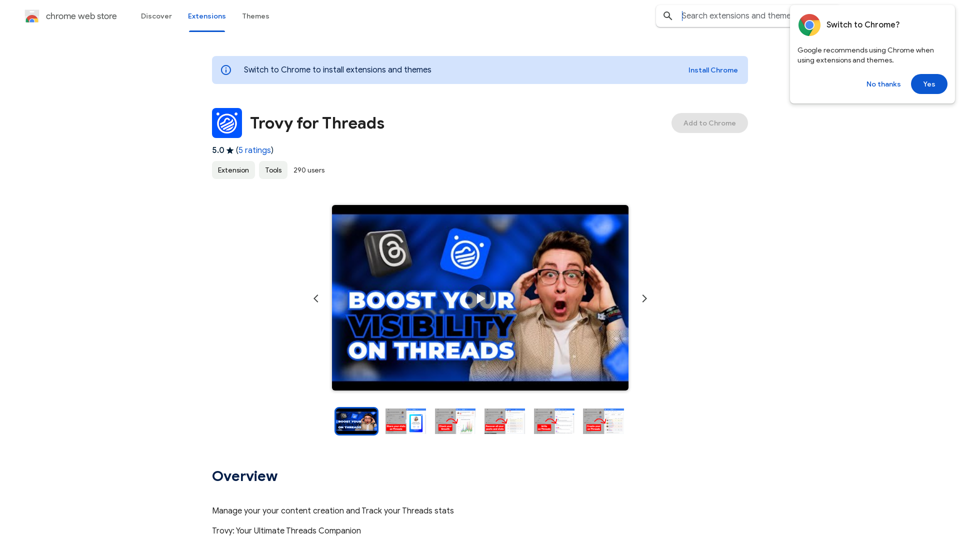
Einführung
Funktion
Beiträge & Ersteller mit Lesezeichen versehen
Speichern Sie einfach Lieblingsbeiträge und -profile für schnellen Zugriff und bleiben Sie so mit inspirierenden Inhalten und Erstellern verbunden.
Sofortige Profilstatistiken
Erhalten Sie mit nur einem Klick eine detaillierte Zusammenfassung Ihres sozialen Engagements, einschließlich Gesamtzahl der Beiträge, Likes und Antworten.
Elegante Integration
Trovy fügt sich nahtlos in die Threads-Oberfläche ein und bietet eine nicht aufdringliche und natürliche Erweiterung der Plattform.
Verfolgung des sozialen Wachstums
Überwachen Sie Ihren wachsenden Einfluss auf Threads, indem Sie das Follower-Wachstum und die Engagement-Level verfolgen.
Inhaltsverwaltung
Organisieren und planen Sie Ihre Threads-Inhalte mühelos, um eine konsistente und wirkungsvolle Online-Präsenz zu erhalten.
KI-gestützte Beitragserstellung
Entfesseln Sie Kreativität mit Trovys KI-Tool, das entwickelt wurde, um überzeugende Inhalte zu erstellen und Inspiration zu liefern.
Mühelose Installation
Einfacher Installationsprozess für den Chrome-Browser mit intuitiver Integration in Ihr Threads-Profil.
Häufig gestellte Fragen
Was ist Trovy für Threads?
Trovy für Threads ist eine Chrome-Erweiterung, die Ihre Präsenz im sozialen Netzwerk Threads verbessert, indem sie Tools zur Verwaltung, Analyse und Verbesserung des digitalen Engagements anbietet.
Wie viel kostet Trovy für Threads?
Trovy für Threads ist eine kostenlose Chrome-Erweiterung, die ohne jegliche Kosten oder Abonnements zum Download und zur Nutzung verfügbar ist.
Was sind die Hauptvorteile der Nutzung von Trovy für Threads?
Zu den Vorteilen gehören:
- Verbesserte Social-Media-Erfahrung
- Optimierte Inhaltserstellung und -verwaltung
- KI-gestützte Beitragserstellung
- Mühelose Installation und Integration
- Kostenlos nutzbar
Wie kann ich die Nutzung von Trovy für Threads maximieren?
Um Trovys Potenzial zu maximieren:
- Nutzen Sie Funktionen zur Inhaltserstellung und Statistikverfolgung
- Überwachen Sie soziales Engagement und Wachstum
- Nutzen Sie die KI-gestützte Beitragserstellung
- Installieren und integrieren Sie nahtlos mit dem Chrome-Browser
Verwandte Webseiten
PI-Aufforderungen für ChatGPT, Gemini, Claude, Mistral, Groq & PI ChatGPT: * Schreibe eine kurze Geschichte über einen Roboter, der lernt, was es heißt, menschlich zu sein. Gemini: * Erstelle eine kreative Geschichte in der Form eines Gedichts über die Schönheit der Natur. Claude: * Analysiere den folgenden Text und identifiziere die Hauptargumente. Mistral: * Übersetze diesen Text ins Spanische. Groq: * Generiere eine Liste von Ideen für ein neues Videospiel. PI: * Schreibe einen Song über die Bedeutung von Freundschaft.
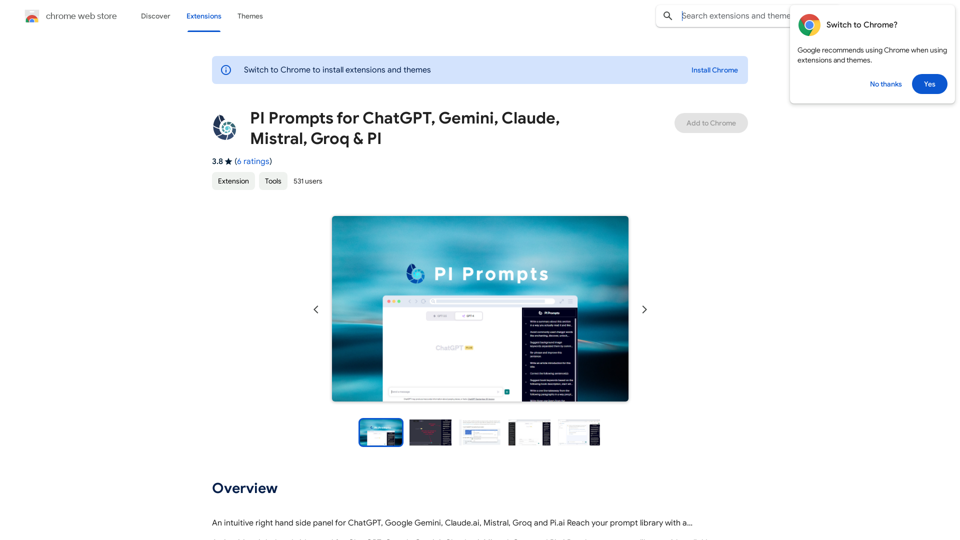
PI-Aufforderungen für ChatGPT, Gemini, Claude, Mistral, Groq & PI ChatGPT: * Schreibe eine kurze Geschichte über einen Roboter, der lernt, was es heißt, menschlich zu sein. Gemini: * Erstelle eine kreative Geschichte in der Form eines Gedichts über die Schönheit der Natur. Claude: * Analysiere den folgenden Text und identifiziere die Hauptargumente. Mistral: * Übersetze diesen Text ins Spanische. Groq: * Generiere eine Liste von Ideen für ein neues Videospiel. PI: * Schreibe einen Song über die Bedeutung von Freundschaft.Eine intuitive Seitenleiste für ChatGPT, Google Gemini, Claude.ai, Mistral, Groq und Pi.ai. Greifen Sie auf Ihre Aufforderungshalbe mit einem…
193.90 M
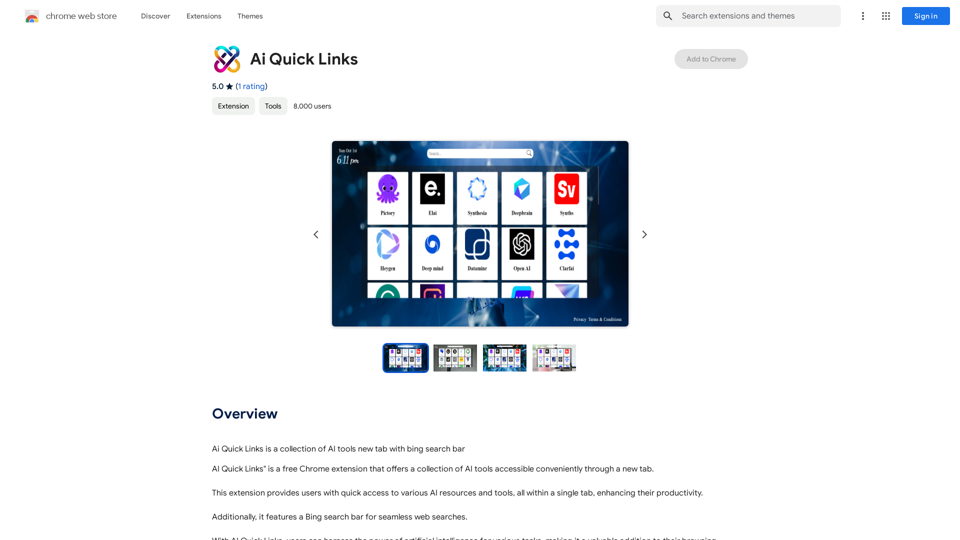
Ai Schnellzugriffe ist eine Sammlung von KI-Tools in der neuen Registerkarte mit Bing-Suchleiste.
193.90 M

Schneller und bezahlbarer Logo-Generator für kleine Unternehmen
Schneller und bezahlbarer Logo-Generator für kleine UnternehmenErstellen Sie einzigartige Logos schnell und kostengünstig mit Aikiu Studio. Erstellen Sie professionelle Designs für kleine Unternehmen und Solounternehmer in Minuten. Erhalten Sie hochwertige, problemlose Logo-Erstellung.
0
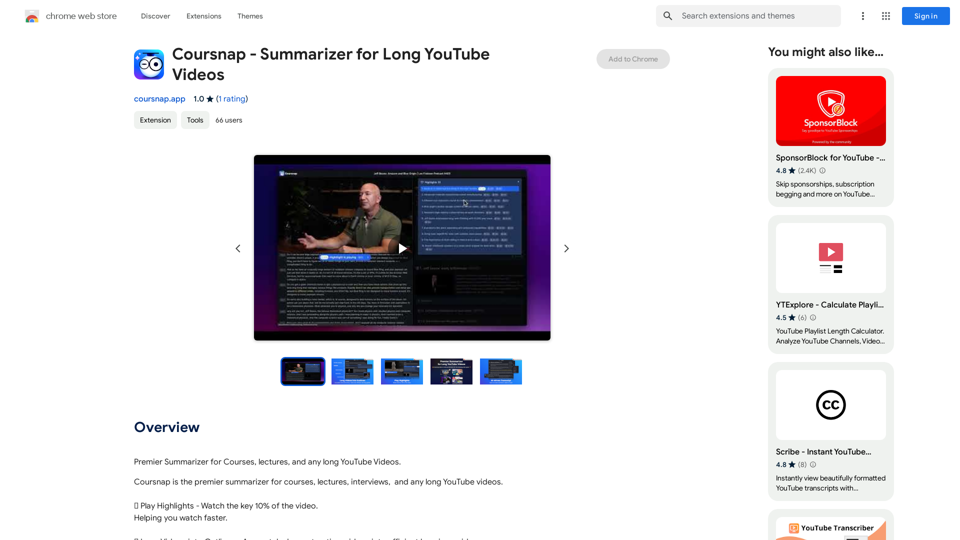
Coursnap - Zusammenfassungen für lange YouTube-Videos
Coursnap - Zusammenfassungen für lange YouTube-VideosPremier-Zusammenfassungsgenerator für Kurse, Vorlesungen und alle langen YouTube-Videos.
193.90 M

Das Leben ist ermüdend, aber die Zukunft "wird besser sein" Pokkoa KI x I Ging Einsichten Entdeckung
Das Leben ist ermüdend, aber die Zukunft "wird besser sein" Pokkoa KI x I Ging Einsichten EntdeckungEntfesseln Sie die Macht von KI-I-Ging für Erkenntnisentdeckung und detaillierte Führung
0
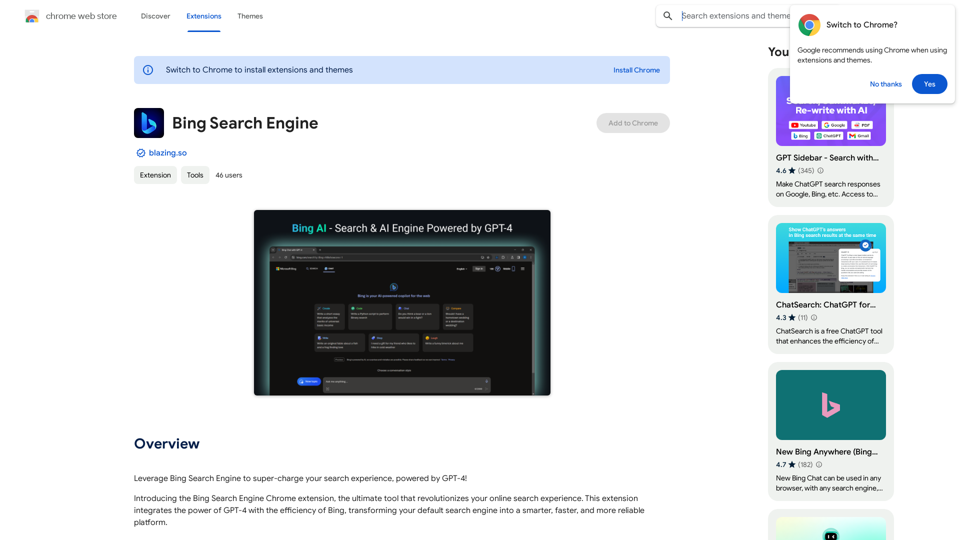
Nutzen Sie die Bing-Suchmaschine, um Ihre Sucherfahrung mit der Kraft von GPT-4 zu revolutionieren!
193.90 M
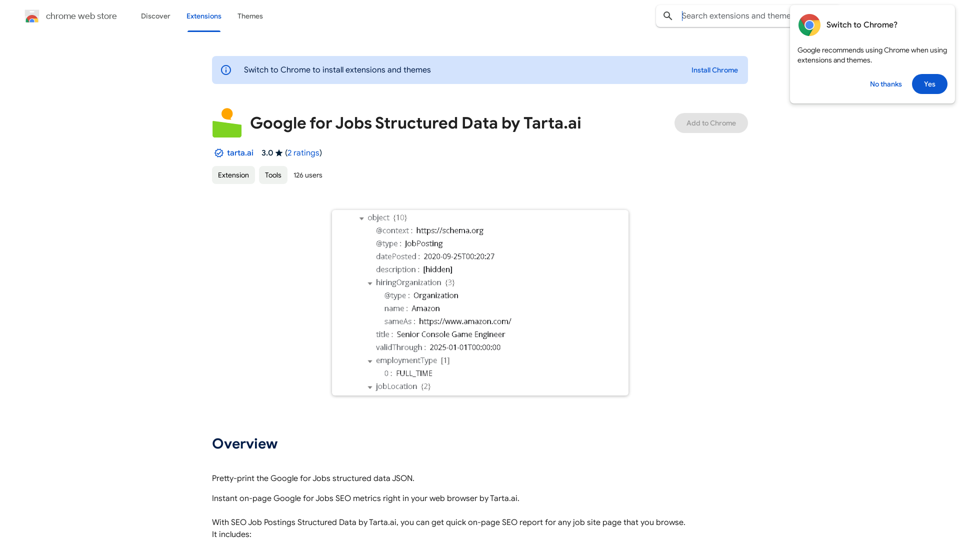
Google für Stellenangebote strukturierte Daten von Tarta.ai
Google für Stellenangebote strukturierte Daten von Tarta.aiSEO Job Postings Structured Data von Tarta.ai ist eine KI-gesteuerte Plattform, die Stellenausschreibungen mit strukturierten Daten für eine verbesserte Suchmaschinenoptimierung anreichert.
193.90 M