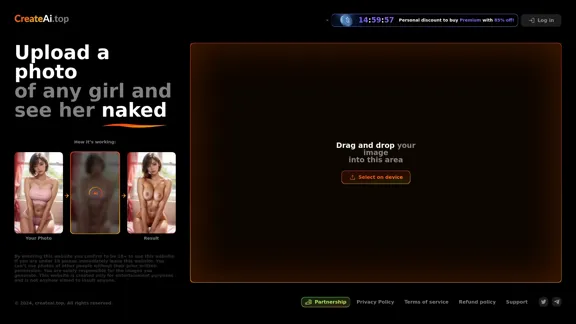
Create Ai Girls is an online platform that allows users to upload photos and generate AI-enhanced images. The service is designed for entertainment purposes and emphasizes user responsibility regarding the images they upload. It requires users to be at least 18 years old to access the content.
Create AI Girls
Create AI Girls
Introduction
Feature
-
Image Upload: Users can upload a photo of any girl to generate AI-enhanced images. This feature allows for a personalized experience based on the user's chosen image.
-
AI Processing: The platform uses advanced AI technology to process the uploaded images and generate results that meet user expectations.
-
User Responsibility: Users must ensure they have permission to use the photos they upload, as the platform does not allow images of others without prior consent.
-
Entertainment Focus: The website is strictly for entertainment purposes, making it clear that it is not intended to insult or offend anyone.
-
Age Verification: Users must confirm they are 18 years or older to use the website, ensuring compliance with legal age restrictions.
How to Use?
- Ensure you have the right to use the photo you are uploading.
- Familiarize yourself with the platform's terms of service and privacy policy.
- Use high-quality images for better results from the AI processing.
- Experiment with different images to see a variety of AI-generated outcomes.
FAQ
What is Create Ai Girls?
Create Ai Girls is an online platform that allows users to upload photos and generate AI-enhanced images for entertainment purposes.
How does Create Ai Girls work?
Users upload a photo, and the platform's AI processes the image to generate enhanced results based on the original photo.
Is there an age restriction for using Create Ai Girls?
Yes, users must be at least 18 years old to access the website and its services.
Can I upload photos of other people?
No, you cannot upload photos of others without their prior written permission.
What is the purpose of Create Ai Girls?
The platform is designed solely for entertainment and is not intended to insult or offend anyone.
Price
-
Premium Plan: 85% discount available for a limited time (specific pricing not provided).
The price is for reference only, please refer to the latest official data for actual information.
Evaluation
-
Create Ai Girls provides a unique and entertaining service for users interested in AI-generated images, allowing for a personalized experience.
-
The platform's emphasis on user responsibility is commendable, ensuring that users are aware of the legal implications of uploading images.
-
However, the service may face challenges regarding ethical considerations and the potential misuse of generated images.
-
Overall, while the platform offers an interesting concept, users should approach it with caution and awareness of the implications of their actions.
Related Websites
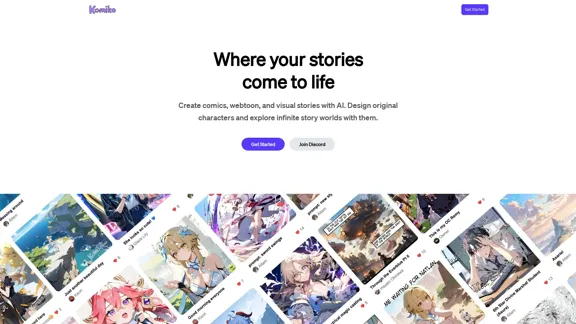
Bring your stories to life with AI. Create captivating comics, webtoon, and visual stories. Design original characters and dive into limitless story worlds.
743.50 K
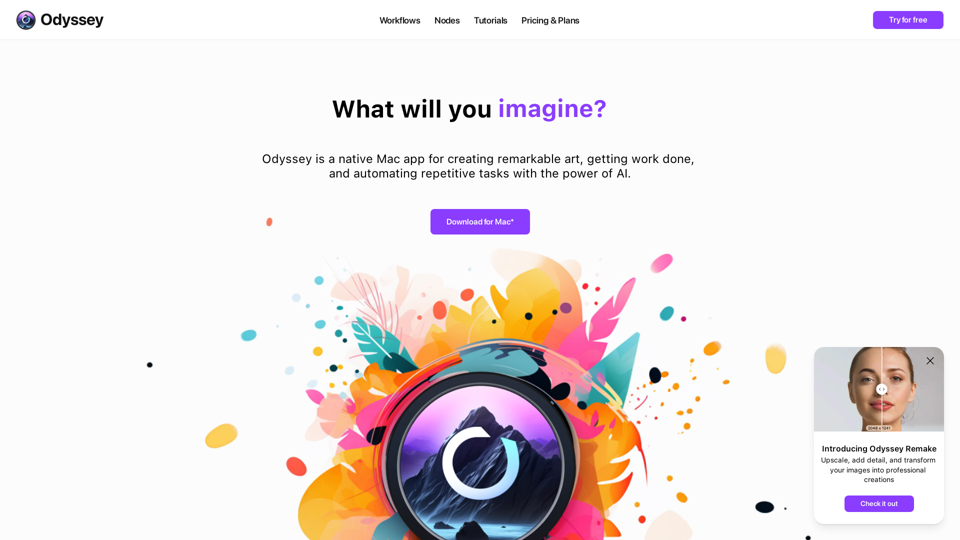
Odyssey is a native Mac app for creating remarkable art, getting work done, and automating repetitive tasks with the power of AI.
12.13 K
Create unique and professional logos effortlessly with LogoAI.ai's AI logo maker. Enjoy free online access, advanced customization, watermark-free logos, and secure design.
129.09 K
Flux AI Image Generator: The Future of Creative Visualization
Flux AI Image Generator: The Future of Creative VisualizationExplore the boundless possibilities of Flux AI, the leading AI image generator that converts your textual descriptions into breathtaking, one-of-a-kind visuals.
0
JumboGPT - Bulk Prompts for ChatGPT This is a collection of bulk prompts for ChatGPT, designed to help you explore its capabilities and generate diverse creative text formats. Instructions: * Each prompt is designed to be used individually with ChatGPT. * You can copy and paste the prompts directly into the ChatGPT interface. * Feel free to modify the prompts to suit your specific needs and interests. Categories: * Story Starters: > A lone astronaut stumbles upon a derelict spaceship... > The old woman sat on the park bench, watching the children play... > A mysterious package arrived on her doorstep, addressed simply to "The Keeper"... * Creative Writing: > Write a short poem about the feeling of nostalgia. > Compose a song about a robot who falls in love with a human. > Describe a world where animals can talk. * Dialogue Prompts: > Two friends argue about the best way to spend a weekend. > A detective interrogates a suspect in a murder case. > A parent tries to explain a difficult concept to their child. * Worldbuilding: > Create a detailed description of a fantasy city. > Design a new species of creature for a science fiction story. > Develop a unique magic system for a medieval world. * Code Generation: > Write a Python function to calculate the factorial of a number. > Generate HTML code for a simple webpage. > Create a SQL query to retrieve data from a database. * Humor: > Write a joke about a programmer. > Create a funny story about a talking cat. > Generate a list of puns about food. * Educational: > Explain the concept of photosynthesis in simple terms. > Summarize the main events of the American Revolution. > Provide a brief history of the development of the internet.
JumboGPT - Bulk Prompts for ChatGPT This is a collection of bulk prompts for ChatGPT, designed to help you explore its capabilities and generate diverse creative text formats. Instructions: * Each prompt is designed to be used individually with ChatGPT. * You can copy and paste the prompts directly into the ChatGPT interface. * Feel free to modify the prompts to suit your specific needs and interests. Categories: * Story Starters: > A lone astronaut stumbles upon a derelict spaceship... > The old woman sat on the park bench, watching the children play... > A mysterious package arrived on her doorstep, addressed simply to "The Keeper"... * Creative Writing: > Write a short poem about the feeling of nostalgia. > Compose a song about a robot who falls in love with a human. > Describe a world where animals can talk. * Dialogue Prompts: > Two friends argue about the best way to spend a weekend. > A detective interrogates a suspect in a murder case. > A parent tries to explain a difficult concept to their child. * Worldbuilding: > Create a detailed description of a fantasy city. > Design a new species of creature for a science fiction story. > Develop a unique magic system for a medieval world. * Code Generation: > Write a Python function to calculate the factorial of a number. > Generate HTML code for a simple webpage. > Create a SQL query to retrieve data from a database. * Humor: > Write a joke about a programmer. > Create a funny story about a talking cat. > Generate a list of puns about food. * Educational: > Explain the concept of photosynthesis in simple terms. > Summarize the main events of the American Revolution. > Provide a brief history of the development of the internet.Use ChatGPT to process many different questions and save the responses in a spreadsheet format like CSV or Excel.
193.90 M
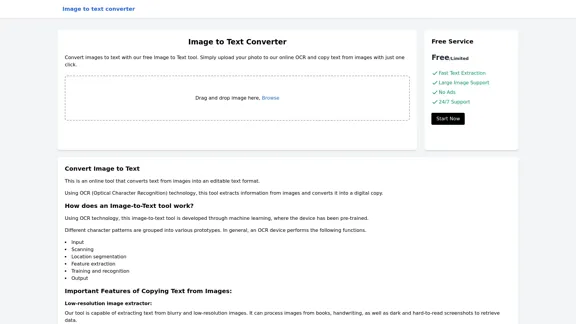
Image to text converter, converting image text to text, how to extract text from an image.
Image to text converter, converting image text to text, how to extract text from an image.Transform images with text into editable, searchable content instantly. Our advanced AI technology extracts text from any image with remarkable accuracy, supporting multiple languages and document types. Simply upload your picture, and watch as handwritten notes, printed documents, screenshots, and signs are converted to crisp, copyable text in seconds.
0