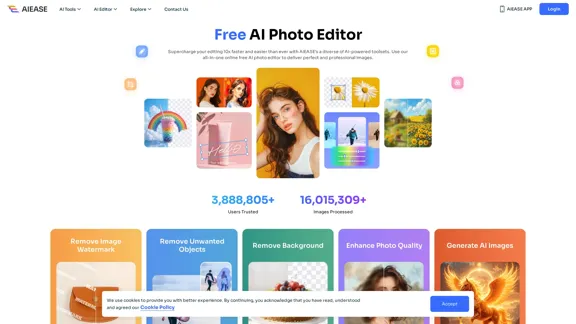
AI Ease offers a free AI photo editing platform that streamlines the editing process with a variety of powerful tools. Users can enhance images, remove backgrounds, and generate new visuals effortlessly. The platform is designed for both casual users and professionals, providing high-quality results with minimal effort.
Free AI Photo Editor: Simplify Photo Editing Online - AI Ease
Simplify and automate your photo editing with AI Ease. Experience a variety of AI photo editing tools to enhance every aspect of your images for free.
Introduction
Feature
-
Diverse AI Tools
AI Ease includes a wide range of tools such as background remover, photo enhancer, watermark remover, object remover, AI headshot generator, and more, catering to various editing needs.
-
Background Removal
The background remover tool allows users to eliminate unwanted backgrounds quickly and accurately, providing a transparent background in just three seconds.
-
Watermark Removal
Users can easily remove watermarks from images with a single click, thanks to advanced detection technology that preserves the image quality.
-
Object Removal
The object remover feature enables users to erase unwanted elements from images seamlessly, utilizing AI algorithms to maintain the background integrity.
-
Photo Enhancement
AI Ease offers photo enhancement tools that can unblur images, sharpen details, and upscale photos, improving overall quality with ease.
-
AI Image Generation
Users can generate unique images from text prompts using the AI image generator, which supports over 20 art styles for creative projects.
-
Mobile Accessibility
The platform is available on both iOS and Android, allowing users to edit photos on the go.
How to Use?
- Sign up for a free account on AI Ease to access all tools.
- Start by selecting the specific tool you want to use, such as background remover or photo enhancer.
- Upload your image and follow the prompts to apply the desired edits.
- Preview the changes before downloading the final image.
- Explore various tools to find the best fit for your editing needs.
FAQ
What is AI Ease?
AI Ease is an online photo editing platform that provides a suite of AI-driven tools for enhancing and editing images efficiently and for free.
Is it free to use AI Ease's AI photo editing tools?
Yes, all tools on AI Ease are available for free, allowing users to edit images without any cost.
Is it safe to use AI Ease to edit images?
Yes, AI Ease prioritizes user data security and allows users to manage their accounts and editing history safely.
Can I use AI Ease's AI photo editor for commercial use?
Yes, users can utilize the processed or AI-generated images for commercial purposes as per AI Ease's terms of service.
Price
- Free Plan: $0/month
The price is for reference only, please refer to the latest official data for actual information.
Evaluation
- AI Ease provides a robust set of tools that significantly enhance the photo editing experience, making it accessible for users of all skill levels.
- The platform's efficiency in background removal and object editing is particularly impressive, saving users time and effort.
- While the toolset is extensive, some advanced features may require further refinement to meet professional standards.
- The user interface is intuitive, but additional tutorials or guides could enhance the user experience for beginners.
- Overall, AI Ease is a valuable resource for anyone looking to improve their photo editing capabilities without incurring costs.
Related Websites
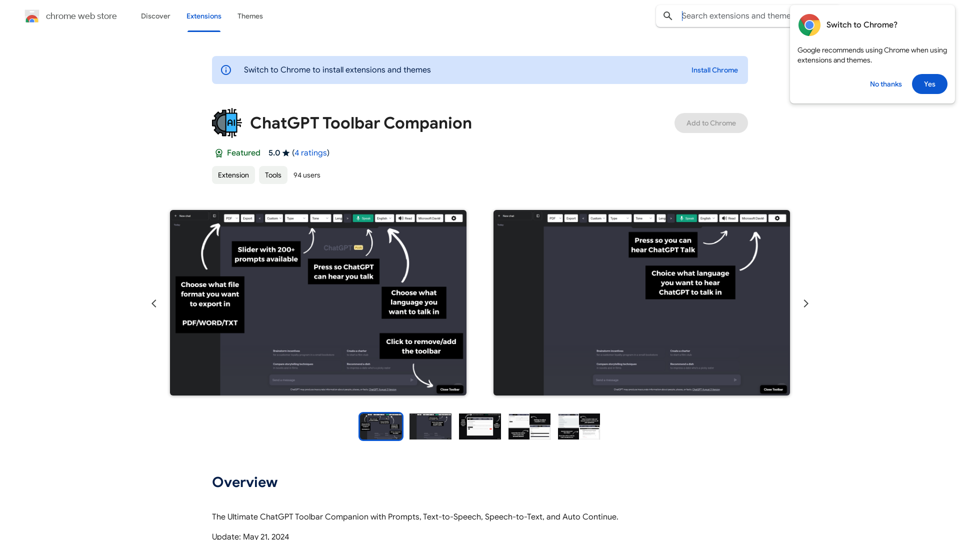
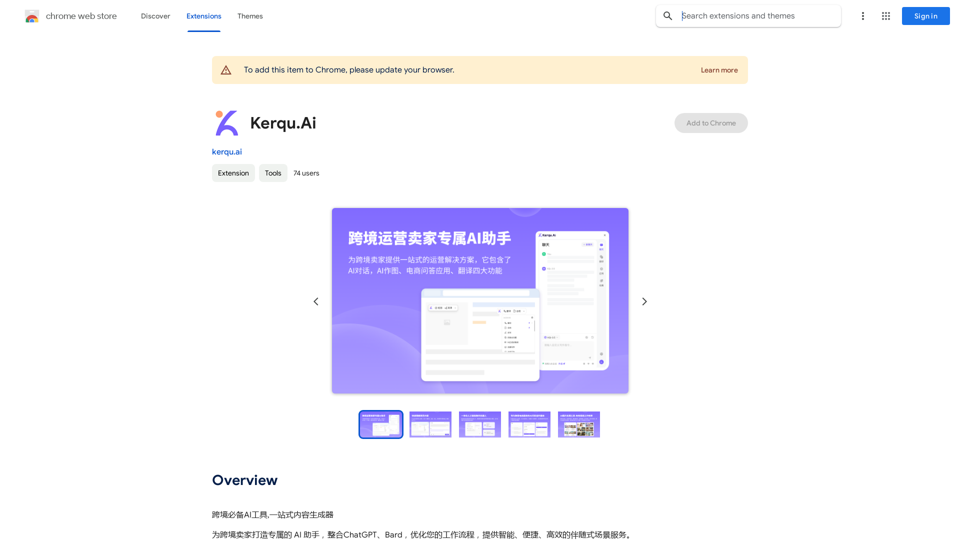
The Ultimate ChatGPT Toolbar Companion with Prompts, Text-to-Speech, Speech-to-Text, and Auto Continue.
193.90 M

Discover the magic of AI with our PS2 filter and instantly transform your photos into classic PS2 video game characters. Experience this retro style with a modern twist—just upload your photo and see the transformation in one click! Try it for free at ps2filterai.net.
0
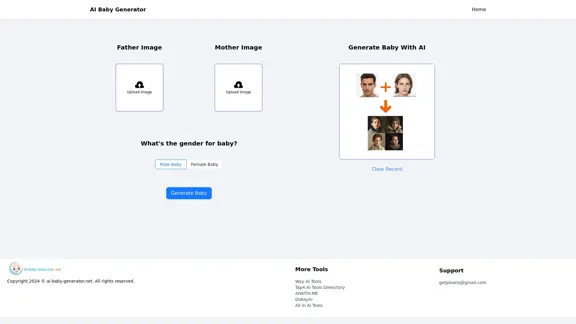
AI Baby Generator | Generate Your Future Baby Photos Using AI
AI Baby Generator | Generate Your Future Baby Photos Using AIGenerate baby photos using our AI Baby Generator to see what your future baby might look like.
0
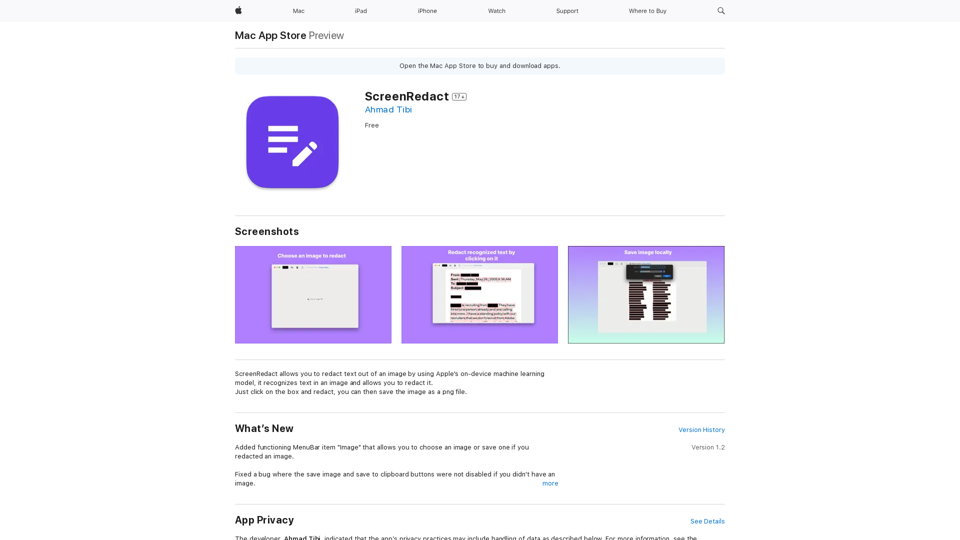
ScreenRedact on the Mac App Store #Description ScreenRedact is a powerful and easy-to-use screenshot editing tool that allows you to quickly and easily remove sensitive information from your screenshots. With its intuitive interface and advanced features, ScreenRedact is the perfect solution for anyone who needs to share screenshots online or with others. #Features * Easy to use: ScreenRedact's intuitive interface makes it easy to get started, even if you're not tech-savvy. * Advanced editing tools: ScreenRedact offers a range of advanced editing tools, including blur, pixelate, and redact, to help you remove sensitive information from your screenshots. * Customizable: ScreenRedact allows you to customize the appearance of your redactions, including the color, opacity, and style. * Support for multiple file formats: ScreenRedact supports a range of file formats, including JPEG, PNG, and TIFF. * Share easily: ScreenRedact makes it easy to share your edited screenshots with others, either by saving them to your computer or sharing them directly to social media or email. #What's New * Improved performance: ScreenRedact is now faster and more efficient, making it easier to edit your screenshots. * New editing tools: ScreenRedact now includes new editing tools, including a magic wand and a lasso tool, to make it even easier to remove sensitive information from your screenshots. * Enhanced customization options: ScreenRedact now offers even more customization options, including the ability to change the color and opacity of your redactions. #Ratings and Reviews * 4.5/5 stars: ScreenRedact has an average rating of 4.5 out of 5 stars on the Mac App Store. * "Easy to use and effective": One reviewer praised ScreenRedact's ease of use and effectiveness, saying "I was able to quickly and easily remove sensitive information from my screenshots." * "A must-have for anyone who shares screenshots online": Another reviewer called ScreenRedact "a must-have for anyone who shares screenshots online," citing its ease of use and advanced features.
ScreenRedact on the Mac App Store #Description ScreenRedact is a powerful and easy-to-use screenshot editing tool that allows you to quickly and easily remove sensitive information from your screenshots. With its intuitive interface and advanced features, ScreenRedact is the perfect solution for anyone who needs to share screenshots online or with others. #Features * Easy to use: ScreenRedact's intuitive interface makes it easy to get started, even if you're not tech-savvy. * Advanced editing tools: ScreenRedact offers a range of advanced editing tools, including blur, pixelate, and redact, to help you remove sensitive information from your screenshots. * Customizable: ScreenRedact allows you to customize the appearance of your redactions, including the color, opacity, and style. * Support for multiple file formats: ScreenRedact supports a range of file formats, including JPEG, PNG, and TIFF. * Share easily: ScreenRedact makes it easy to share your edited screenshots with others, either by saving them to your computer or sharing them directly to social media or email. #What's New * Improved performance: ScreenRedact is now faster and more efficient, making it easier to edit your screenshots. * New editing tools: ScreenRedact now includes new editing tools, including a magic wand and a lasso tool, to make it even easier to remove sensitive information from your screenshots. * Enhanced customization options: ScreenRedact now offers even more customization options, including the ability to change the color and opacity of your redactions. #Ratings and Reviews * 4.5/5 stars: ScreenRedact has an average rating of 4.5 out of 5 stars on the Mac App Store. * "Easy to use and effective": One reviewer praised ScreenRedact's ease of use and effectiveness, saying "I was able to quickly and easily remove sensitive information from my screenshots." * "A must-have for anyone who shares screenshots online": Another reviewer called ScreenRedact "a must-have for anyone who shares screenshots online," citing its ease of use and advanced features.ScreenRedact allows you to remove sensitive text from an image by utilizing Apple's on-device machine learning model, which identifies text within an image and enables you to redact it with ease.
124.77 M
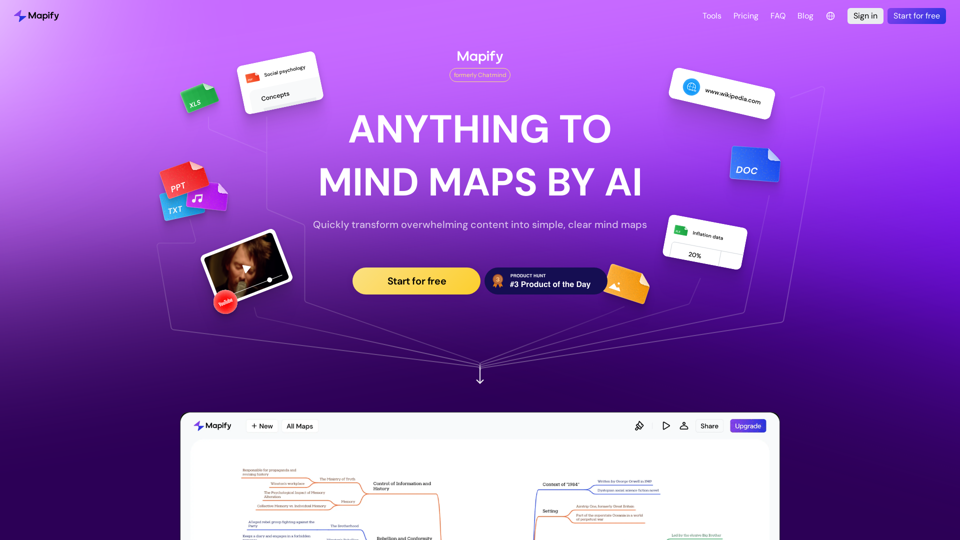
Mapify: Transform Anything to Mind Maps by AI, formerly Chatmind
Mapify: Transform Anything to Mind Maps by AI, formerly ChatmindMapify, upgraded from Chatmind by the Xmind Team, is a free online mind mapping and brainstorming tool powered by AI. It can summarize PDF, Word, PowerPoint, YouTube, long text, and images into mind maps in just a few minutes.
1.15 M