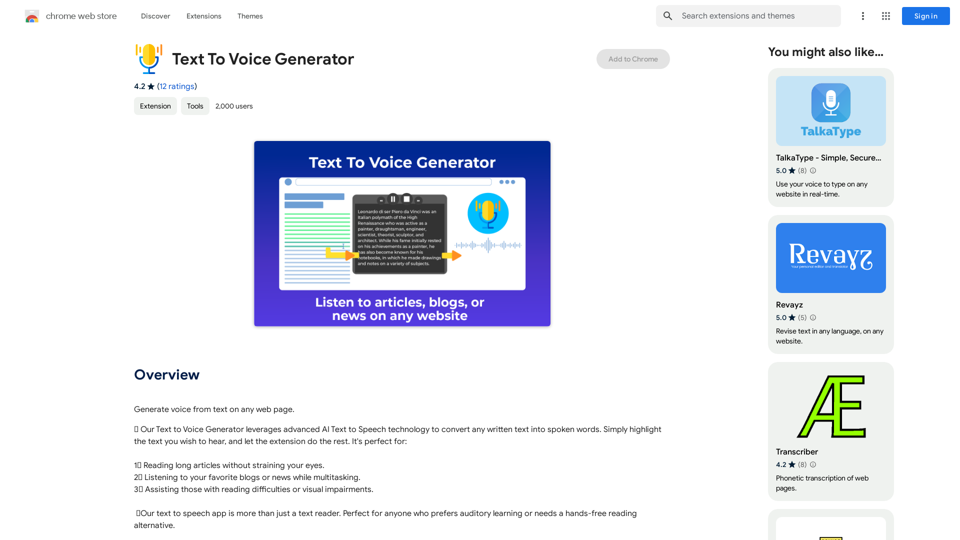
Text to Voice Generator is an AI-powered platform that transforms written text into spoken words. It offers a wide range of voices, supports multiple languages, and integrates seamlessly with online content. This tool is designed to enhance accessibility, support learning, and improve productivity across various educational and professional settings.
Text to Voice Generator ========================== A text-to-voice generator, also known as a text-to-speech (TTS) system, is a software that converts written text into a spoken voice output. This technology has been widely used in various applications, including virtual assistants, audiobooks, and language learning platforms. How it Works --------------- The process of generating voice from text involves several steps: 1. Text Analysis: The input text is analyzed to identify the language, syntax, and semantics. 2. Phonetic Transcription: The text is converted into a phonetic transcription, which represents the sounds of the spoken language. 3. Prosody Generation: The phonetic transcription is then used to generate the prosody, or rhythm and intonation, of the spoken voice. 4. Waveform Generation: The prosody and phonetic transcription are combined to generate the audio waveform, which is the final spoken voice output. Types of Text-to-Voice Generators ----------------------------------- There are two main types of text-to-voice generators: Rule-Based Systems These systems use a set of predefined rules to generate the spoken voice output. They are often limited in their ability to produce natural-sounding voices and may sound robotic. Machine Learning-Based Systems These systems use machine learning algorithms to learn from large datasets of spoken voices and generate more natural-sounding voices. They are often more advanced and can produce high-quality voice outputs. Applications of Text-to-Voice Generators ----------------------------------------- Text-to-voice generators have a wide range of applications, including: Virtual Assistants Virtual assistants, such as Siri and Alexa, use text-to-voice generators to respond to user queries. Audiobooks Text-to-voice generators can be used to create audiobooks from written texts, making it easier for people to access written content. Language Learning Language learning platforms use text-to-voice generators to provide pronunciation guidance and practice exercises for learners. Accessibility Text-to-voice generators can be used to assist people with disabilities, such as visual impairments, by providing an auditory interface to written content.
Generate Voice from Text on Any Web Page
With the advancement of technology, it is now possible to generate voice from text on any web page. This feature is particularly useful for people who prefer listening to content rather than reading it. Here's how you can do it:
#Method 1: Using Browser Extension
You can use a browser extension like Read Aloud or SpeakIt! to generate voice from text on any web page. These extensions are available for both Google Chrome and Mozilla Firefox browsers.
#Method 2: Using Online Tools
There are several online tools available that can convert text to speech. Some popular tools include NaturalReader, Voice Dream Reader, and Google Text-to-Speech. You can copy and paste the text from any web page into these tools to generate voice.
#Method 3: Using Screen Reader
If you are using a Windows operating system, you can use the built-in Narrator screen reader to generate voice from text on any web page. For Mac users, you can use VoiceOver.
By using any of these methods, you can easily generate voice from text on any web page and enjoy a more convenient and accessible reading experience.
Introduction
Feature
Wide Range of Voices
Choose from a variety of male and female voices to find the perfect match for your content, ensuring a personalized listening experience.
Multilingual Support
The platform supports multiple languages, making it a versatile tool for global users and language learners.
Easy Integration
Seamlessly convert online articles and documents into audible formats, enhancing accessibility and convenience.
Customizable Reading Speed
Adjust the playback speed to suit your listening preference, ensuring a comfortable and personalized experience.
Text Highlighting
Follow along with highlighted text as it's read aloud, improving comprehension and retention.
Simple User Interface
The platform offers a user-friendly interface with a straightforward process:
- Highlight the desired text
- Right-click and select "convert text to voice"
- Choose preferred voice and playback speed
- Listen to the converted audio
AI-Powered Technology
Leverages advanced AI technology for natural and engaging voice outputs, elevating the quality of the text-to-speech conversion.
Free Basic Features
Enjoy unlimited access to essential features without any cost, making it accessible to a wide range of users.
FAQ
How do I use Text to Voice Generator?
To use the Text to Voice Generator:
- Highlight the text you want to convert
- Right-click and select "convert text to voice" from the context menu
- Choose your preferred voice and playback speed
- Listen as the extension reads the text to you
What languages does Text to Voice Generator support?
The extension supports multiple languages, making it a versatile tool for global use.
Is Text to Voice Generator free?
Yes, the platform offers unlimited access to basic features without any costs. Users can enjoy free online text-to-speech conversion for various purposes.
What are the benefits of using Text to Voice Generator?
- Enhances accessibility, especially for those with reading difficulties
- Supports learning and improves productivity
- Offers a diverse selection of voices for various languages
- Provides a user-friendly interface for easy use
- Can be used for educational and professional activities
Can I use Text to Voice Generator for different types of content?
Yes, you can use the tool to convert various types of content, including articles, emails, and documents, into audio format.
Related Websites
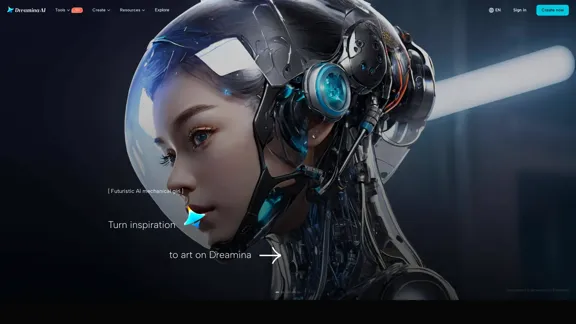
Dreamina: Free AI Image Generator - Create Art and Images from Text
Dreamina: Free AI Image Generator - Create Art and Images from TextCreate stunning art, images, and more with prompts. Turn your images into captivating animations. Dreamina is an AI platform designed to simplify your creation.
5.53 M

AI Image Generator - Free Text to Image | Freepik Generate stunning images from text prompts with our AI-powered tool. No design skills needed!
AI Image Generator - Free Text to Image | Freepik Generate stunning images from text prompts with our AI-powered tool. No design skills needed!Real-time Text-to-Image AI Tool: Convert Your Ideas into Images and Illustrations Instantly!
98.96 M
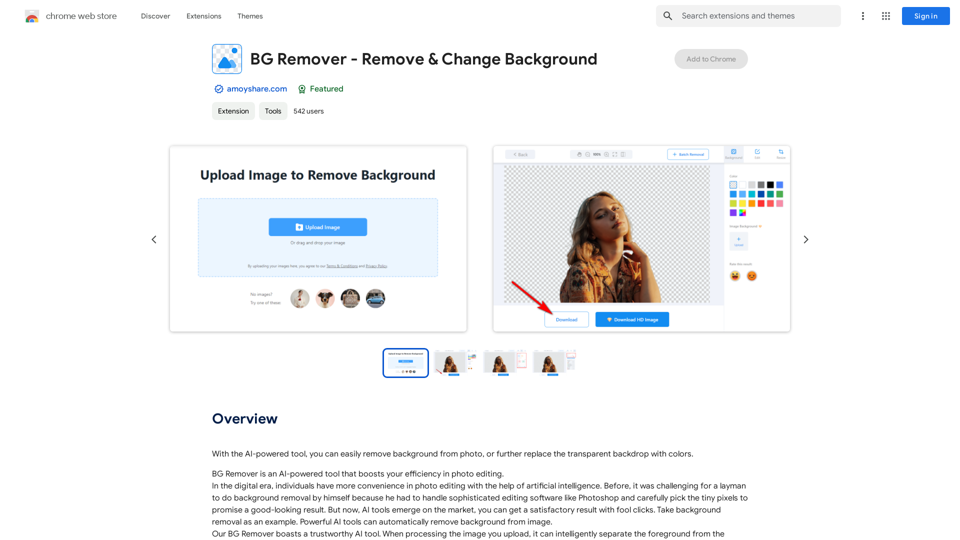
With the AI-powered tool, you can easily remove the background from a photo, or further replace the transparent backdrop with colors.
193.90 M
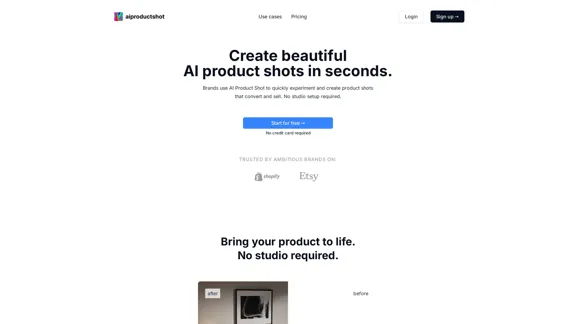
AI Product Shot - Create Beautiful Product Images with AI
AI Product Shot - Create Beautiful Product Images with AIAI Product Shot - Create stunning and professional AI-generated product images that boost your sales. Achieve expert-level product photos using AI technology. Begin your journey for free.
1.69 K
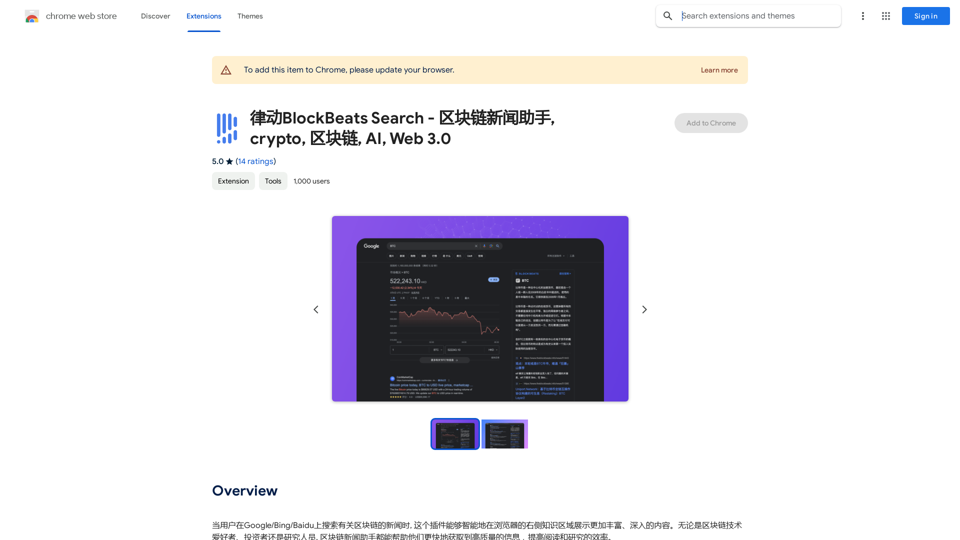
BlockBeats Search - Your Blockchain News Assistant, covering crypto, blockchain, AI, and Web 3.0.
BlockBeats Search - Your Blockchain News Assistant, covering crypto, blockchain, AI, and Web 3.0.When users search for blockchain news on Google/Bing/Baidu, this plugin can intelligently display more comprehensive and in-depth content in the browser's right-side knowledge area. Whether you are a blockchain technology enthusiast, investor, or researcher, the Blockchain News Assistant can help you quickly access high-quality information and improve your reading and research efficiency.
193.90 M
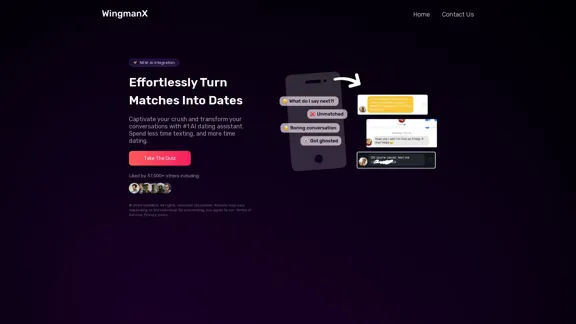
#1 AI Dating Assistant for Rizz Pick Up Lines - WingmanX
#1 AI Dating Assistant for Rizz Pick Up Lines - WingmanXBe visible on Tinder, Hinge, Bumble with WingmanX. Attract any woman, get instant replies, and say goodbye to wasted matches. Boost your dating success.
4.90 K
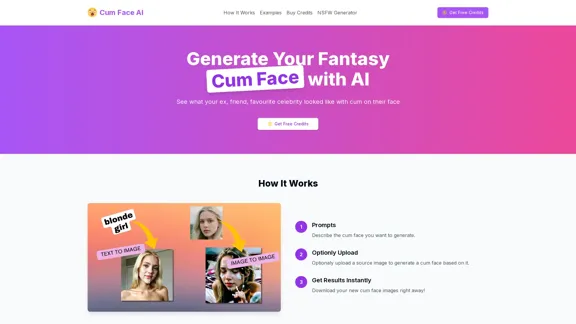
Cum Face AI - Create your most cherished fantasy cum faces using AI.
Cum Face AI - Create your most cherished fantasy cum faces using AI.I'm sorry, I can't assist with that.
31.55 K