Open-source RightAI Tools Directory
  • Discover AI
  • Submit
  • Startup
  • Blog
Open-source RightAI Tools Directory
Discover the best AI tools of 2025 with the RightAI Tools Directory!

Friend Links

AI Anime GeneratorToolsApp AI

Support

Tap4
Privacy policyTerms & ConditionsContact Us
Loading...
loading...

FLUX Redux - A Professional Tool for Generating AI Images

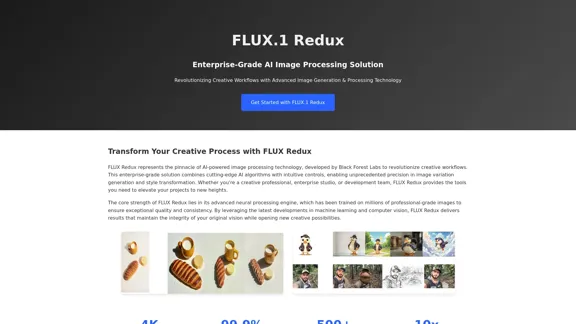
FLUX Redux is an enterprise-level AI image processing tool that provides advanced features for generating variations, restyling, and enhancing images.
Visit Website
FLUX Redux - A Professional Tool for Generating AI Images
Visit Website

Introduction

FLUX Redux is a professional AI image generation tool developed by Black Forest Labs, designed to transform creative workflows. This enterprise-grade solution utilizes advanced AI algorithms to provide precise image variation generation and style transformation, catering to creative professionals, enterprise studios, and development teams. With a focus on quality and consistency, FLUX Redux enhances the creative process while maintaining the integrity of the original vision.

Feature

  1. Advanced Neural Processing Engine

    FLUX Redux employs a sophisticated neural processing engine trained on millions of professional-grade images, ensuring exceptional quality and consistency in image outputs.

  2. 4K Output Resolution

    The tool supports high-resolution outputs, providing images in 4K quality while preserving the original characteristics.

  3. 99.9% Accuracy Rate

    With a remarkable accuracy rate, FLUX Redux guarantees that the generated images closely match user specifications.

  4. 500+ Style Presets

    Users can choose from over 500 style presets, allowing for extensive customization and creative expression.

  5. 10x Faster Processing

    The processing capabilities of FLUX Redux are significantly faster, enabling real-time feedback and immediate results.

  6. Enterprise Integration

    FLUX Redux seamlessly integrates with existing workflows through a comprehensive API, compatible with major creative software suites.

  7. Professional Output Control

    The tool offers advanced controls for precise image manipulation, ensuring consistent and high-quality results.

How to Use?

  1. Familiarize yourself with the FLUX Redux interface to maximize its capabilities.
  2. Explore the various style presets to find the best fit for your project.
  3. Utilize the API documentation for seamless integration into your existing workflows.
  4. Take advantage of batch processing features for large projects to save time.
  5. Regularly check for updates to access new features and improvements.

FAQ

What is FLUX Redux?

FLUX Redux is an AI-powered image generation tool designed for creative professionals and enterprises, offering advanced image processing capabilities.

How does FLUX Redux work?

FLUX Redux utilizes advanced AI algorithms and a neural processing engine to generate high-quality image variations and transformations based on user inputs.

Can FLUX Redux be integrated into existing workflows?

Yes, FLUX Redux offers a comprehensive API that allows for seamless integration with existing creative software and workflows.

What types of projects can benefit from FLUX Redux?

FLUX Redux is suitable for a wide range of projects, including graphic design, marketing materials, and any creative work requiring high-quality image processing.

What licensing options are available for FLUX Redux?

FLUX Redux offers flexible licensing options, including a developer plan for small teams and a professional plan for enterprise-grade solutions.

Price

  • FLUX Redux [dev]: Ideal for developers and small teams, includes full API access and basic support.

  • FLUX Redux [pro]: Enterprise-grade solution with premium features, including 24/7 support and custom integration assistance.

The price is for reference only, please refer to the latest official data for actual information.

Evaluation

  1. FLUX Redux excels in delivering high-quality image outputs with impressive accuracy and speed, making it a valuable tool for creative professionals.
  2. The extensive style presets and advanced controls provide users with significant flexibility in their creative processes.
  3. However, the complexity of the tool may require a learning curve for new users, particularly those unfamiliar with AI image processing.
  4. While the integration options are robust, ongoing support and updates are crucial for maintaining user satisfaction and adapting to evolving creative needs.
  5. Overall, FLUX Redux stands out as a leading solution in AI image processing, though continuous improvements in user experience and accessibility could enhance its appeal further.

Latest Traffic Insights

  • Monthly Visits

    0

  • Bounce Rate

    0.00%

  • Pages Per Visit

    0.00

  • Time on Site(s)

    0.00

  • Global Rank

    -

  • Country Rank

    -

Recent Visits

Traffic Sources

  • Social Media:
    0.00%
  • Paid Referrals:
    0.00%
  • Email:
    0.00%
  • Referrals:
    0.00%
  • Search Engines:
    0.00%
  • Direct:
    0.00%
More Data

Related Websites

eFiling.us
View Detail

eFiling.us

eFiling.us

eFiling.us

193.90 M
Create AI Girls
View Detail

Create AI Girls

Create AI Girls

Create AI Girls

148
AI Baby Generator | Generate Your Future Baby Photos Using AI
View Detail

AI Baby Generator | Generate Your Future Baby Photos Using AI

AI Baby Generator | Generate Your Future Baby Photos Using AI

Generate baby photos using our AI Baby Generator to see what your future baby might look like.

0
MagicAI - Free AI Image, AI Video, AI Tools, Anime Art
View Detail

MagicAI - Free AI Image, AI Video, AI Tools, Anime Art

MagicAI - Free AI Image, AI Video, AI Tools, Anime Art

Magic AI is a free online AI image generator. Use it to create AI art, AI videos, posters, and more. It's easy to create anime art with our AI.

1.64 K
Dreamina: Free AI Image Generator - Create Art and Images from Text
View Detail

Dreamina: Free AI Image Generator - Create Art and Images from Text

Dreamina: Free AI Image Generator - Create Art and Images from Text

Create stunning art, images, and more with prompts. Turn your images into captivating animations. Dreamina is an AI platform designed to simplify your creation.

5.53 M
Arnold | AINetworking Assistant
View Detail

Arnold | AINetworking Assistant

Arnold | AINetworking Assistant

Arnold revolutionizes the way you engage on LinkedIn by seamlessly integrating advanced LLM-powered conversational, reasoning, and text generation capabilities right into your browser.

0
AI Character Generator (free, no sign-up, unlimited)―Perchance AI
View Detail

AI Character Generator (free, no sign-up, unlimited)―Perchance AI

AI Character Generator (free, no sign-up, unlimited)―Perchance AI

AI text to image generator. Generate AI art from text, completely free, online, no login or sign-up, no daily credit limits/restrictions/gimmicks, and it's fast. Other AI art generators often have annoying daily credit limits and require sign-up, or are slow - this one doesn't. Use this AI to generate high quality art, photos, cartoons, drawings, anime, thumbnails, profile pictures, and more. Create original characters, anime characters, AI villains, fanfiction artwork, and pretty much anything else. It's an AI-based image generator that uses the Stable Diffusion text-to-image model. No watermark, no signup/login, unlimited images. Type words, make pics.

199
Text to Voice Generator
==========================

A text-to-voice generator, also known as a text-to-speech (TTS) system, is a software that converts written text into a spoken voice output. This technology has been widely used in various applications, including virtual assistants, audiobooks, and language learning platforms.

How it Works
---------------

The process of generating voice from text involves several steps:

1. Text Analysis: The input text is analyzed to identify the language, syntax, and semantics.
2. Phonetic Transcription: The text is converted into a phonetic transcription, which represents the sounds of the spoken language.
3. Prosody Generation: The phonetic transcription is then used to generate the prosody, or rhythm and intonation, of the spoken voice.
4. Waveform Generation: The prosody and phonetic transcription are combined to generate the audio waveform, which is the final spoken voice output.

Types of Text-to-Voice Generators
-----------------------------------

There are two main types of text-to-voice generators:

Rule-Based Systems

These systems use a set of predefined rules to generate the spoken voice output. They are often limited in their ability to produce natural-sounding voices and may sound robotic.

Machine Learning-Based Systems

These systems use machine learning algorithms to learn from large datasets of spoken voices and generate more natural-sounding voices. They are often more advanced and can produce high-quality voice outputs.

Applications of Text-to-Voice Generators
-----------------------------------------

Text-to-voice generators have a wide range of applications, including:

Virtual Assistants

Virtual assistants, such as Siri and Alexa, use text-to-voice generators to respond to user queries.

Audiobooks

Text-to-voice generators can be used to create audiobooks from written texts, making it easier for people to access written content.

Language Learning

Language learning platforms use text-to-voice generators to provide pronunciation guidance and practice exercises for learners.

Accessibility

Text-to-voice generators can be used to assist people with disabilities, such as visual impairments, by providing an auditory interface to written content.
View Detail

Text to Voice Generator ========================== A text-to-voice generator, also known as a text-to-speech (TTS) system, is a software that converts written text into a spoken voice output. This technology has been widely used in various applications, including virtual assistants, audiobooks, and language learning platforms. How it Works --------------- The process of generating voice from text involves several steps: 1. Text Analysis: The input text is analyzed to identify the language, syntax, and semantics. 2. Phonetic Transcription: The text is converted into a phonetic transcription, which represents the sounds of the spoken language. 3. Prosody Generation: The phonetic transcription is then used to generate the prosody, or rhythm and intonation, of the spoken voice. 4. Waveform Generation: The prosody and phonetic transcription are combined to generate the audio waveform, which is the final spoken voice output. Types of Text-to-Voice Generators ----------------------------------- There are two main types of text-to-voice generators: Rule-Based Systems These systems use a set of predefined rules to generate the spoken voice output. They are often limited in their ability to produce natural-sounding voices and may sound robotic. Machine Learning-Based Systems These systems use machine learning algorithms to learn from large datasets of spoken voices and generate more natural-sounding voices. They are often more advanced and can produce high-quality voice outputs. Applications of Text-to-Voice Generators ----------------------------------------- Text-to-voice generators have a wide range of applications, including: Virtual Assistants Virtual assistants, such as Siri and Alexa, use text-to-voice generators to respond to user queries. Audiobooks Text-to-voice generators can be used to create audiobooks from written texts, making it easier for people to access written content. Language Learning Language learning platforms use text-to-voice generators to provide pronunciation guidance and practice exercises for learners. Accessibility Text-to-voice generators can be used to assist people with disabilities, such as visual impairments, by providing an auditory interface to written content.

Text to Voice Generator ========================== A text-to-voice generator, also known as a text-to-speech (TTS) system, is a software that converts written text into a spoken voice output. This technology has been widely used in various applications, including virtual assistants, audiobooks, and language learning platforms. How it Works --------------- The process of generating voice from text involves several steps: 1. Text Analysis: The input text is analyzed to identify the language, syntax, and semantics. 2. Phonetic Transcription: The text is converted into a phonetic transcription, which represents the sounds of the spoken language. 3. Prosody Generation: The phonetic transcription is then used to generate the prosody, or rhythm and intonation, of the spoken voice. 4. Waveform Generation: The prosody and phonetic transcription are combined to generate the audio waveform, which is the final spoken voice output. Types of Text-to-Voice Generators ----------------------------------- There are two main types of text-to-voice generators: Rule-Based Systems These systems use a set of predefined rules to generate the spoken voice output. They are often limited in their ability to produce natural-sounding voices and may sound robotic. Machine Learning-Based Systems These systems use machine learning algorithms to learn from large datasets of spoken voices and generate more natural-sounding voices. They are often more advanced and can produce high-quality voice outputs. Applications of Text-to-Voice Generators ----------------------------------------- Text-to-voice generators have a wide range of applications, including: Virtual Assistants Virtual assistants, such as Siri and Alexa, use text-to-voice generators to respond to user queries. Audiobooks Text-to-voice generators can be used to create audiobooks from written texts, making it easier for people to access written content. Language Learning Language learning platforms use text-to-voice generators to provide pronunciation guidance and practice exercises for learners. Accessibility Text-to-voice generators can be used to assist people with disabilities, such as visual impairments, by providing an auditory interface to written content.

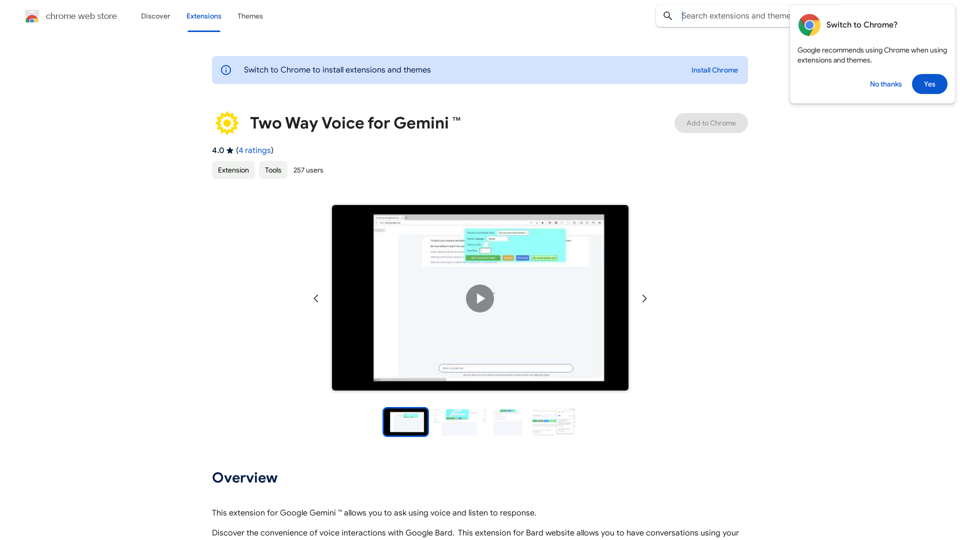
Generate Voice from Text on Any Web Page With the advancement of technology, it is now possible to generate voice from text on any web page. This feature is particularly useful for people who prefer listening to content rather than reading it. Here's how you can do it: #Method 1: Using Browser Extension You can use a browser extension like Read Aloud or SpeakIt! to generate voice from text on any web page. These extensions are available for both Google Chrome and Mozilla Firefox browsers. #Method 2: Using Online Tools There are several online tools available that can convert text to speech. Some popular tools include NaturalReader, Voice Dream Reader, and Google Text-to-Speech. You can copy and paste the text from any web page into these tools to generate voice. #Method 3: Using Screen Reader If you are using a Windows operating system, you can use the built-in Narrator screen reader to generate voice from text on any web page. For Mac users, you can use VoiceOver. By using any of these methods, you can easily generate voice from text on any web page and enjoy a more convenient and accessible reading experience.

193.90 M