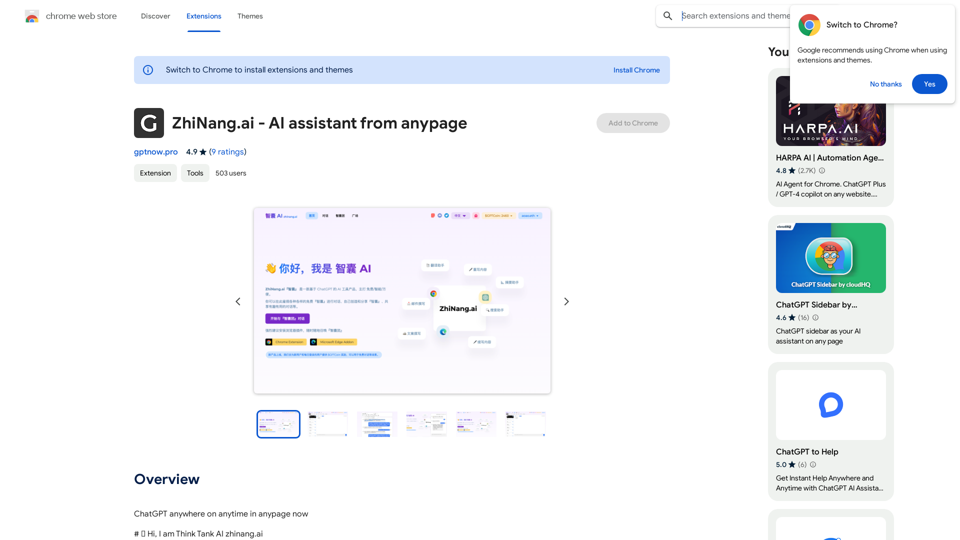
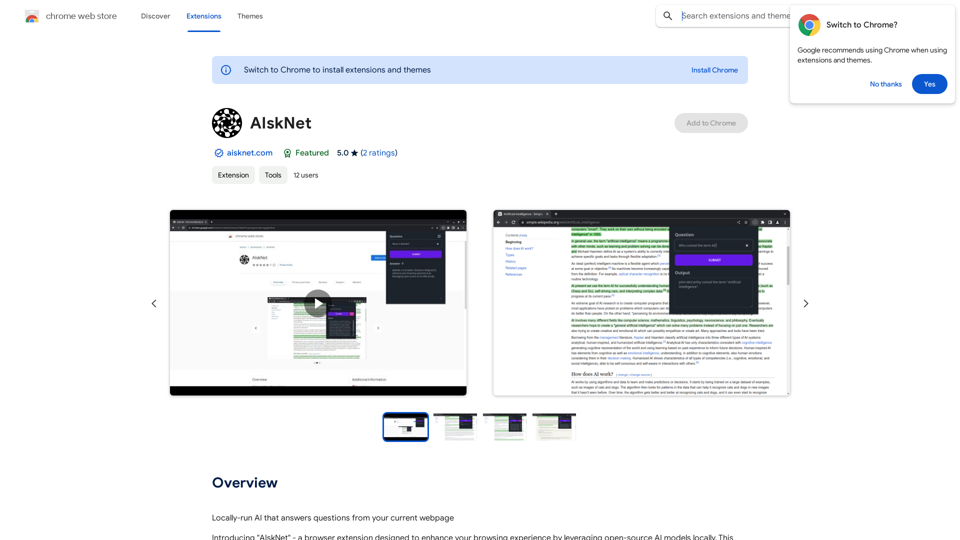
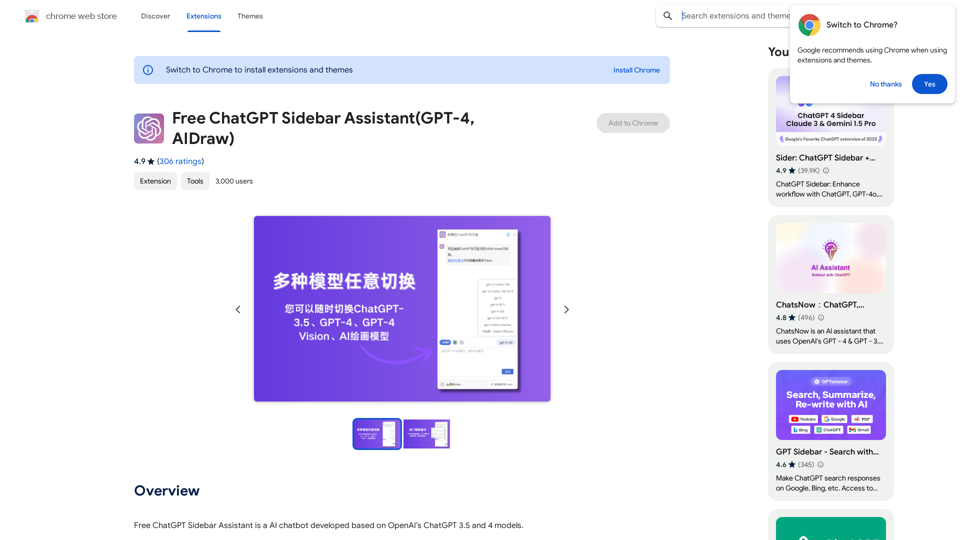
ChatGPT Sidebar Assistant is a free AI chatbot based on OpenAI's ChatGPT 3.5 and 4 models. It offers multiple AI models, including GPT-3.5, GPT-4, ChatGPT Vision, and AI drawing. This versatile tool provides users with a wide range of AI-powered capabilities, accessible directly from the browser sidebar without affecting page usage.
Free ChatGPT Sidebar Assistant (GPT-4, AIDraw)
Free ChatGPT Sidebar Assistant is an AI chatbot developed based on OpenAI's ChatGPT 3.5 and 4 models.
Introduction
Feature
Multiple AI Models
ChatGPT Sidebar Assistant supports various AI models:
- GPT-3.5
- GPT-4
- ChatGPT Vision
- AI drawing
Abundant Prompt Templates
- Pre-loaded templates for easy question-asking
- Beginner-friendly, no worry about wasting question limits
Cloud-Based Chat History Storage
- Securely stores chat history in the cloud
- Easy access and review of past conversations
Sidebar Display
- Conveniently positioned on the browser sidebar
- Access AI tools without disrupting page usage
Breaking Network Restrictions
- Direct connection to OpenAI's official ChatGPT
- Bypasses network restrictions for wider accessibility
Token-Based Usage
- Free access to over 10,000 tokens per user
- Allows for extensive use of AI-powered tools
No Registration Required
- Immediate access without account creation
- User-friendly approach for quick AI tool utilization
Completely Free
- No hidden costs or fees
- High-quality AI tools at no charge
Flexible Pricing Options
| Plan | Tokens | Price |
|---|---|---|
| Free | 10,000/day | $0 |
| Monthly | More tokens | Upgrade required |
| Seasonal | More tokens | Upgrade required |
FAQ
Can I use ChatGPT Sidebar Assistant for free?
Yes, ChatGPT Sidebar Assistant offers a free plan with 10,000 tokens per day.
How do I upgrade to a paid plan?
Users can choose to upgrade to a monthly or seasonal plan for more tokens. Specific pricing details are not provided in the given content.
Can I use ChatGPT Sidebar Assistant without creating an account?
Yes, ChatGPT Sidebar Assistant can be used without creating an account, allowing for immediate access to its AI-powered tools.
Latest Traffic Insights
Monthly Visits
193.90 M
Bounce Rate
56.27%
Pages Per Visit
2.71
Time on Site(s)
115.91
Global Rank
-
Country Rank
-
Recent Visits
Traffic Sources
- Social Media:0.48%
- Paid Referrals:0.55%
- Email:0.15%
- Referrals:12.81%
- Search Engines:16.21%
- Direct:69.81%
Related Websites
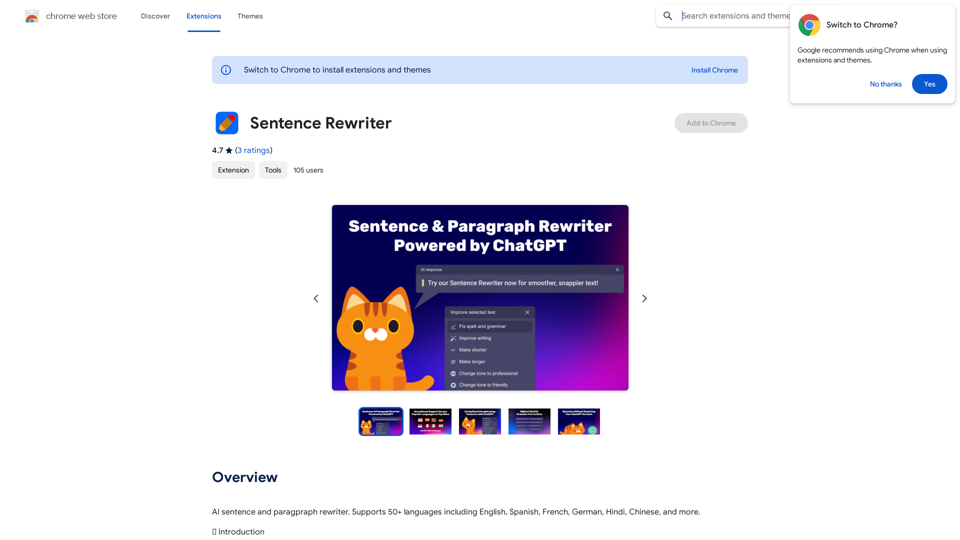
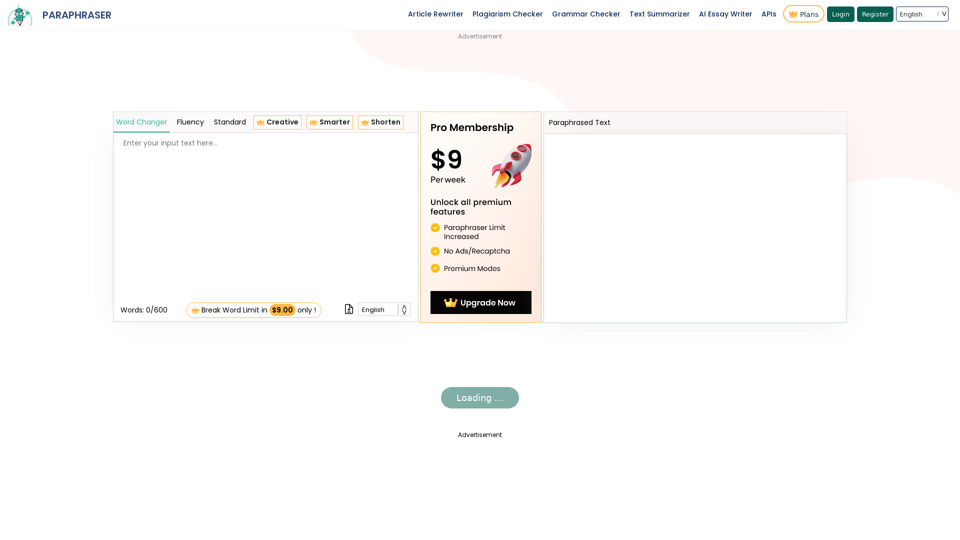
AI sentence and paragraph rewriter. Supports 50+ languages including English, Spanish, French, German, Hindi, Chinese, and more.
193.90 M