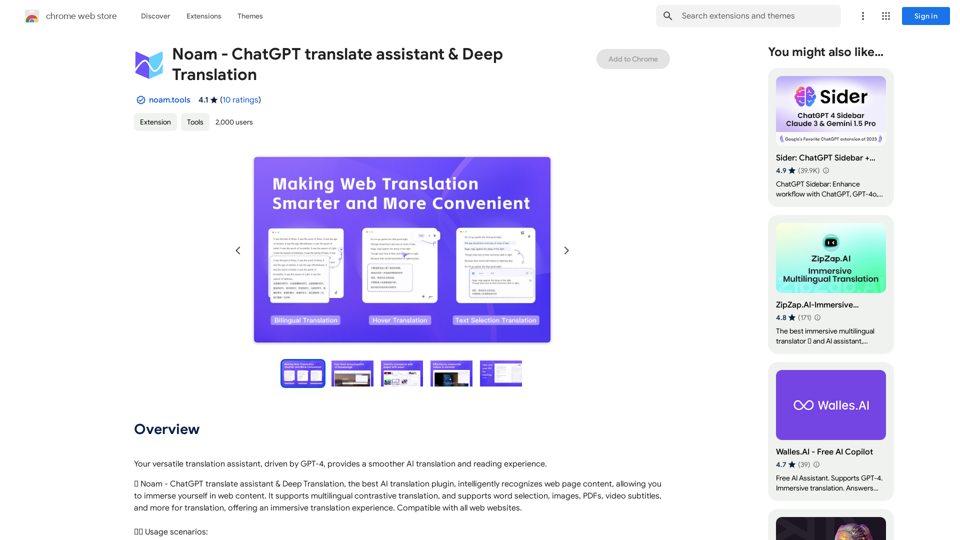
Noam is a ChatGPT translate assistant & Deep Translation plugin that enhances AI translation and reading experiences. Powered by GPT-4, it intelligently recognizes web page content, allowing users to immerse themselves in foreign language content. Noam offers features like intelligent content area recognition, PDF document translation, efficient mouse hover interaction, image content translation, and a built-in AI dictionary.
Noam - ChatGPT Translation Assistant & Deep Translation
Your versatile translation assistant, driven by GPT-4, provides a smoother AI translation and reading experience.
Introduction
Feature
Intelligent Content Area Recognition
Noam translates web pages without altering the original format, preserving the original language while adding translation contrast. This simplifies reading interaction and provides an immersive experience.
PDF Document Translation
Users can upload PDF documents for bilingual contrastive translation without changing the document content, enabling immersive PDF reading.
Efficient Mouse Hover Interaction
Simply hover the mouse over any foreign paragraph on a webpage to get instant bilingual contrastive translation.
One-Click Image Content Translation
Noam supports translating image content with a single click, making visual content more accessible.
Built-in AI Dictionary
The integrated AI dictionary allows for convenient word lookup anytime, anywhere.
Quick Start Guide
- Click "Translate Current Site" for AI-powered immersive translation.
- Use mouse hover or hover + shortcut keys for immersive translation effects.
- Automatic language detection and one-click translation to the target language.
- Access the built-in AI dictionary for quick word lookup.
FAQ
How do I turn on/off the translation service?
Click the plugin icon on the right side of the webpage to toggle the service on or off.
What is the plugin's capability based on?
Noam's capabilities are based on AI large language models, which provide more contextually accurate translations compared to traditional machine translation.
What about permissions?
Noam requires permission to read and change website data to provide translation services. This permission is solely used for translation purposes and not for any other activities.
How can I contact Noam for support or feedback?
You can email [email protected] or visit the official website at https://noam.tools for customer service.
Related Websites
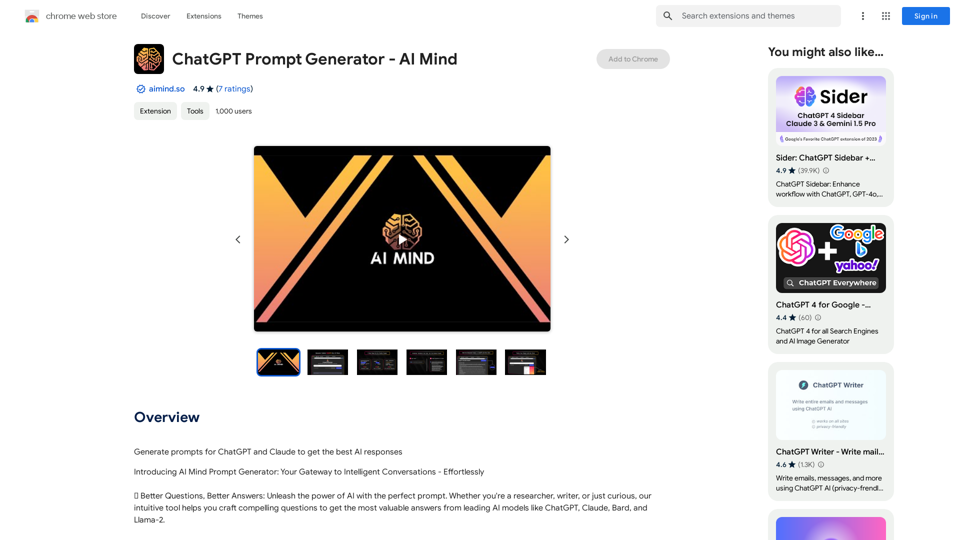
ChatGPT Prompt Generator - AI Mind This is a tool to help you generate creative and effective prompts for ChatGPT. Features: * Diverse Prompt Types: Explore various prompt categories like story writing, dialogue, code generation, and more. * Customization Options: Tailor your prompts with specific details, tone, style, and length preferences. * Inspiration & Examples: Discover a library of pre-made prompts and examples to spark your imagination. * AI-Powered Suggestions: Get intelligent suggestions and refinements for your prompts based on your input. How it Works: 1. Choose a Prompt Type: Select the type of output you desire from ChatGPT. 2. Provide Input: Enter your desired keywords, themes, or specific instructions. 3. Customize Settings: Adjust parameters like tone, style, length, and format. 4. Generate Prompt: Click "Generate" to receive a unique and optimized prompt tailored to your needs. Start Creating! Let your imagination run wild and explore the possibilities of ChatGPT with our AI-powered prompt generator.
ChatGPT Prompt Generator - AI Mind This is a tool to help you generate creative and effective prompts for ChatGPT. Features: * Diverse Prompt Types: Explore various prompt categories like story writing, dialogue, code generation, and more. * Customization Options: Tailor your prompts with specific details, tone, style, and length preferences. * Inspiration & Examples: Discover a library of pre-made prompts and examples to spark your imagination. * AI-Powered Suggestions: Get intelligent suggestions and refinements for your prompts based on your input. How it Works: 1. Choose a Prompt Type: Select the type of output you desire from ChatGPT. 2. Provide Input: Enter your desired keywords, themes, or specific instructions. 3. Customize Settings: Adjust parameters like tone, style, length, and format. 4. Generate Prompt: Click "Generate" to receive a unique and optimized prompt tailored to your needs. Start Creating! Let your imagination run wild and explore the possibilities of ChatGPT with our AI-powered prompt generator.Generate prompts for ChatGPT and Claude to get the best AI responses
193.90 M
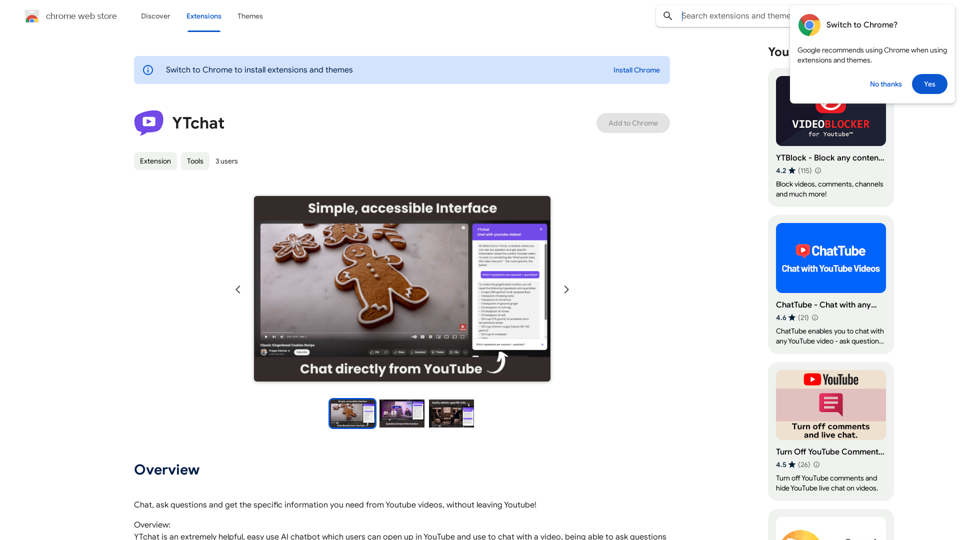
Talk to a chatbot, ask questions, and get the exact information you need from YouTube videos, all without leaving YouTube!
193.90 M

ChatsNow is an AI assistant that uses OpenAI's GPT-4 and GPT-3.5, as well as Claude2, to provide various services, such as chat, translation, and Vision.
193.90 M
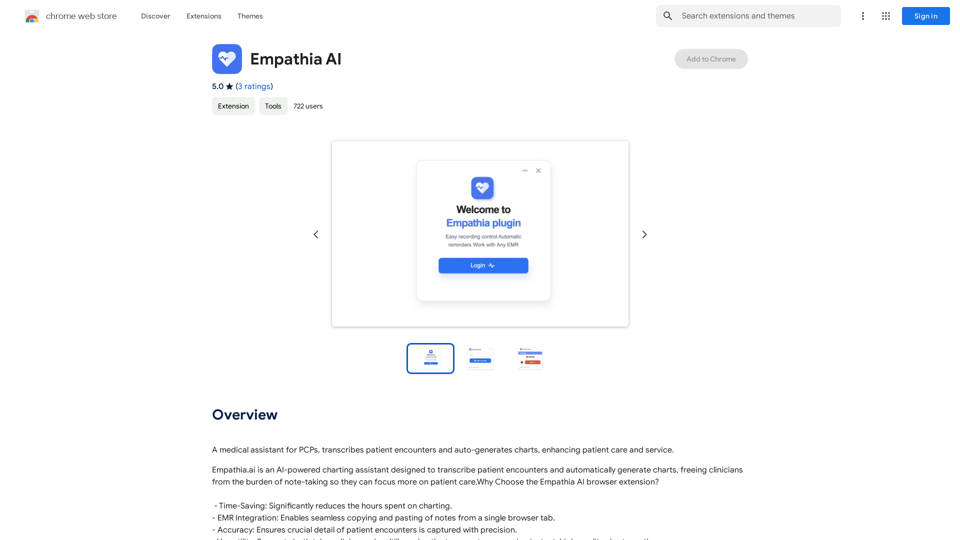
A medical assistant for primary care physicians, transcribes patient visits and automatically creates medical records, improving patient care and service.
193.90 M
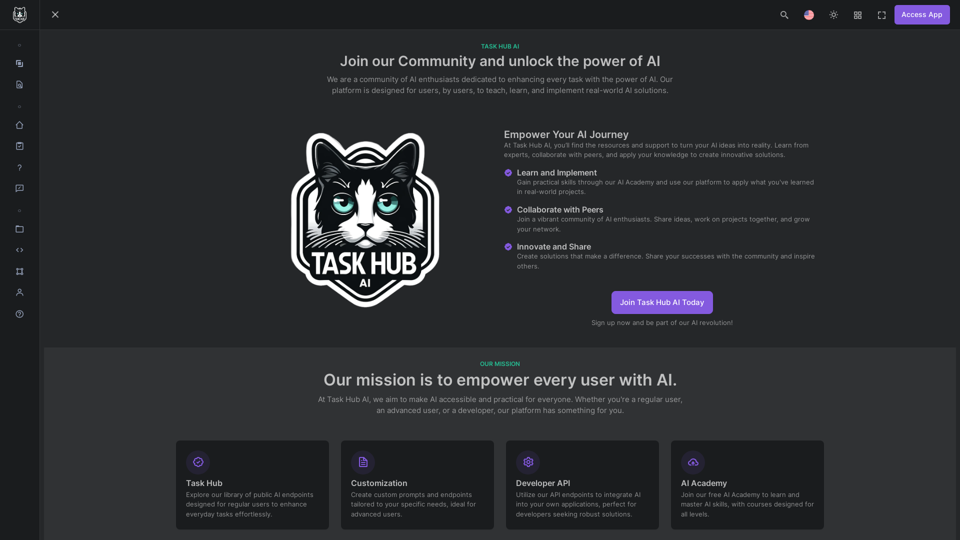
Unlock the power of AI with Task Hub AI. Learn from experts, collaborate with peers, and innovate with our AI community. Sign up now to turn your AI ideas into reality!
0