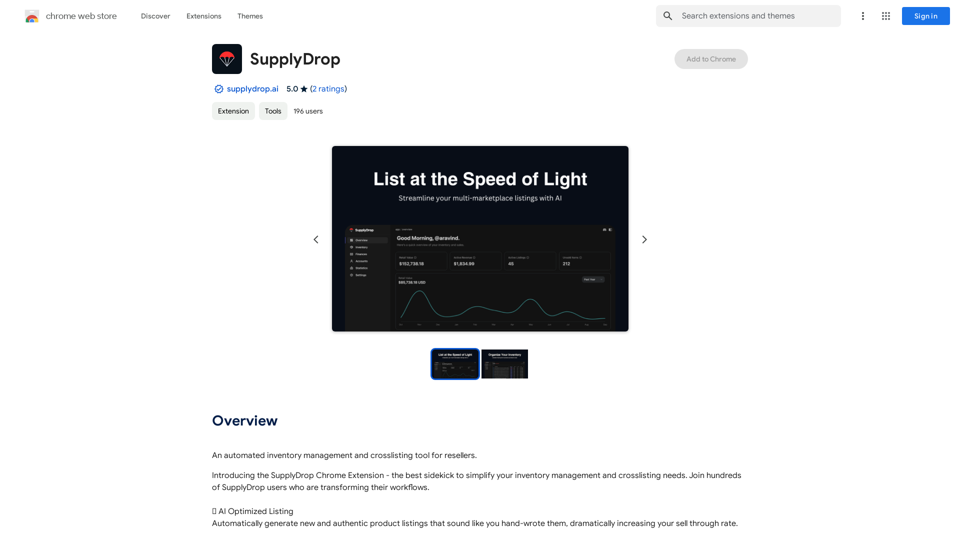
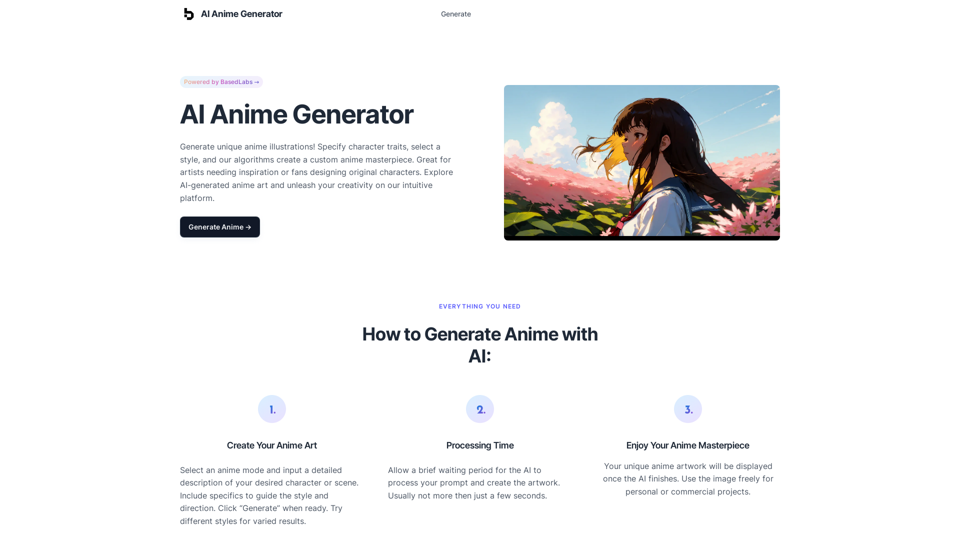
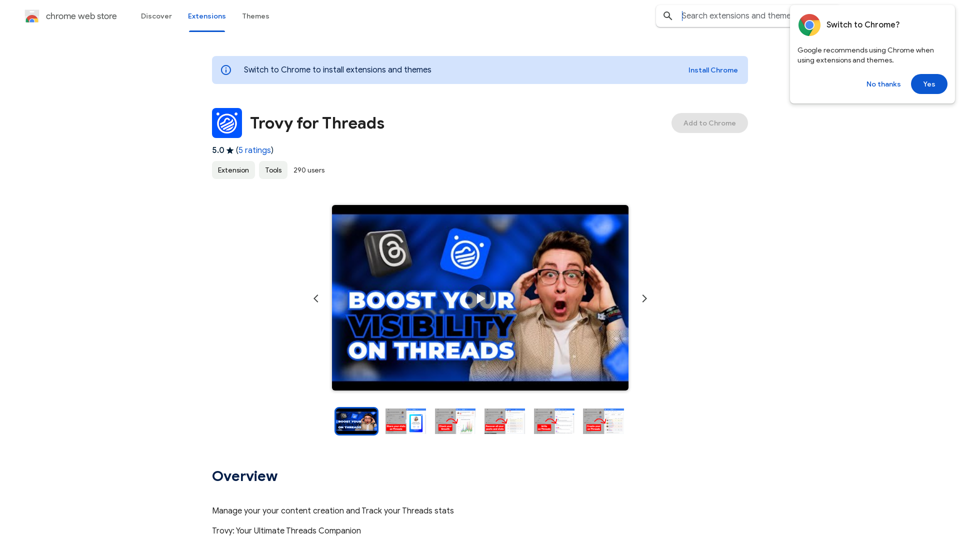
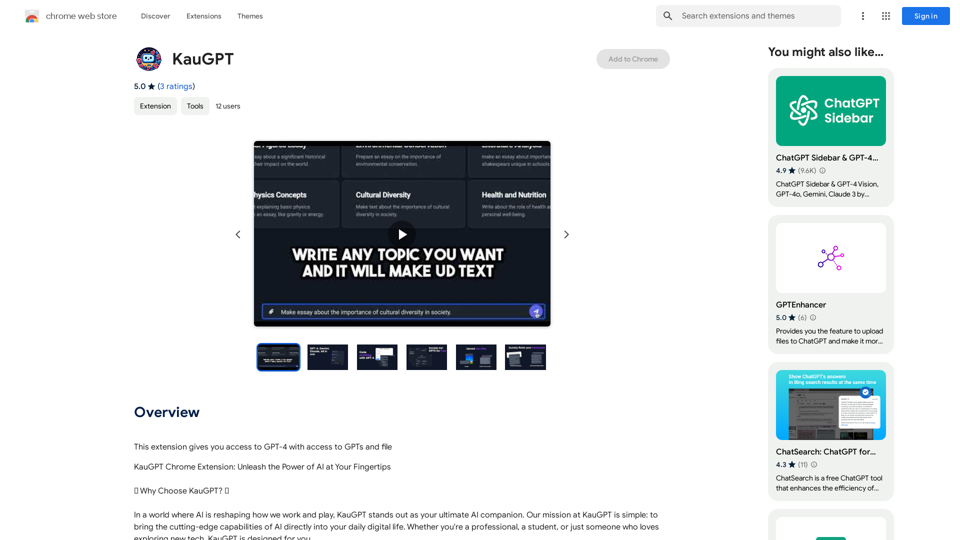
SupplyDrop is an innovative automated inventory management and crosslisting tool designed specifically for resellers. It streamlines workflows and boosts sell-through rates by leveraging AI technology. The platform's standout feature is its AI-optimized listing capability, which generates authentic-sounding product descriptions that appear hand-written, significantly enhancing the likelihood of successful sales.
SupplyDrop's AI technology automatically generates new and authentic product listings that sound as if they were hand-written. This feature dramatically increases sell-through rates by creating compelling, natural-sounding descriptions.
Crosslist Everywhere
With just a single click, users can automatically list their products on various second-hand marketplaces, including:
Marketplaces
Facebook Marketplace
eBay
Poshmark
Mercari
Shopify
And more...
Automatic Imports
SupplyDrop eliminates manual copying by automatically importing product details from users' favorite retailers, saving time and reducing errors in the listing process.
User-Friendly Interface
The platform offers a simple and intuitive interface, making it easy for users to generate product listings, crosslist items, and import product details efficiently.
SupplyDrop offers a free version with limited features. Additionally, there is a paid subscription option that provides extended access and additional benefits for users who require more advanced functionality.
Can I use SupplyDrop for my business?
Yes, SupplyDrop is specifically designed for resellers and businesses looking to streamline their inventory management and crosslisting processes. It caters to the needs of various business sizes and types within the reselling industry.
How do I get started with SupplyDrop?
Getting started with SupplyDrop is simple. Users can begin by downloading the Chrome extension and following the easy-to-use interface to set up their account and start utilizing the platform's features.
Comparing Similarity for nb.no Book and Image Search Results
Let's explore how to measure the similarity between:
* Book search results from nb.no (the Norwegian National Library)
* Image search results from various sources
This comparison can be valuable for understanding:
* How well visual representations match textual descriptions.
* Potential for using images to enhance book discovery.
* Developing new search functionalities that combine text and image data.
We can use various techniques to assess similarity, including:
* Textual Similarity: Analyzing the keywords, topics, and overall content of book descriptions and image captions.
* Visual Similarity: Comparing the visual features of images using algorithms like convolutional neural networks (CNNs).
* Hybrid Approaches: Combining textual and visual similarity measures for a more comprehensive evaluation.
By comparing similarity scores across different methods, we can gain insights into the strengths and weaknesses of each approach and identify the most effective way to connect books and images.
Slash Commands for ChatGPT and Bard
=====================================
Introduction
Slash commands are a convenient way to interact with ChatGPT and Bard, allowing you to perform various tasks and actions within the chat interface. This guide provides an overview of the available slash commands for both ChatGPT and Bard.
ChatGPT Slash Commands
#General Commands
* `/help`: Displays a list of available slash commands and their descriptions.
* `/reset`: Resets the conversation, clearing all previous messages and context.
#Conversation Management
* `/start`: Starts a new conversation, allowing you to begin a fresh topic or task.
* `/stop`: Ends the current conversation, stopping any ongoing tasks or topics.
#Language and Tone
* `/lang <language_code>`: Sets the language for the conversation (e.g., `/lang en` for English).
* `/tone <tone>`: Adjusts the tone of the responses (e.g., `/tone formal` for formal tone).
#Task Management
* `/task <task_name>`: Creates a new task or topic for the conversation (e.g., `/task math problem`).
* `/done`: Marks the current task as completed.
#Information and Resources
* `/define <word>`: Provides the definition of a word or phrase.
* `/wiki <topic>`: Displays information about a topic from Wikipedia.
Bard Slash Commands
#General Commands
* `/help`: Displays a list of available slash commands and their descriptions.
* `/reset`: Resets the conversation, clearing all previous messages and context.
#Conversation Management
* `/start`: Starts a new conversation, allowing you to begin a fresh topic or task.
* `/stop`: Ends the current conversation, stopping any ongoing tasks or topics.
#Language and Tone
* `/lang <language_code>`: Sets the language for the conversation (e.g., `/lang en` for English).
* `/tone <tone>`: Adjusts the tone of the responses (e.g., `/tone formal` for formal tone).
#Task Management
* `/task <task_name>`: Creates a new task or topic for the conversation (e.g., `/task math problem`).
* `/done`: Marks the current task as completed.
#Information and Resources
* `/define <word>`: Provides the definition of a word or phrase.
* `/wiki <topic>`: Displays information about a topic from Wikipedia.
* `/news <topic>`: Displays news articles related to a specific topic.
Conclusion
Slash commands provide a convenient way to interact with ChatGPT and Bard, allowing you to manage conversations, adjust language and tone, and access various resources. By mastering these commands, you can optimize your experience and get the most out of your interactions with these AI models.