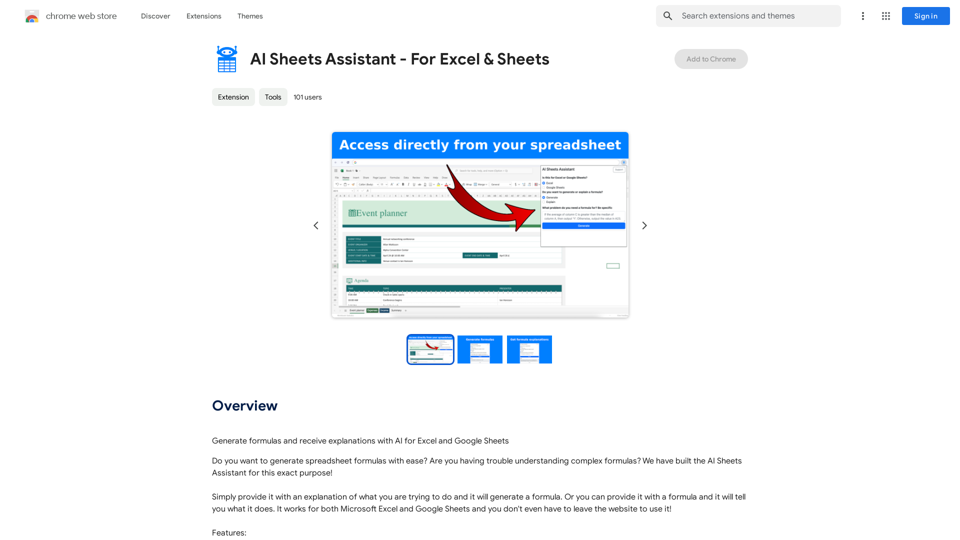
Plainly est une plateforme alimentée par l'IA qui révolutionne la création vidéo en automatisant le processus. Elle permet aux utilisateurs de produire des vidéos de haute qualité à grande échelle sans nécessiter une expertise approfondie en production vidéo. En utilisant des modèles préconçus et en connectant des sources de données, Plainly permet la génération et la distribution automatiques de milliers de vidéos uniques.
Facilement - Automatiser la création de vidéos
Plainly est un logiciel de automation vidéo simple à utiliser. Créez des workflows de création de vidéos automatisés et générez des milliers de vidéos en quelques clics.
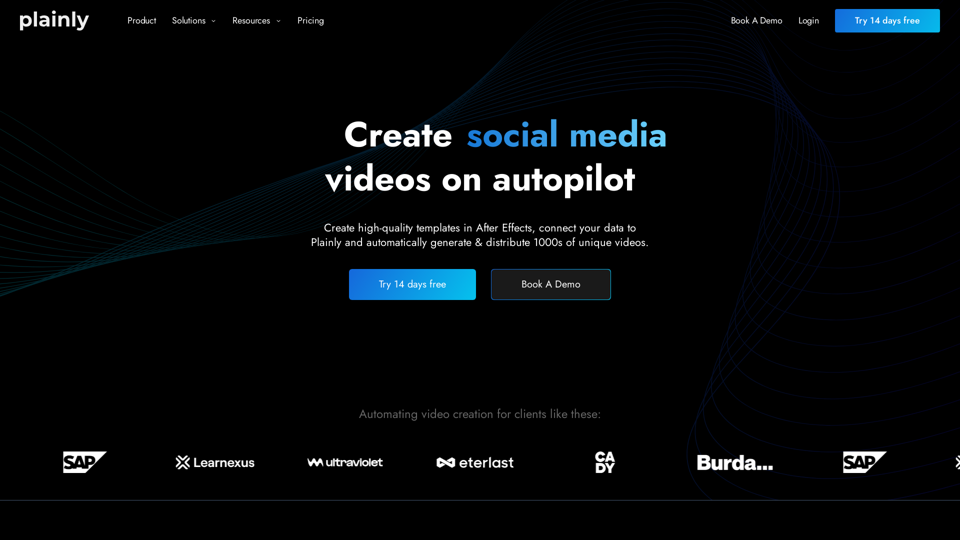
Introduction
Fonctionnalité
Créer des vidéos à partir de CSV
Plainly simplifie la création vidéo en permettant aux utilisateurs de générer des vidéos à partir de fichiers CSV, ce qui est idéal pour la production vidéo à grande échelle à partir de vastes ensembles de données.
Convertir des articles en vidéos
Les utilisateurs peuvent transformer du contenu textuel existant en vidéos engageantes, améliorant l'engagement des utilisateurs et les opportunités de monétisation.
API d'édition vidéo
Plainly offre une puissante API d'édition vidéo qui permet la création vidéo programmatique basée sur des modèles After Effects avec une configuration minimale.
Création de modèles et bibliothèque
Les utilisateurs peuvent créer des modèles personnalisés dans Adobe After Effects sans limitations. De plus, Plainly fournit une bibliothèque de modèles gratuits pour tous les utilisateurs.
Intégration flexible des données
Plainly prend en charge le rendu par lots à l'aide de sources de données statiques comme les fichiers CSV et le rendu à la demande via API ou des intégrations en un clic avec des outils tiers.
Rendu automatisé
Une fois configuré, Plainly insère automatiquement les données dans les modèles et effectue le rendu des vidéos, permettant aux utilisateurs de se concentrer sur d'autres tâches importantes.
Production vidéo à haut volume
La plateforme est conçue pour générer des milliers de vidéos uniques à grande échelle, la rendant adaptée aux entreprises ayant des besoins de production vidéo à haut volume.
Protection de la vie privée
Plainly donne la priorité à la confidentialité des utilisateurs et n'utilise pas les données des clients à des fins de formation. Les utilisateurs peuvent supprimer leur compte à tout moment, assurant une suppression complète des données.
FAQ
Qu'est-ce qu'un logiciel d'automatisation vidéo ?
Un logiciel d'automatisation vidéo vous permet de créer automatiquement plusieurs versions de la même vidéo, rationalisant le processus de production pour les projets vidéo à grande échelle.
En quoi le logiciel d'automatisation vidéo diffère-t-il des outils d'édition vidéo automatisés ?
Bien que parfois utilisés de manière interchangeable, le logiciel d'automatisation vidéo se concentre sur la création de plusieurs versions ou de vidéos personnalisées à grande échelle, tandis que les outils d'édition vidéo automatisés peuvent offrir des capacités d'édition plus générales.
Quelles sont les applications du logiciel d'automatisation vidéo ?
Le logiciel d'automatisation vidéo est principalement utilisé pour :
- Créer des vidéos personnalisées à grande échelle
- Générer des variations vidéo en masse
- Automatiser la production vidéo pour les campagnes marketing
Comment l'automatisation vidéo peut-elle améliorer les campagnes marketing personnalisées ?
Le logiciel d'automatisation vidéo peut :
- Incorporer automatiquement les données utilisateur dans des modèles préconçus
- Générer des vidéos personnalisées pour des spectateurs individuels
- Mettre à l'échelle efficacement le contenu vidéo personnalisé
Quand devrais-je envisager un abonnement Plainly ?
Envisagez un abonnement Plainly lorsque :
- Les limites d'utilisation gratuites ne répondent plus à vos besoins
- Vous avez besoin de fonctionnalités et d'avantages supplémentaires
- Vous avez besoin d'un accès étendu aux capacités de la plateforme
Plainly peut-il générer des images ?
Non, Plainly se concentre principalement sur la création vidéo et n'offre pas de capacités de génération d'images.
Comment puis-je maximiser mon utilisation de Plainly ?
Pour maximiser le potentiel de Plainly :
- Utilisez l'API d'édition vidéo pour la création vidéo automatisée
- Intégrez avec Google Sheets et d'autres sources de données
- Concentrez-vous sur la création de vidéos basées sur les données à grande échelle
- Exploitez la bibliothèque de modèles gratuits pour des styles vidéo variés
Sites web connexes
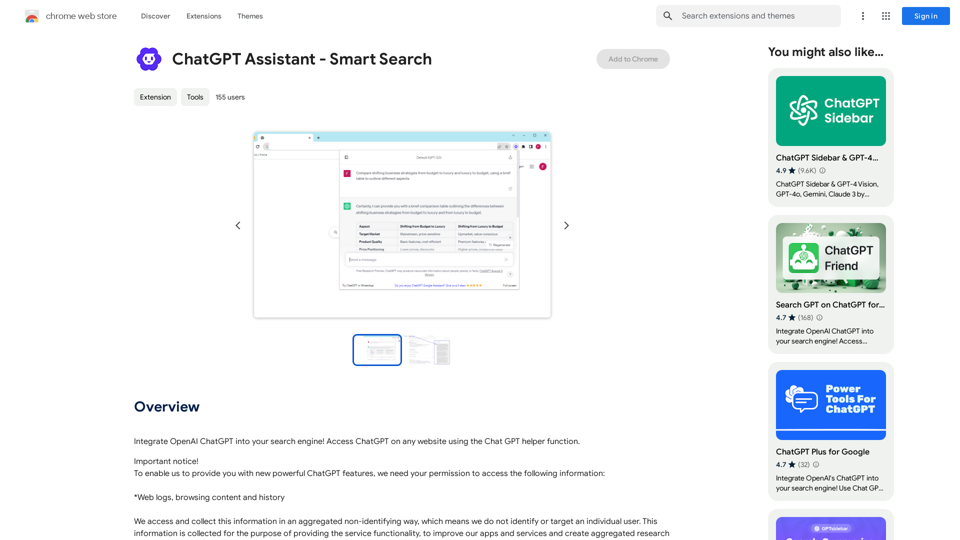
Intégrez OpenAI ChatGPT à votre moteur de recherche ! Accédez à ChatGPT sur n'importe quel site Web à l'aide de la fonction d'aide Chat GPT.
193.90 M
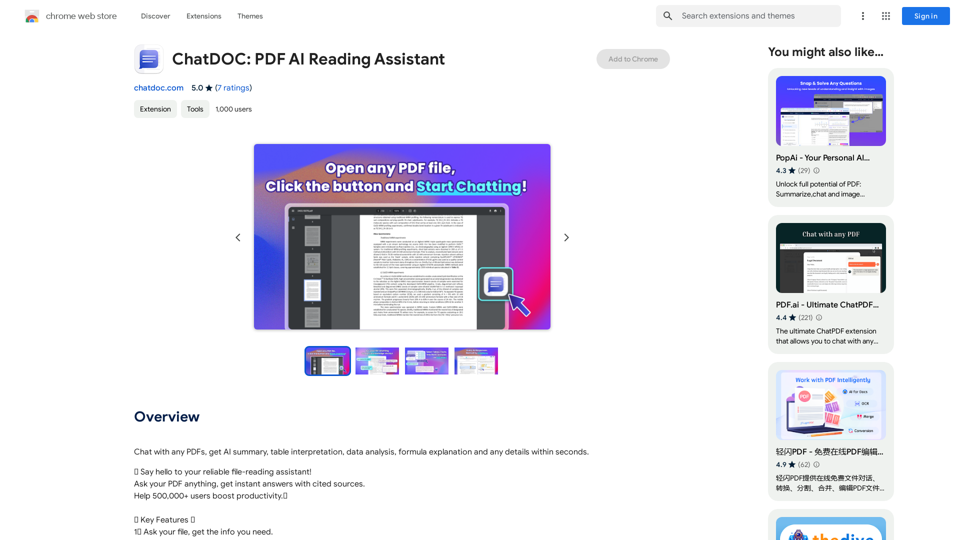
ChatDOC : Assistant de Lecture Intelligente de PDF
ChatDOC : Assistant de Lecture Intelligente de PDFDiscutez avec n'importe quels PDF, obtenez un résumé IA, interprétation de tableau, analyse de données, explication de formule et tous les détails en quelques secondes.
193.90 M
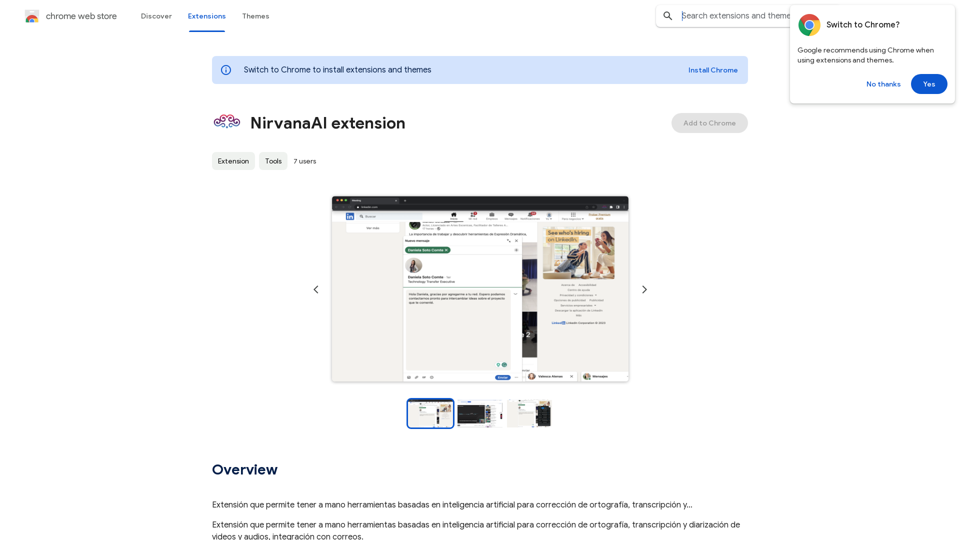
Extension qui permet d'avoir à portée de main des outils basés sur l'intelligence artificielle pour la correction d'orthographe, la transcription et...
193.90 M
Créez des applications personnalisées et obtenez des informations éclairées par l'IA pour décrocher votre emploi de rêve avec AIJobSaga.
0
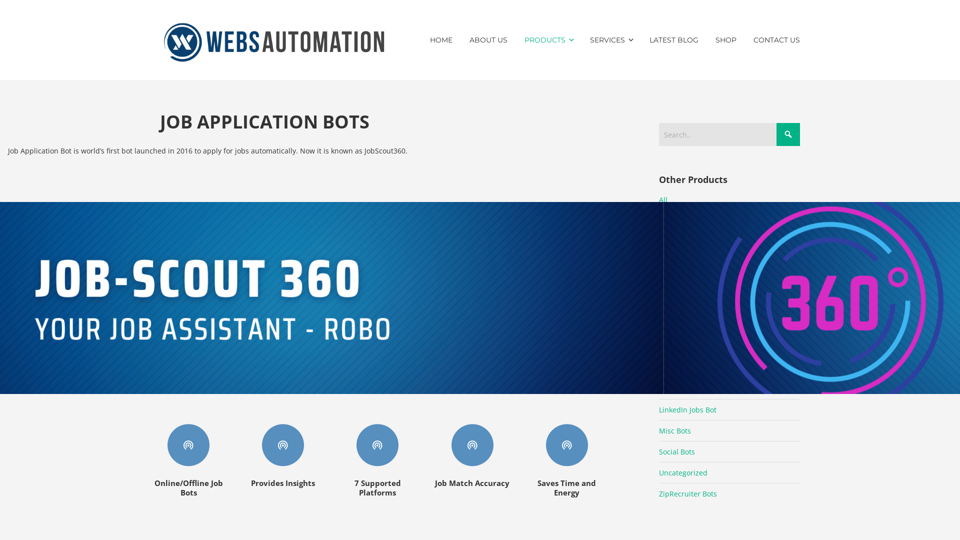
Meilleur bot de demande d'emploi d'IA 2024 | Webs-Automation
Meilleur bot de demande d'emploi d'IA 2024 | Webs-AutomationAméliorez votre recherche d'emploi avec le bot d'application d'emploi AI ultime ! Simplifiez le processus de candidature et améliorez vos perspectives avec notre bot d'application d'emploi de pointe.
2.69 K
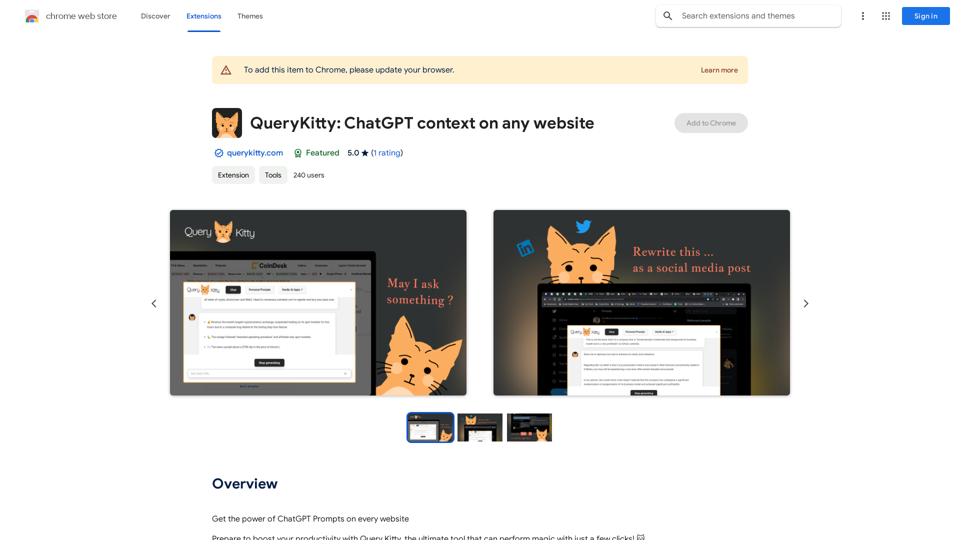
QueryKitty : Contexte ChatGPT sur n'importe quel site web
QueryKitty : Contexte ChatGPT sur n'importe quel site webObtenez le pouvoir des prompts de ChatGPT sur tout site web
193.90 M
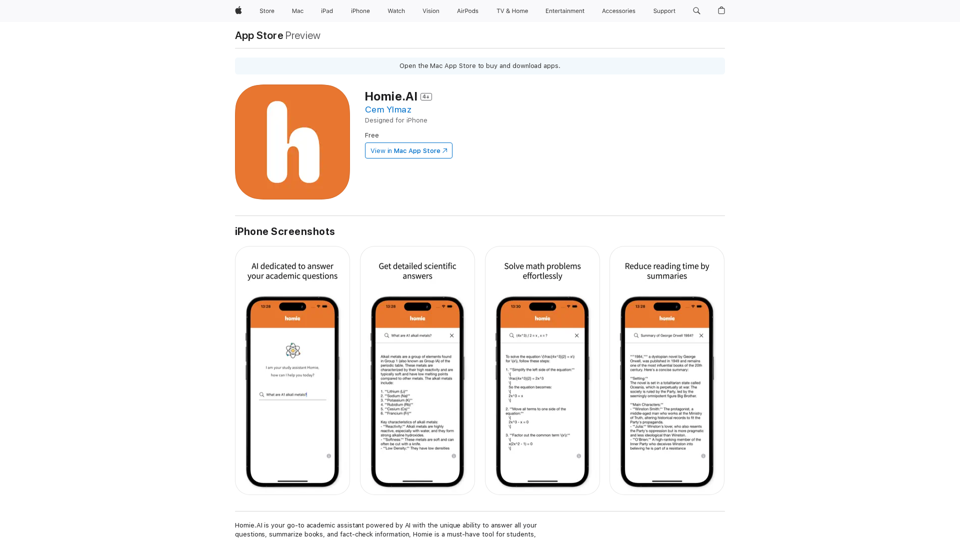
Homie.AI est votre assistant académique de référence alimenté par l'IA avec la capacité unique de répondre à toutes vos questions, de résumer des livres et de vérifier les informations, Homie…
124.77 M