AI Board (GPT Support) is a corporate-focused extension that leverages the ChatGPT API with enhanced security measures. It offers a secure and efficient platform for companies to harness the capabilities of ChatGPT while maintaining data protection and control. This tool is designed to streamline workflows, increase productivity, and ensure the safe utilization of AI technology within corporate environments.
AI Board (GPT Support)
This is a service that uses the general ChatGPT API with enhanced security for corporate use.
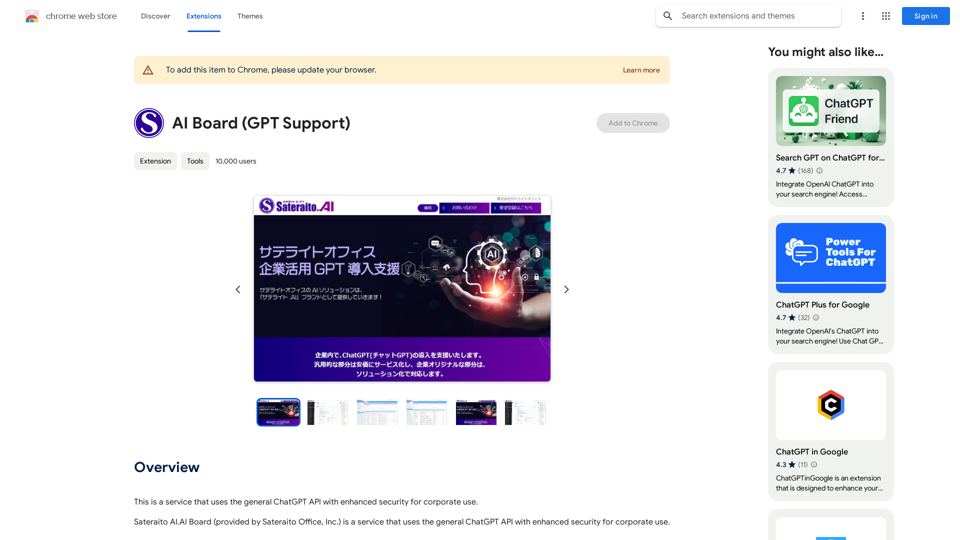
Introduction
Feature
Prompt Management
- Save personal or shared prompts for quick access
- Organize and categorize prompts for efficient use
Multi-Modal Interaction
- Ask and answer questions using voice commands
- Utilize right-click functionality in the browser for seamless integration
Versatile Output Formats
- Receive answers in tabular format for structured data
- Get responses in markdown for easy readability
- Obtain program format outputs for code-related queries
QA Logging and Analysis
- Save question-answer logs for future reference
- Track and analyze conversation history for insights
Security and Compliance
- Specify prohibited words to prevent sensitive information sharing
- Restrict employee access to maintain data control
- Mask personal information for enhanced privacy protection
Corporate-Focused Design
- Tailored for business use with separate administrator installation
- Customizable settings to align with company policies
FAQ
How do I start using AI Board (GPT Support)?
To begin using AI Board (GPT Support):
- Install the extension
- Follow the setup prompts to create your account
- Configure settings according to your company's requirements
- Start utilizing the features for asking questions and managing prompts
Is AI Board (GPT Support) available for individual use?
AI Board (GPT Support) is primarily designed for corporate use. It requires a separate administrator installation and is not intended for individual consumers. For pricing and availability, contact Sateraito Office Inc. directly.
How does AI Board (GPT Support) enhance security?
AI Board (GPT Support) enhances security through:
- Prohibited word specifications
- Employee access restrictions
- Personal information masking
- Secure API integration with ChatGPT
These features ensure that sensitive corporate data remains protected while leveraging AI capabilities.
Related Websites

LearnHouse - The modern Open source learning platform for everyone.
LearnHouse - The modern Open source learning platform for everyone.LearnHouse is an open source platform that makes it easy for anyone to provide world-class educational content and it offers a variety of content types : Dynamic Pages, Videos, Documents & more.
12
Experience our AI-Powered Amazon Listing Optimizer for e-commerce success. Maximize sales potential with optimized product listings.
193.90 M
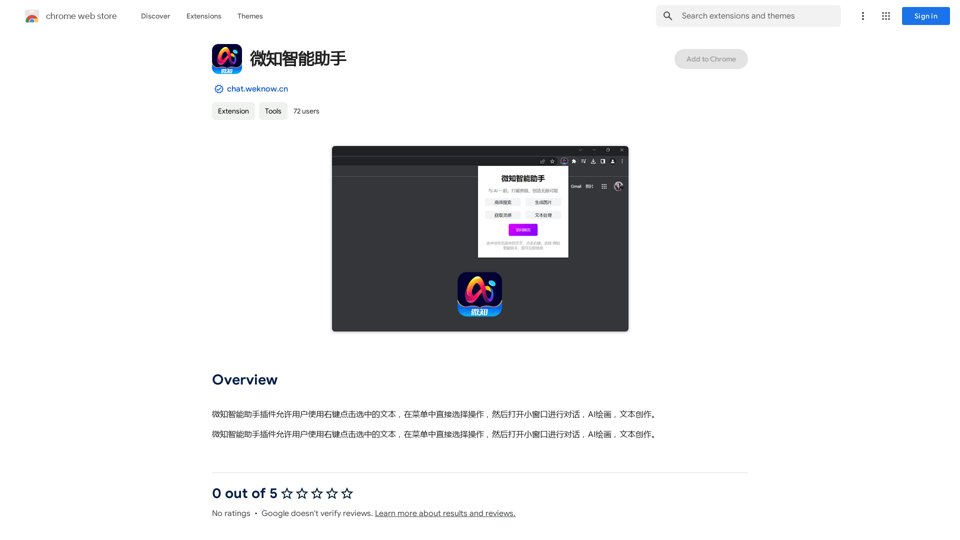
The Wechat Intelligent Assistant plugin allows users to right-click on selected text, choose an operation from the menu, and then open a small window for conversation, AI drawing, and text creation.
193.90 M
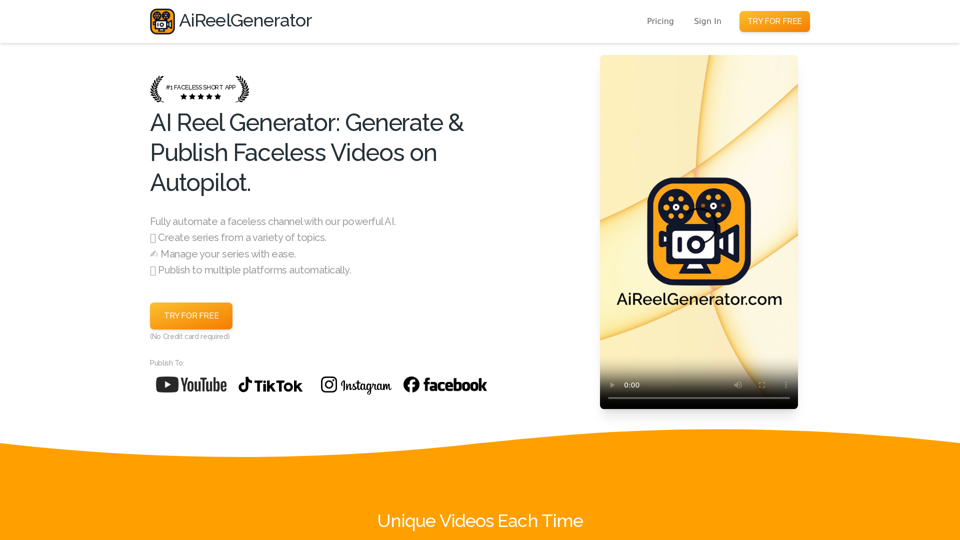
AiReelGenerator.com | Faceless Videos on Autopilot.
AiReelGenerator.com | Faceless Videos on Autopilot.Discover AiReelGenerator, the newest app that automatically makes videos without faces. Just pick a subject, and our AI will make and upload fresh videos to your YouTube, TikTok, Instagram, or Facebook account every day.
196
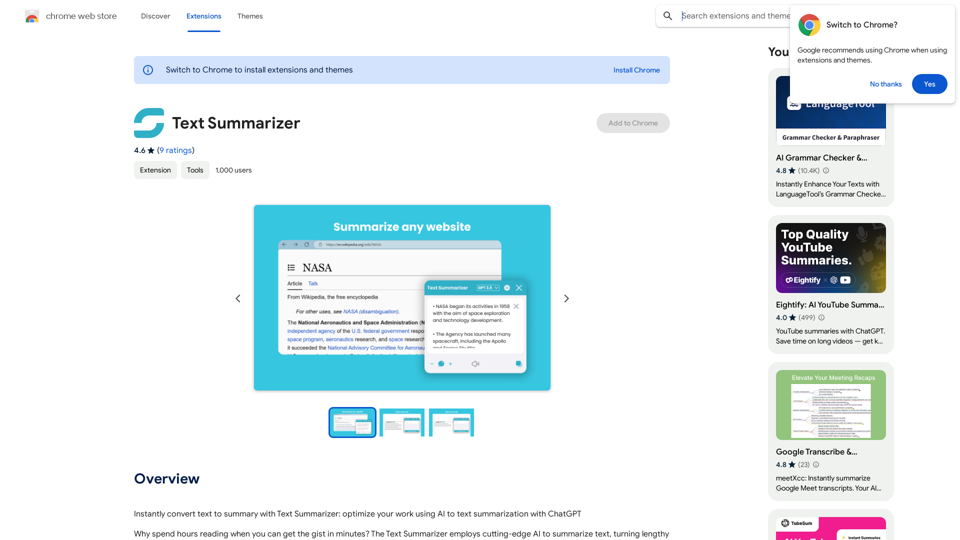
Text Summarizer This is a tool that can condense large amounts of text into shorter, more manageable summaries.
Text Summarizer This is a tool that can condense large amounts of text into shorter, more manageable summaries.Instantly summarize text with Text Summarizer: optimize your work using AI-powered text summarization with ChatGPT.
193.90 M