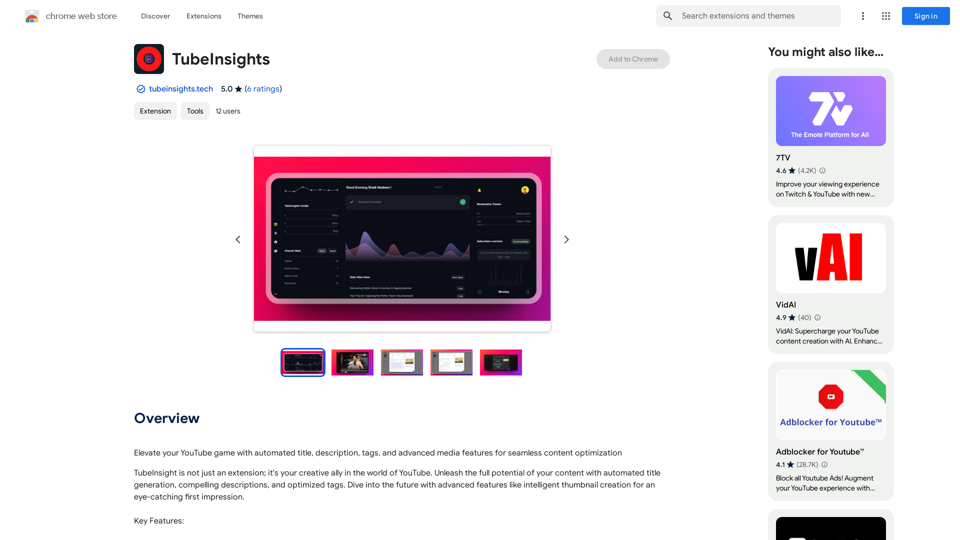
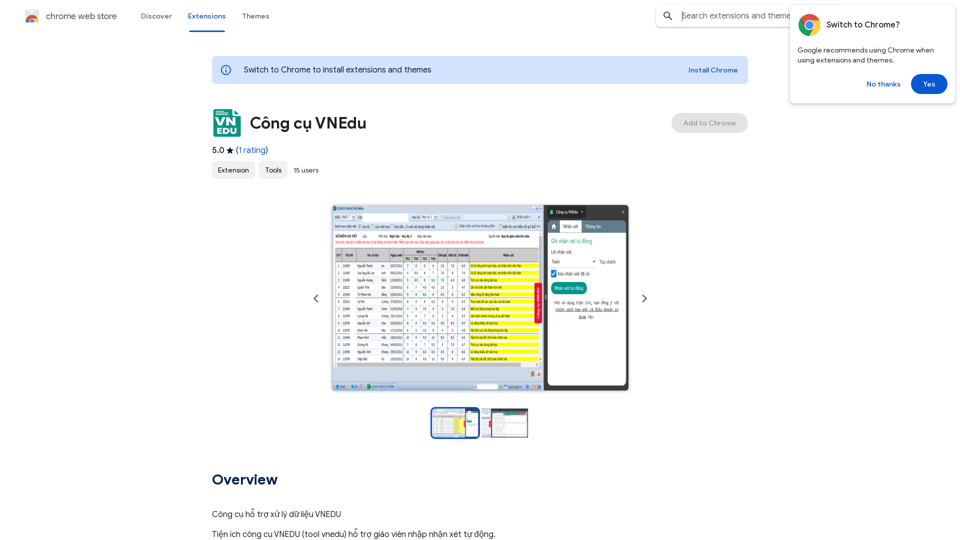
The Chrome Web Store is Google's digital distribution platform for Chrome browser extensions, themes, and apps. It offers a vast selection of tools to enhance browsing, boost productivity, and add functionality. Users can easily discover, download, and install these additions to customize their Chrome experience.
Chrome Web Store
Add new features to your browser and personalize your browsing experience.
Introduction
Feature
Wide Range of Extensions and Themes
- Diverse selection catering to various needs and interests
- Productivity tools, entertainment apps, and more
- Something for every user's preference
Easy Discovery and Installation
- User-friendly interface for browsing and searching
- Categories for easy navigation
- Reviews and ratings to guide selection
- Simple installation process with just a few clicks
Developer-Friendly Platform
- APIs and tools for developers to create extensions and themes
- Opportunity to publish and distribute creations
- Support for high-quality, user-focused development
Pricing Options
- Many free extensions and themes available
- Some premium options with subscription or one-time payment
- Diverse pricing to suit different user needs
Security and Updates
- Regular updates for browser and extensions
- Security patches to protect users
- Importance of keeping everything up-to-date
FAQ
How do I use the Chrome Web Store?
- Open Chrome browser
- Navigate to the Chrome Web Store
- Browse categories or search for specific items
- Read reviews and ratings
- Click "Add to Chrome" to install
- Follow prompts to complete installation
How can I uninstall an extension or theme?
To uninstall:
- Go to Chrome settings page
- Click on "Extensions"
- Click "Remove" button next to the item you want to uninstall
How do I report a problem with an extension or theme?
To report a problem:
- Go to Chrome settings page
- Click on "Extensions"
- Click "Report" button next to the problematic item
Where can I get help with an extension or theme?
For help:
- Go to the Chrome support page
- Click on "Extensions and themes"
- Find answers to common questions and troubleshooting tips
Related Websites
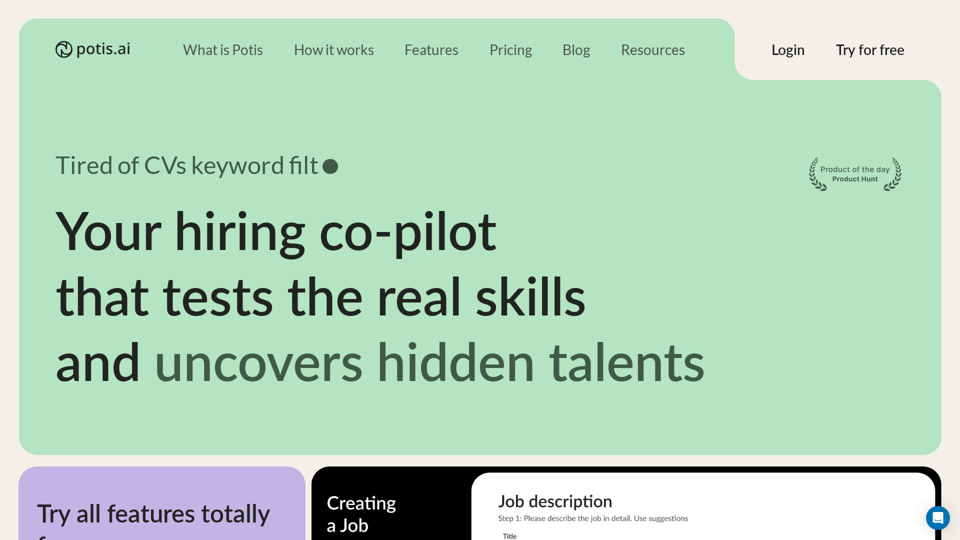
Hiring Copilot for Clean and Fast Bulk Candidates Screening with Behavioral Interview and Real Cases
6.63 K
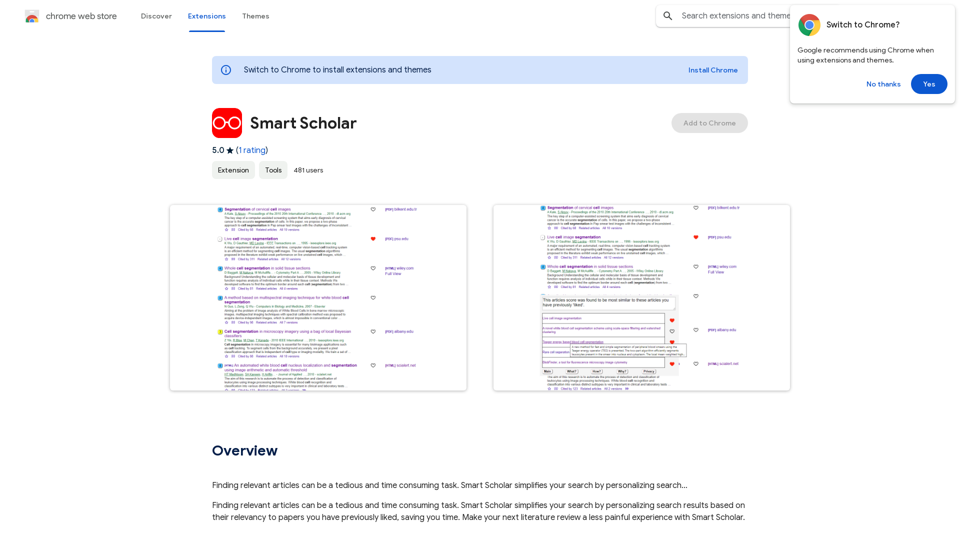
Finding relevant articles can be a tedious and time-consuming task. Smart Scholar simplifies your search by personalizing search results based on your interests and preferences.
193.90 M
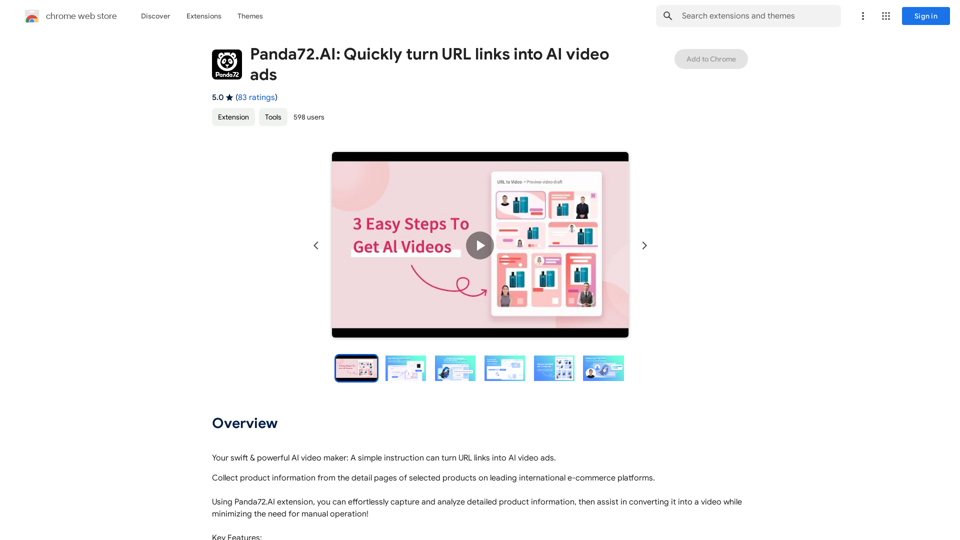
Panda72.AI: Quickly turn URL links into AI video ads
Panda72.AI: Quickly turn URL links into AI video adsYour swift & powerful AI video maker: A simple instruction can turn URL links into AI video ads.
193.90 M
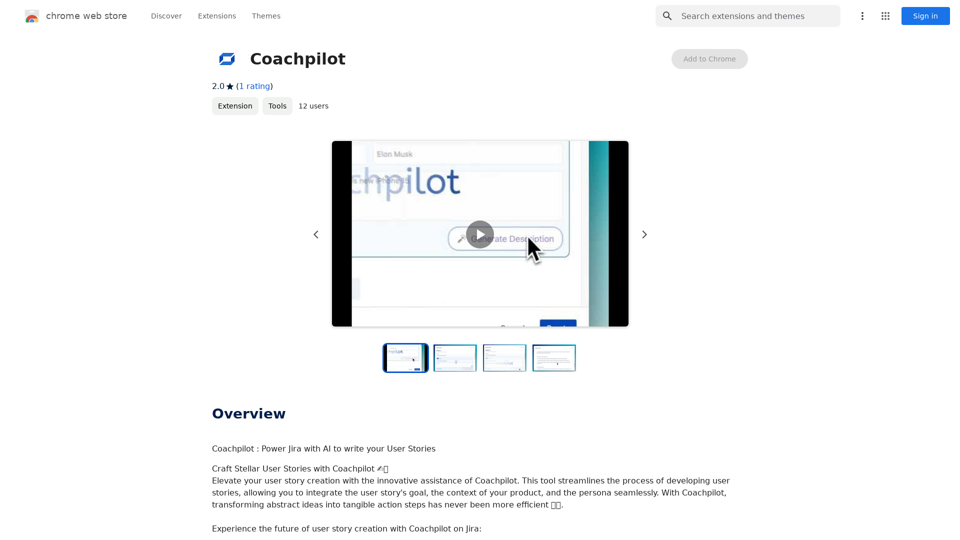
Coachpilot: Use AI to Write User Stories in Jira Coachpilot helps you write better user stories in Jira using the power of artificial intelligence.
193.90 M
⭐ Your AI work assistant can answer any work questions you have. It integrates with collaborative work, work message notifications, to optimize your workflow and boost your productivity. ⭐ How to install Simply go to the Chrome Web Store, search for the extension, and click "Add to Chrome." Once installed, the extension will be available in your toolbar for easy access.
193.90 M
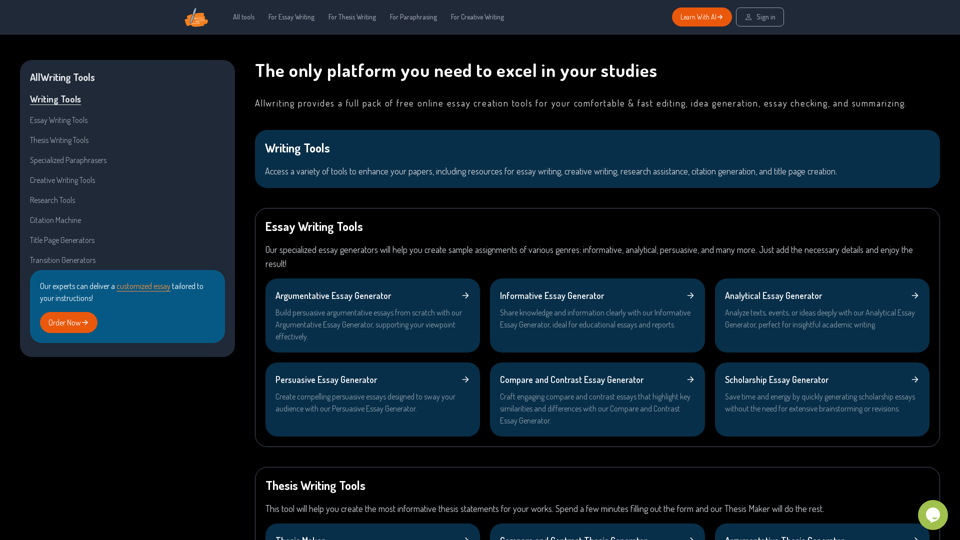
The Only Platform You Need to Excel in Your Studies | AllWriting
The Only Platform You Need to Excel in Your Studies | AllWritingAllwriting provides a full pack of free online essay creation tools for your comfortable & fast editing, idea generation, essay checking, and summarizing.
638