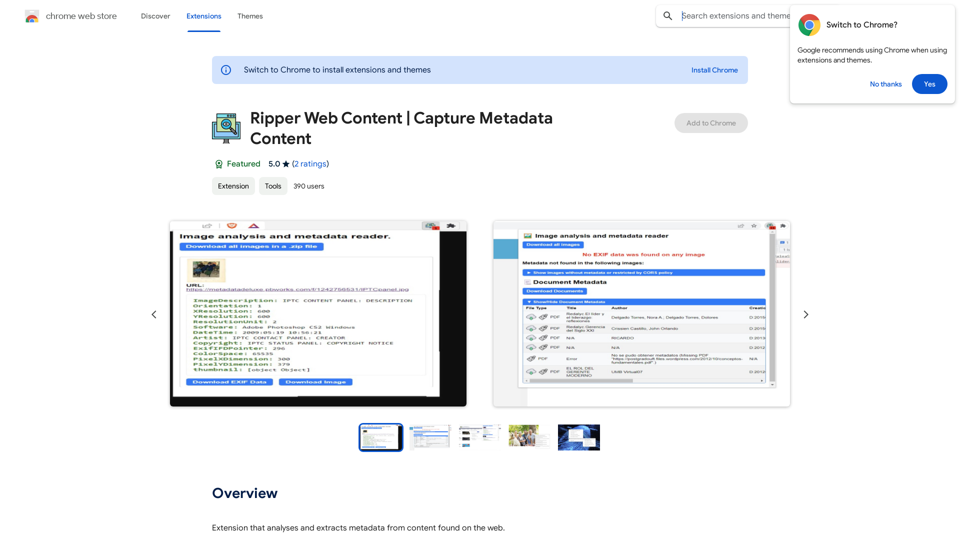
Ripper Web Content is an AI-powered platform designed for comprehensive web content analysis. It specializes in image and document processing, offering features like metadata extraction, reverse image search, and face detection. This versatile tool caters to various needs, from digital forensics to OSINT (Open Source Intelligence) applications, making it valuable for both casual users and professionals in investigative fields.
Ripper Web Content | Capture Metadata Content
Extension that analyzes and extracts metadata from content found on the web.
Introduction
Feature
Image Analysis and Metadata Extraction
- Extract and download detailed image metadata
- Perform reverse image searches using Google Lens and TinEye
- Analyze images with FotoForensics for deeper insights
Advanced Face Detection
- Detect the number of people in photos
- Identify gender, age, and mood of individuals in images
Document Processing
- Scan various document formats (.pdf, .docx, .pptx, .xlsx)
- Extract metadata from documents
- Fast document downloading capabilities
Efficient Image Handling
- Rapid image download functionality
- Comprehensive image analysis tools
OSINT and Digital Forensics Support
- Valuable features for investigative work and open-source intelligence gathering
- Reverse lookup capabilities for enhanced research
Accessibility
- Available as a free Chrome extension
- Premium subscription option for extended access and additional benefits
FAQ
What types of files can Ripper Web Content analyze?
Ripper Web Content can analyze various file types including:
- Images (for metadata extraction and face detection)
- Documents (.pdf, .docx, .pptx, .xlsx)
Is Ripper Web Content suitable for professional use?
Yes, Ripper Web Content is suitable for professional use, especially in:
- Digital forensics
- Investigative environments
- OSINT (Open Source Intelligence) applications
Are there any usage limits for the free version?
While the basic extension is free, there are usage limits. Premium subscribers get access to:
- Extended features
- Increased usage limits
- Additional benefits beyond the free version
How can I maximize the use of Ripper Web Content?
To get the most out of Ripper Web Content:
- Use it for analyzing and extracting metadata from web content
- Utilize the reverse image search for finding similar images online
- Leverage face detection for detailed photo analysis
- Explore both free and premium features to suit your needs
Related Websites
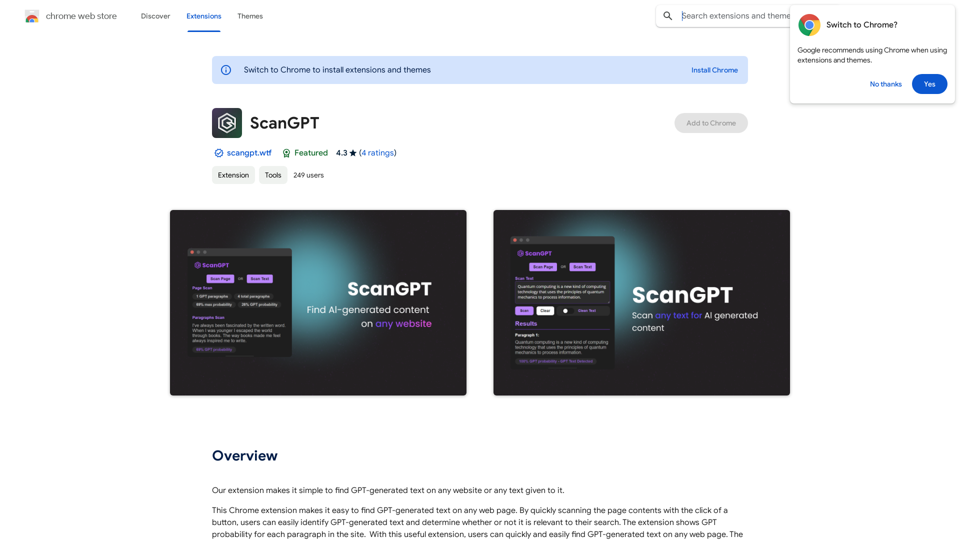
Our extension makes it simple to find GPT-generated text on any website or any text given to it.
193.90 M
Luxi.ai uses advanced image recognition technology to easily identify objects in uploaded images. Discover the items in your photos with precision and ease.
1.73 K
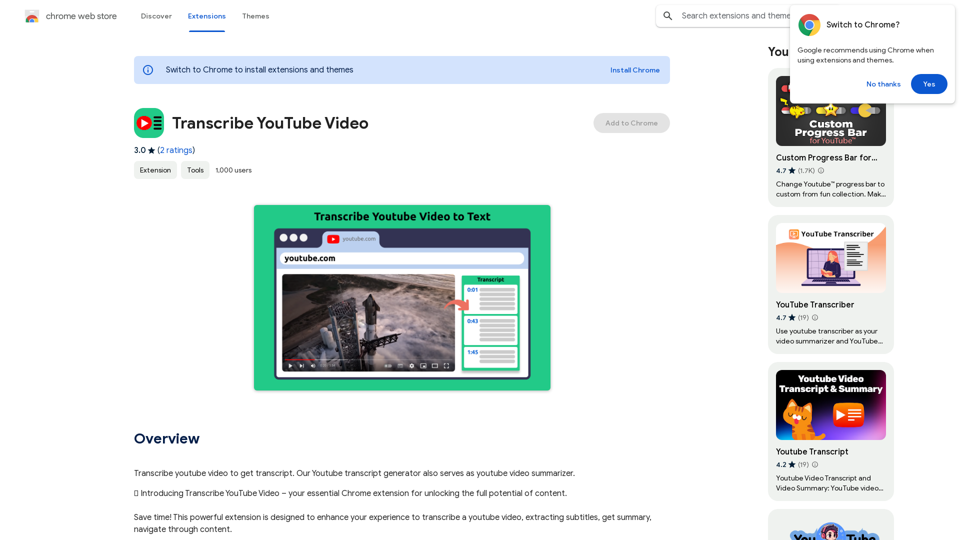
Please provide me with the YouTube video link so I can transcribe it for you.
Please provide me with the YouTube video link so I can transcribe it for you.Transcribe a YouTube video to get a transcript. Our YouTube transcript generator also acts as a YouTube video summarizer.
193.90 M
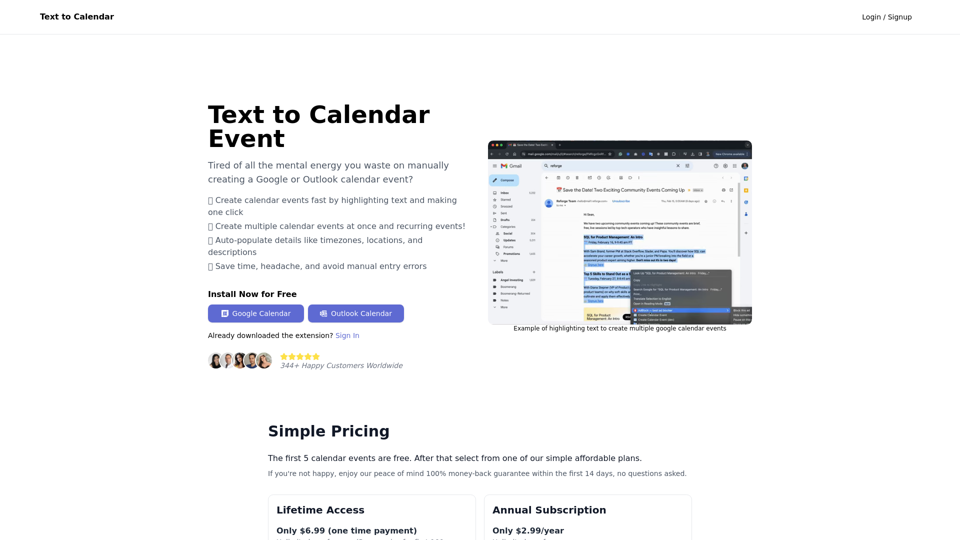
Text to Calendar Convert text into a calendar format, making it easy to organize and schedule events.
Text to Calendar Convert text into a calendar format, making it easy to organize and schedule events.Easily create calendar events from any piece of highlighted text
4.65 K
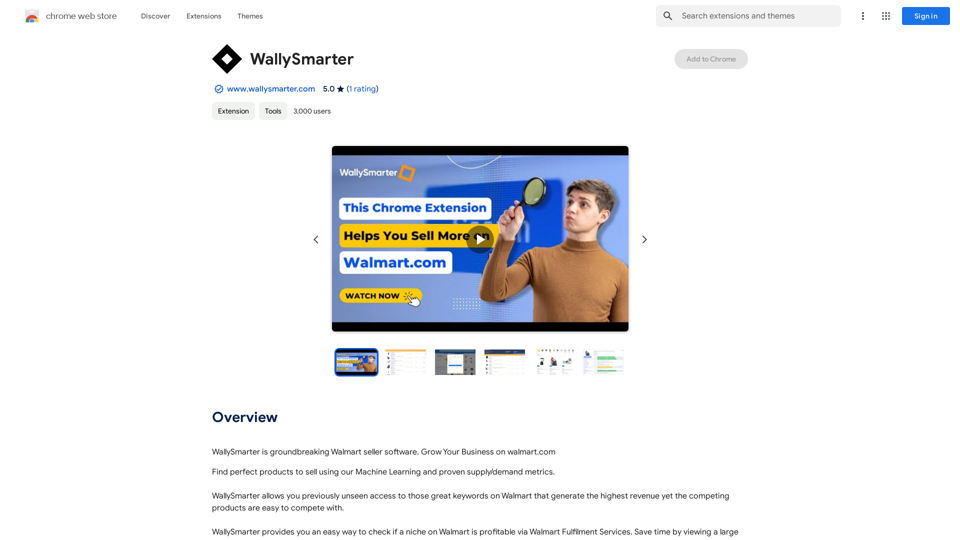
WallySmarter is groundbreaking software for selling on Walmart. Grow your business on walmart.com.
193.90 M
![AIScraper
This is a Python library for scraping data from websites that use the Amazon Interactive Search (AIS) API.
Features:
* Easy to use: Simply provide a search query and the library will return a list of product results.
* Flexible: You can customize your scraping by specifying filters, such as price range, brand, and category.
* Efficient: The library uses asynchronous requests to speed up the scraping process.
* Reliable: The library is designed to handle rate limits and other website restrictions.
Installation:
```bash
pip install aiscraper
```
Usage:
```python
from aiscraper import AIScraper
Create an instance of the AIScraper class
scraper = AIScraper()
Perform a search for "laptops"
results = scraper.search("laptops")
Print the product titles
for result in results:
print(result["title"])
```
Documentation:
https://github.com/aiscraper/aiscraper](https://static.right-ai.com/tools/2024/7/4/chromewebstore-google-com-detail-aiscraper-mfjniiodgjhlmleaakofgijfccdgppbc-thumbnail-1720072105.png "AIScraper
This is a Python library for scraping data from websites that use the Amazon Interactive Search (AIS) API.
Features:
* Easy to use: Simply provide a search query and the library will return a list of product results.
* Flexible: You can customize your scraping by specifying filters, such as price range, brand, and category.
* Efficient: The library uses asynchronous requests to speed up the scraping process.
* Reliable: The library is designed to handle rate limits and other website restrictions.
Installation:
```bash
pip install aiscraper
```
Usage:
```python
from aiscraper import AIScraper
Create an instance of the AIScraper class
scraper = AIScraper()
Perform a search for \"laptops\"
results = scraper.search(\"laptops\")
Print the product titles
for result in results:
print(result[\"title\"])
```
Documentation:
https://github.com/aiscraper/aiscraper")
AIScraper This is a Python library for scraping data from websites that use the Amazon Interactive Search (AIS) API. Features: * Easy to use: Simply provide a search query and the library will return a list of product results. * Flexible: You can customize your scraping by specifying filters, such as price range, brand, and category. * Efficient: The library uses asynchronous requests to speed up the scraping process. * Reliable: The library is designed to handle rate limits and other website restrictions. Installation: ```bash pip install aiscraper ``` Usage: ```python from aiscraper import AIScraper Create an instance of the AIScraper class scraper = AIScraper() Perform a search for "laptops" results = scraper.search("laptops") Print the product titles for result in results: print(result["title"]) ``` Documentation: https://github.com/aiscraper/aiscraper
AIScraper This is a Python library for scraping data from websites that use the Amazon Interactive Search (AIS) API. Features: * Easy to use: Simply provide a search query and the library will return a list of product results. * Flexible: You can customize your scraping by specifying filters, such as price range, brand, and category. * Efficient: The library uses asynchronous requests to speed up the scraping process. * Reliable: The library is designed to handle rate limits and other website restrictions. Installation: ```bash pip install aiscraper ``` Usage: ```python from aiscraper import AIScraper Create an instance of the AIScraper class scraper = AIScraper() Perform a search for "laptops" results = scraper.search("laptops") Print the product titles for result in results: print(result["title"]) ``` Documentation: https://github.com/aiscraper/aiscraperWeb scraper, powered by AI! Collect structured data from web pages in just a few clicks! What's new 🔹Simplified data collection…
193.90 M