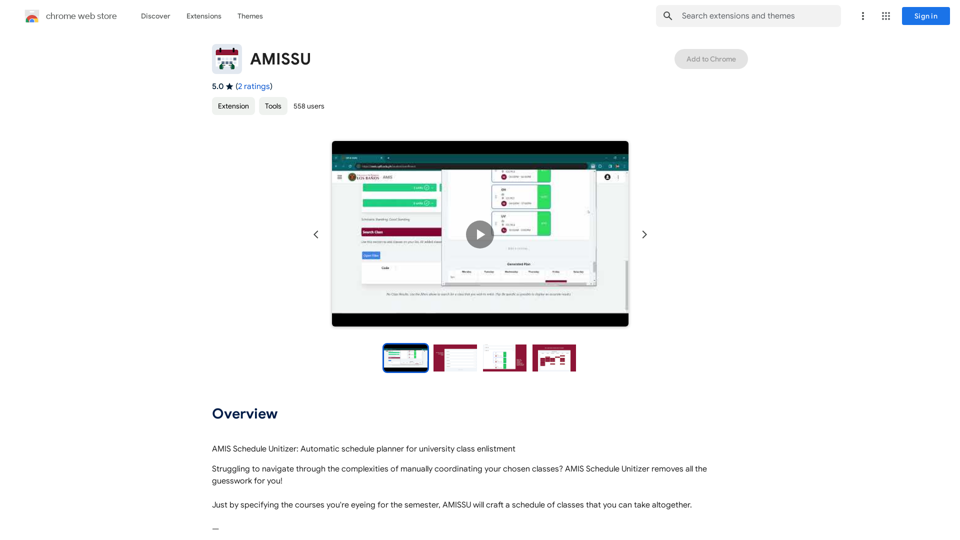
AMIS Schedule Unitizer ist eine KI-gestützte Plattform, die für Studenten der University of the Philippines Los Baños (UPLB) entwickelt wurde. Sie vereinfacht den komplexen Prozess der Koordinierung von Stundenplänen, indem sie automatisch einen kompatiblen Zeitplan basierend auf den vom Studenten ausgewählten Kursen erstellt. Diese kostenlose Chrome-Erweiterung ist exklusiv für Benutzer des UPLB Academic Management Information System zugeschnitten und bietet eine zeitsparende und benutzerfreundliche Lösung für die akademische Planung.
AMISSU
AMIS Zeitplan-Einheitler: Automatischer Zeitplan-Planer für die Einschreibung in Universitätskurse
Einführung
Funktion
Automatische Stundenplanerstellung
AMIS Schedule Unitizer eliminiert Rätselraten, indem es automatisch einen zusammenhängenden Stundenplan basierend auf den vom Studenten angegebenen Kursen erstellt.
UPLB-spezifisches Design
Die Plattform ist exklusiv für UPLB-Studenten zugeschnitten und integriert sich nahtlos in das Academic Management Information System der Universität.
Benutzerfreundliche Oberfläche
Mit einem einfachen Eingabeprozess können Studenten leicht ihre gewünschten Kurse angeben und einen optimierten Zeitplan erhalten, was es auch für technisch nicht versierte Personen zugänglich macht.
Zeiteffiziente Planung
Durch die Automatisierung des Stundenplanerstellungsprozesses spart AMIS Schedule Unitizer den Studenten erheblich Zeit und Mühe bei der akademischen Planung.
Kostenlose Zugänglichkeit
AMIS Schedule Unitizer ist als kostenlose Erweiterung im Chrome Web Store verfügbar und für alle UPLB-Studenten ohne Kosten zugänglich.
Häufig gestellte Fragen
Was ist AMIS Schedule Unitizer?
AMIS Schedule Unitizer ist eine KI-gesteuerte Plattform, die UPLB-Studenten hilft, automatisch kompatible Stundenpläne basierend auf ihren ausgewählten Kursen für das Semester zu erstellen.
Wie benutze ich AMIS Schedule Unitizer?
Um AMIS Schedule Unitizer zu nutzen, geben Sie einfach die Kurse an, die Sie im Semester belegen möchten. Die Plattform erstellt dann einen Stundenplan mit Kursen, die Sie alle zusammen belegen können.
Ist AMIS Schedule Unitizer exklusiv für UPLB-Studenten?
Ja, AMIS Schedule Unitizer ist ausschließlich für Benutzer des UPLB Academic Management Information System zugeschnitten, derzeit die Studenten der University of the Philippines Los Baños.
Wie viel kostet AMIS Schedule Unitizer?
AMIS Schedule Unitizer ist eine kostenlose Erweiterung, die im Chrome Web Store zum Download verfügbar ist.
Was sind einige hilfreiche Tipps für die Nutzung von AMIS Schedule Unitizer?
Stellen Sie sicher, dass Sie Ihre gewünschten Kurse genau angeben, um die besten Ergebnisse zu erhalten. Es wird auch empfohlen, AMIS Schedule Unitizer regelmäßig zu nutzen, um Ihren Zeitplan im Auge zu behalten und Konflikte zu vermeiden.
Verwandte Webseiten
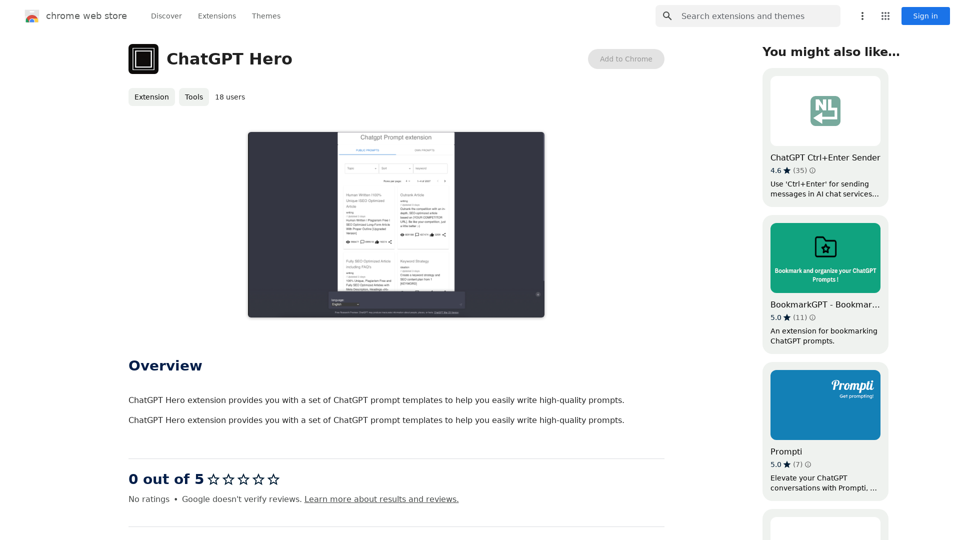
Die ChatGPT Hero Erweiterung bietet Ihnen eine Reihe von ChatGPT-Prompt-Vorlagen, mit denen Sie einfach hochwertige Prompts erstellen können.
193.90 M
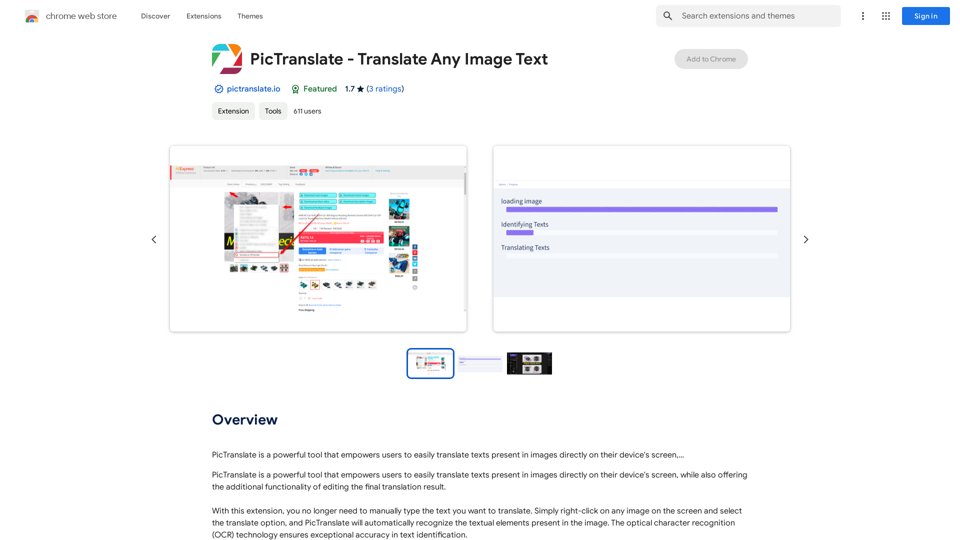
PicTranslate ist ein leistungsfähiges Werkzeug, das Benutzern ermöglicht, Texte in Bildern direkt auf dem Bildschirm ihres Geräts leicht zu übersetzen,…
193.90 M
AI-Aufsatzschreiber & Kostenlose KI-Schreibwerkzeuge | Aufsatzgenerator
AI-Aufsatzschreiber & Kostenlose KI-Schreibwerkzeuge | AufsatzgeneratorVerbessern Sie Ihre Aufsatzschreibfähigkeiten mit unserem KI-Aufsatzschreiber. Beginnen Sie noch heute mit der Erstellung von Aufsätzen mithilfe unserer KI-Aufsatzschreibwerkzeuge | Keine Anmeldung erforderlich
121.36 K
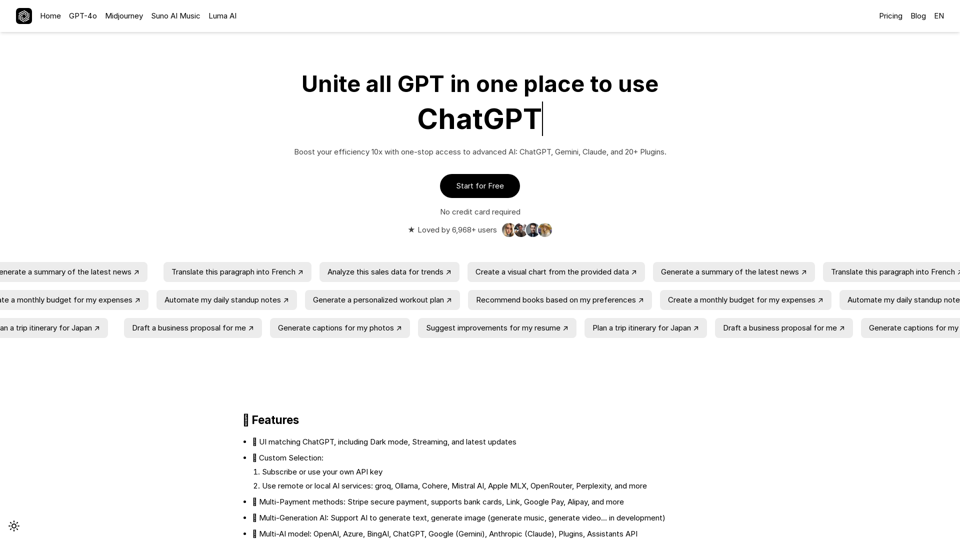
UniGPT Ein universelles Sprachmodell, das für verschiedene Aufgaben trainiert wurde, wie z.B. Textgenerierung, Fragebeantwortung und Textklassifizierung.
UniGPT Ein universelles Sprachmodell, das für verschiedene Aufgaben trainiert wurde, wie z.B. Textgenerierung, Fragebeantwortung und Textklassifizierung.UniGPT ist eine Plattform, die alle GPTs an einem Ort vereint und Zugang zu fortschrittlichen KI-Technologien bietet.
0