Lead Sniffer - Econodata is an AI-powered platform designed to revolutionize sales prospecting. It provides sales teams with strategic company information, helping them identify the best markets and generate accurate leads. The platform leverages big data and AI technologies to offer real-time, relevant information about potential prospects, streamlining the sales process and boosting efficiency.
Lead Prospector - Econodata
Browse the web and count on Econodog, our artificial intelligence, to sniff out the best markets and the right leads.
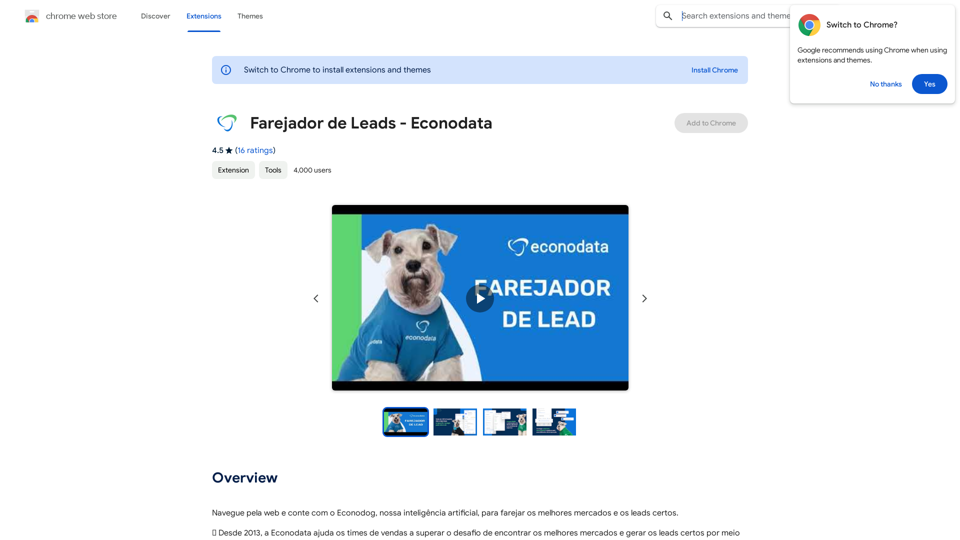
Introduction
Feature
Chrome Extension for Easy Access
Lead Sniffer - Econodata offers a Chrome extension that allows users to visualize company information while browsing the internet, providing seamless integration into the user's workflow.
Real-Time Information Updates
The platform provides 24/7 access to up-to-date company information, ensuring that sales teams always have the most current data at their fingertips.
Efficient Prospecting Process
By focusing on information that truly matters, Lead Sniffer - Econodata makes the prospecting process more efficient, allowing sales teams to work smarter, not harder.
AI-Driven Lead Generation
Utilizing advanced AI technologies, the platform helps users find the best markets and generate accurate leads, improving the overall quality of sales prospects.
Flexible Pricing Options
Lead Sniffer - Econodata offers both a free version and a paid version with additional features, making it an affordable solution for sales teams of all sizes.
FAQ
How does Lead Sniffer - Econodata work?
Lead Sniffer - Econodata works as a Chrome extension. Once installed, it provides users with strategic information about companies they want to prospect, directly in their browser. The platform uses AI and big data to offer real-time, relevant information to streamline the prospecting process.
What types of information does the platform provide?
While specific details aren't mentioned, the platform provides strategic information about companies that is crucial for sales prospecting. This likely includes data such as company size, industry, financial information, and other relevant details that can help sales teams qualify leads more effectively.
Is Lead Sniffer - Econodata suitable for all types of businesses?
The platform appears to be designed for sales teams across various industries. Its ability to provide strategic information about companies makes it potentially useful for B2B sales in particular, but it could be valuable for any business looking to improve its lead generation and prospecting processes.
Related Websites
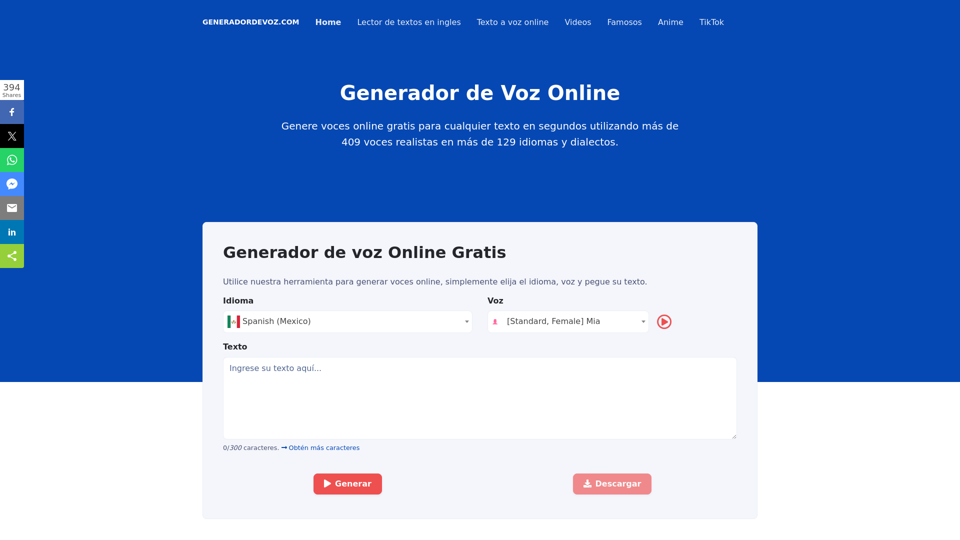
Online Voice Generator for Free with over 600 voices. Generate realistic voices on our website quickly and download it as MP3.
5.84 K

JuicyChat.Ai - Spicy NSFW Character AI Chat - AI Girlfriend
JuicyChat.Ai - Spicy NSFW Character AI Chat - AI GirlfriendJuicyChat.ai - Immerse yourself in provocative NSFW character AI conversations and indulge in the excitement of unrestricted, personal interactions with your AI partner.
11.47 M

Meet Humanize.io, the best AI tool to make your AI content sound more human. Try our AI humanizer for free now!
164.25 K
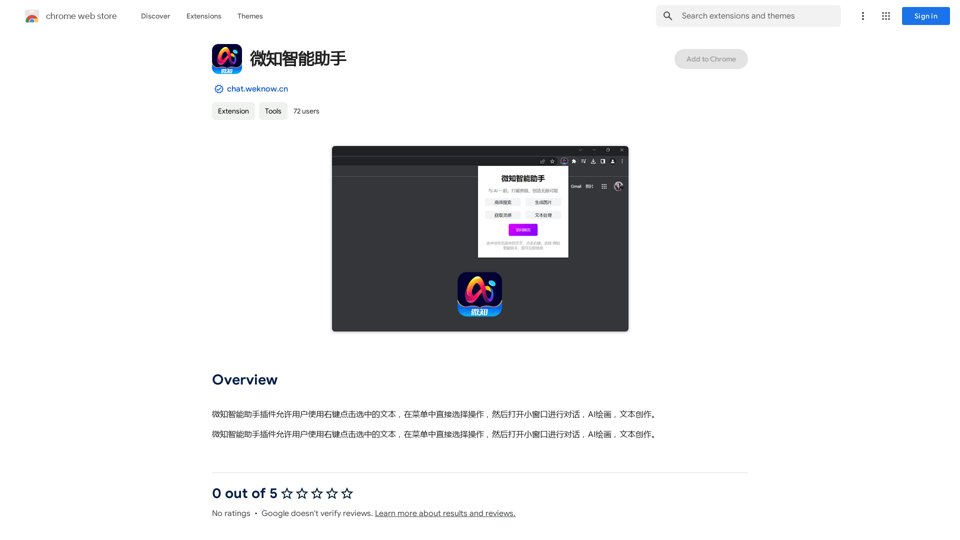
The Wechat Intelligent Assistant plugin allows users to right-click on selected text, choose an operation from the menu, and then open a small window for conversation, AI drawing, and text creation.
193.90 M