Open-source RightAI Tools Directory
  • Discover AI
  • Submit
  • Startup
  • Blog
Open-source RightAI Tools Directory
Discover the best AI tools of 2025 with the RightAI Tools Directory!

Friend Links

AI Anime GeneratorToolsApp AI

Support

Tap4
Privacy policyTerms & ConditionsContact Us
Loading...
loading...

FLUX Canny - Advanced AI Tool for Image Generation with Edge Guidance

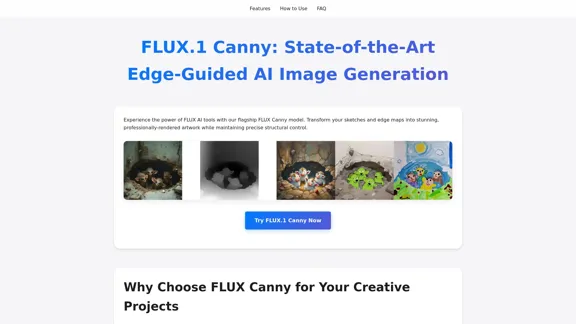
FLUX Canny - A professional edge-guided AI image generation tool. Transform sketches into stunning artwork with precise structural control.
Visit Website
FLUX Canny - Advanced AI Tool for Image Generation with Edge Guidance
Visit Website

Introduction

FLUX Canny is an advanced edge-guided AI image generation tool that transforms sketches and edge maps into stunning artwork while maintaining precise structural control. It leverages state-of-the-art edge detection algorithms to provide professional-quality results, making it suitable for various creative projects.

Feature

  1. Professional Edge Detection

    Utilizes advanced Canny edge detection algorithms for superior structural conditioning.

  2. Precision Control

    Allows users to maintain exact composition while enriching images with details and textures.

  3. Style Transfer

    Seamlessly applies artistic styles while preserving the original structural elements of the images.

  4. Time-Saving Features

    Reduces workflow time by up to 60% through automated edge detection and intelligent image processing.

  5. Quality Assurance

    Ensures consistent, high-quality results across all projects, meeting professional standards.

  6. Workflow Integration

    Compatible with various software like Adobe Creative Suite, Blender, Unity, and Unreal Engine for seamless integration into existing workflows.

How to Use?

  1. Upload your source image or sketch.
  2. Adjust edge detection parameters as needed.
  3. Enter your text prompt to guide the transformation.
  4. Generate your transformed artwork and review the results.

FAQ

What is FLUX Canny?

FLUX Canny is an AI image generation tool that uses edge detection to maintain structural integrity while transforming images based on text prompts.

How does FLUX Canny compare to other AI image tools?

FLUX Canny leads the industry in structural conditioning, offering superior edge preservation and detail generation compared to similar tools.

Can I use FLUX Canny for commercial projects?

Yes, the FLUX Canny Pro version allows for commercial use, while the Dev version is limited to non-commercial use.

What types of images work best with FLUX Canny?

FLUX Canny excels with sketches, architectural drawings, and images where maintaining structural elements is crucial.

Price

  • FLUX Canny Pro: Commercial usage rights and advanced features.
  • FLUX Canny Dev: Non-commercial use with a research-friendly license.
The price is for reference only, please refer to the latest official data for actual information.

Evaluation

  1. FLUX Canny effectively generates high-quality images while preserving structural integrity, making it a valuable tool for creative professionals.
  2. The integration capabilities with popular software enhance its usability across various industries.
  3. However, the learning curve may be steep for beginners, requiring time to master the advanced features and techniques.
  4. Continuous updates and feature enhancements are necessary to keep pace with evolving industry standards and user expectations.

Latest Traffic Insights

  • Monthly Visits

    0

  • Bounce Rate

    0.00%

  • Pages Per Visit

    0.00

  • Time on Site(s)

    0.00

  • Global Rank

    -

  • Country Rank

    -

Recent Visits

Traffic Sources

  • Social Media:
    0.00%
  • Paid Referrals:
    0.00%
  • Email:
    0.00%
  • Referrals:
    0.00%
  • Search Engines:
    0.00%
  • Direct:
    0.00%
More Data

Related Websites

Image Describer - Free AI to Describe Images Online (No Login Required)
View Detail

Image Describer - Free AI to Describe Images Online (No Login Required)

Image Describer - Free AI to Describe Images Online (No Login Required)

Discover AI-Powered Image Descriptions with Image Describer. Gain Instant Insights and Unlock New Perspectives and Efficiency for Your Work and Creations. Join Us Today!

25.53 K
Recally - The Best Screenshot Management App for macOS
View Detail

Recally - The Best Screenshot Management App for macOS

Recally - The Best Screenshot Management App for macOS

Recally is the best app to manage your screenshots on macOS. Organize, browse, and search your screenshots with ease. Available on macOS.

0
Luma AI Video Generator Free Online - Convert Text and Photos to Video at VideoMaker.me
View Detail

Luma AI Video Generator Free Online - Convert Text and Photos to Video at VideoMaker.me

Luma AI Video Generator Free Online - Convert Text and Photos to Video at VideoMaker.me

Discover the power of Luma AI's Dream Machine, an advanced video generator that transforms text and images into high-quality, dynamic videos. Ideal for creators, marketers, and innovators, videomaker.me brings your visual ideas to life with stunning realism and versatility.

397.91 K
Text to Voice Generator
==========================

A text-to-voice generator, also known as a text-to-speech (TTS) system, is a software that converts written text into a spoken voice output. This technology has been widely used in various applications, including virtual assistants, audiobooks, and language learning platforms.

How it Works
---------------

The process of generating voice from text involves several steps:

1. Text Analysis: The input text is analyzed to identify the language, syntax, and semantics.
2. Phonetic Transcription: The text is converted into a phonetic transcription, which represents the sounds of the spoken language.
3. Prosody Generation: The phonetic transcription is then used to generate the prosody, or rhythm and intonation, of the spoken voice.
4. Waveform Generation: The prosody and phonetic transcription are combined to generate the audio waveform, which is the final spoken voice output.

Types of Text-to-Voice Generators
-----------------------------------

There are two main types of text-to-voice generators:

Rule-Based Systems

These systems use a set of predefined rules to generate the spoken voice output. They are often limited in their ability to produce natural-sounding voices and may sound robotic.

Machine Learning-Based Systems

These systems use machine learning algorithms to learn from large datasets of spoken voices and generate more natural-sounding voices. They are often more advanced and can produce high-quality voice outputs.

Applications of Text-to-Voice Generators
-----------------------------------------

Text-to-voice generators have a wide range of applications, including:

Virtual Assistants

Virtual assistants, such as Siri and Alexa, use text-to-voice generators to respond to user queries.

Audiobooks

Text-to-voice generators can be used to create audiobooks from written texts, making it easier for people to access written content.

Language Learning

Language learning platforms use text-to-voice generators to provide pronunciation guidance and practice exercises for learners.

Accessibility

Text-to-voice generators can be used to assist people with disabilities, such as visual impairments, by providing an auditory interface to written content.
View Detail

Text to Voice Generator ========================== A text-to-voice generator, also known as a text-to-speech (TTS) system, is a software that converts written text into a spoken voice output. This technology has been widely used in various applications, including virtual assistants, audiobooks, and language learning platforms. How it Works --------------- The process of generating voice from text involves several steps: 1. Text Analysis: The input text is analyzed to identify the language, syntax, and semantics. 2. Phonetic Transcription: The text is converted into a phonetic transcription, which represents the sounds of the spoken language. 3. Prosody Generation: The phonetic transcription is then used to generate the prosody, or rhythm and intonation, of the spoken voice. 4. Waveform Generation: The prosody and phonetic transcription are combined to generate the audio waveform, which is the final spoken voice output. Types of Text-to-Voice Generators ----------------------------------- There are two main types of text-to-voice generators: Rule-Based Systems These systems use a set of predefined rules to generate the spoken voice output. They are often limited in their ability to produce natural-sounding voices and may sound robotic. Machine Learning-Based Systems These systems use machine learning algorithms to learn from large datasets of spoken voices and generate more natural-sounding voices. They are often more advanced and can produce high-quality voice outputs. Applications of Text-to-Voice Generators ----------------------------------------- Text-to-voice generators have a wide range of applications, including: Virtual Assistants Virtual assistants, such as Siri and Alexa, use text-to-voice generators to respond to user queries. Audiobooks Text-to-voice generators can be used to create audiobooks from written texts, making it easier for people to access written content. Language Learning Language learning platforms use text-to-voice generators to provide pronunciation guidance and practice exercises for learners. Accessibility Text-to-voice generators can be used to assist people with disabilities, such as visual impairments, by providing an auditory interface to written content.

Text to Voice Generator ========================== A text-to-voice generator, also known as a text-to-speech (TTS) system, is a software that converts written text into a spoken voice output. This technology has been widely used in various applications, including virtual assistants, audiobooks, and language learning platforms. How it Works --------------- The process of generating voice from text involves several steps: 1. Text Analysis: The input text is analyzed to identify the language, syntax, and semantics. 2. Phonetic Transcription: The text is converted into a phonetic transcription, which represents the sounds of the spoken language. 3. Prosody Generation: The phonetic transcription is then used to generate the prosody, or rhythm and intonation, of the spoken voice. 4. Waveform Generation: The prosody and phonetic transcription are combined to generate the audio waveform, which is the final spoken voice output. Types of Text-to-Voice Generators ----------------------------------- There are two main types of text-to-voice generators: Rule-Based Systems These systems use a set of predefined rules to generate the spoken voice output. They are often limited in their ability to produce natural-sounding voices and may sound robotic. Machine Learning-Based Systems These systems use machine learning algorithms to learn from large datasets of spoken voices and generate more natural-sounding voices. They are often more advanced and can produce high-quality voice outputs. Applications of Text-to-Voice Generators ----------------------------------------- Text-to-voice generators have a wide range of applications, including: Virtual Assistants Virtual assistants, such as Siri and Alexa, use text-to-voice generators to respond to user queries. Audiobooks Text-to-voice generators can be used to create audiobooks from written texts, making it easier for people to access written content. Language Learning Language learning platforms use text-to-voice generators to provide pronunciation guidance and practice exercises for learners. Accessibility Text-to-voice generators can be used to assist people with disabilities, such as visual impairments, by providing an auditory interface to written content.

Generate Voice from Text on Any Web Page With the advancement of technology, it is now possible to generate voice from text on any web page. This feature is particularly useful for people who prefer listening to content rather than reading it. Here's how you can do it: #Method 1: Using Browser Extension You can use a browser extension like Read Aloud or SpeakIt! to generate voice from text on any web page. These extensions are available for both Google Chrome and Mozilla Firefox browsers. #Method 2: Using Online Tools There are several online tools available that can convert text to speech. Some popular tools include NaturalReader, Voice Dream Reader, and Google Text-to-Speech. You can copy and paste the text from any web page into these tools to generate voice. #Method 3: Using Screen Reader If you are using a Windows operating system, you can use the built-in Narrator screen reader to generate voice from text on any web page. For Mac users, you can use VoiceOver. By using any of these methods, you can easily generate voice from text on any web page and enjoy a more convenient and accessible reading experience.

193.90 M
Buyers List Builder
View Detail

Buyers List Builder

Buyers List Builder

Build a Cash Buyer List Fast and Easy

193.90 M
Video Editor 2024 and Other Cool Programs from Movavi – Download for Free
View Detail

Video Editor 2024 and Other Cool Programs from Movavi – Download for Free

Video Editor 2024 and Other Cool Programs from Movavi – Download for Free

Movavi offers fast and easy-to-use photo and video editing software that is safe and trusted worldwide. Try it all out for free!

3.27 M
Magnific AI β€” The amazing image upscaling and enhancement tool
View Detail

Magnific AI β€” The amazing image upscaling and enhancement tool

Magnific AI β€” The amazing image upscaling and enhancement tool

The most advanced AI upscaler and enhancer. Magnific can reimagine as many details in your image or photo as you wish, guided by your prompt and parameters!

595.11 K
PhotoFuse AI - Your personal AI photographer always with you.
View Detail

PhotoFuse AI - Your personal AI photographer always with you.

PhotoFuse AI - Your personal AI photographer always with you.

Your personal AI photographer in your pocket

1.81 K