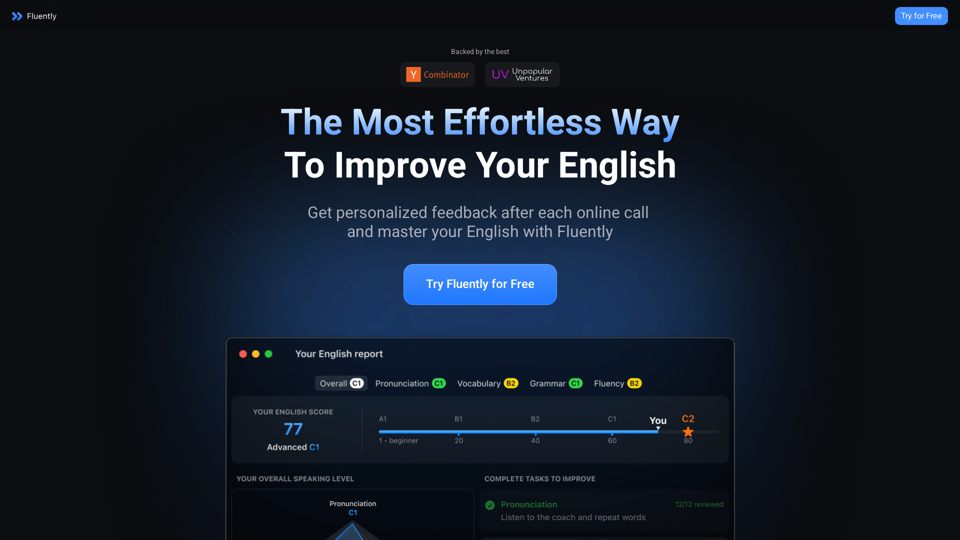
Fluently is an AI-powered speaking coach designed to enhance English language skills through personalized feedback after online calls. It aims to boost users' confidence in speaking English by providing tailored insights and practice opportunities.
AI-Powered Speaking Coach for Calls Enhance your communication skills and ace your calls with our innovative AI-driven speaking coach. This cutting-edge technology provides personalized feedback and guidance to help you improve your verbal and non-verbal cues, tone, and language.
Fluently is a personal speaking coach that delivers instant feedback on your day-to-day calls to refine your accent, improve grammar, and expand your vocabulary.
Introduction
Feature
Personalized Feedback
Fluently analyzes speech patterns during real-life calls, offering customized feedback to help users identify and correct common mistakes in spoken English.
Pronunciation Insights
The app provides detailed insights on pronunciation, helping users refine their speaking skills based on their actual conversations.
Progress Tracking
Users can monitor their improvement over time through:
- Personalized exercises
- Easy-to-follow growth metrics
- Continuous assessment of speaking skills
Automatic Setup
Fluently operates seamlessly without requiring complex setup, allowing users to focus solely on improving their English skills.
24/7 Speaking Practice
The app offers round-the-clock opportunities for speaking practice, providing feedback to support continuous improvement.
User-Friendly Interface
Fluently's simple usage process:
- Download the app
- Launch on your device
- Join any call
- Receive personalized feedback post-call
Affordable Pricing
| Offer | Details |
|---|---|
| Free Trial | Available for new users |
| Subscription | Affordable plans post-trial |
FAQ
How does Fluently work?
Fluently activates automatically during English conversations, analyzing speech patterns and providing personalized feedback after each call to help improve speaking skills.
Is my information used for training purposes?
No, Fluently prioritizes user privacy and does not use personal data for training purposes.
Can I delete my account?
Yes, users can delete their accounts at any time, which also removes all associated data.
How secure is Fluently?
Fluently employs industry-standard security protocols, including transit encryption and local storage & privacy control, ensuring maximum security for users.
Related Websites
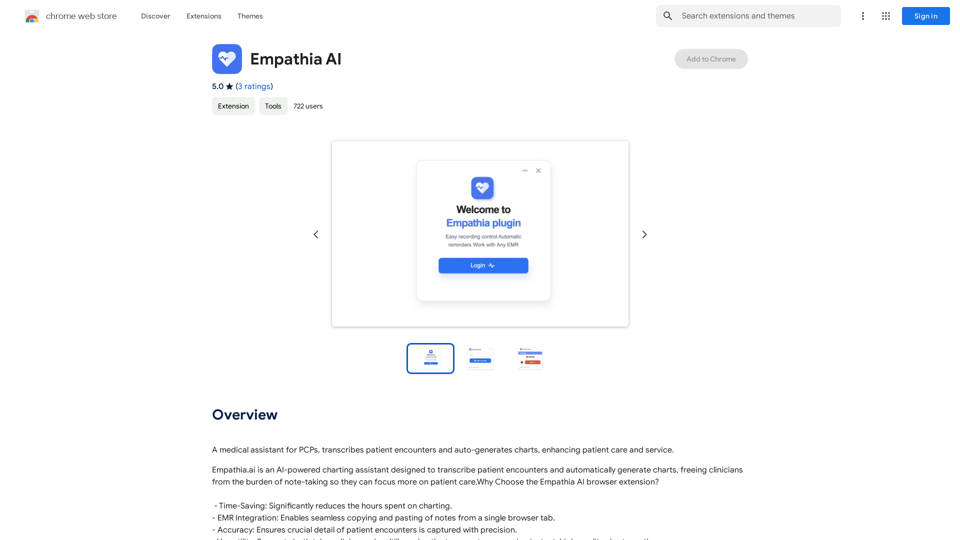
A medical assistant for primary care physicians, transcribes patient visits and automatically creates medical records, improving patient care and service.
193.90 M

LearnHouse - The modern Open source learning platform for everyone.
LearnHouse - The modern Open source learning platform for everyone.LearnHouse is an open source platform that makes it easy for anyone to provide world-class educational content and it offers a variety of content types : Dynamic Pages, Videos, Documents & more.
12
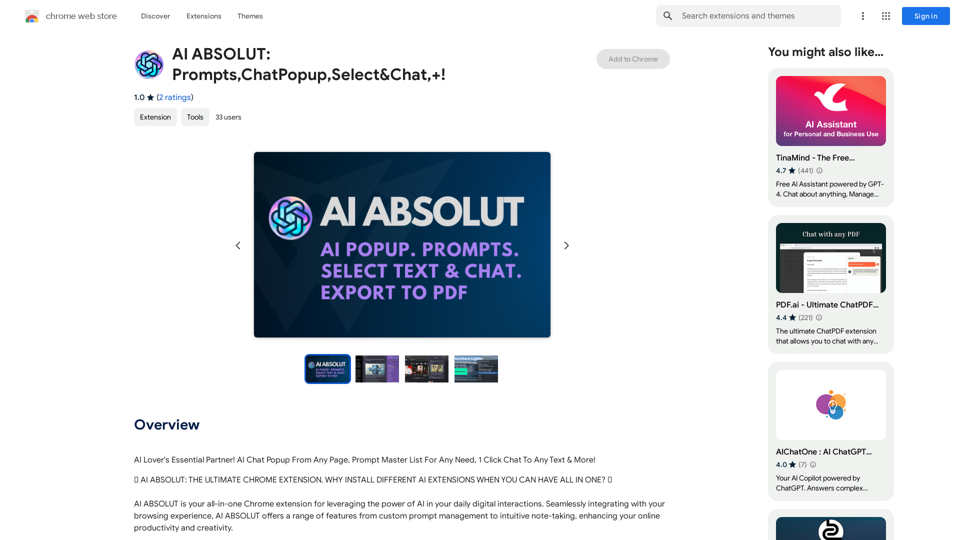
AI ABSOLUT: Prompts, Chat Popup, Select & Chat, +!
AI ABSOLUT: Prompts, Chat Popup, Select & Chat, +!AI Lover's Essential Partner! AI Chat Popup From Any Page, Prompt Master List For Any Need, 1 Click Chat To Any Text & More!
193.90 M
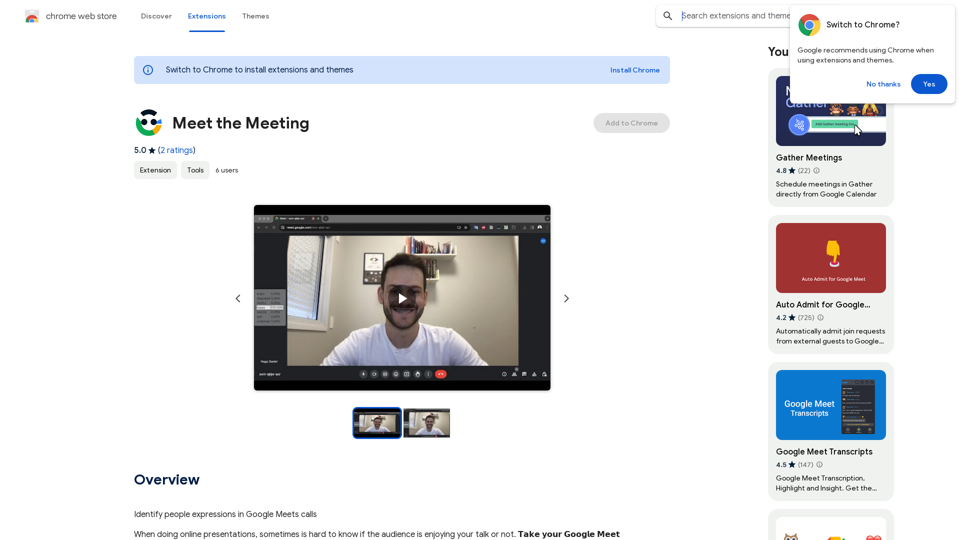
Identifying People Expressions in Google Meets Calls This is a complex task with several challenges: * Technical Limitations: Google Meets doesn't currently offer an API to directly access facial expressions of participants. * Privacy Concerns: Analyzing facial expressions raises significant privacy issues. Users should have control over whether their expressions are being tracked and used. * Accuracy: Even with access to facial data, accurately interpreting expressions can be difficult due to variations in lighting, angles, and individual differences. Possible Approaches (with limitations): * User-Submitted Data: Participants could manually indicate their emotions during the call, which could be collected and analyzed. This relies on user honesty and may not capture subtle expressions. * Third-Party Tools: Some external tools might analyze video feeds and attempt to detect expressions. However, their accuracy and privacy practices should be carefully evaluated. * Future Developments: Google or other companies might develop features that allow for more ethical and accurate expression analysis in the future. It's important to remember that facial expressions are just one aspect of communication, and relying solely on them can be misleading.
193.90 M
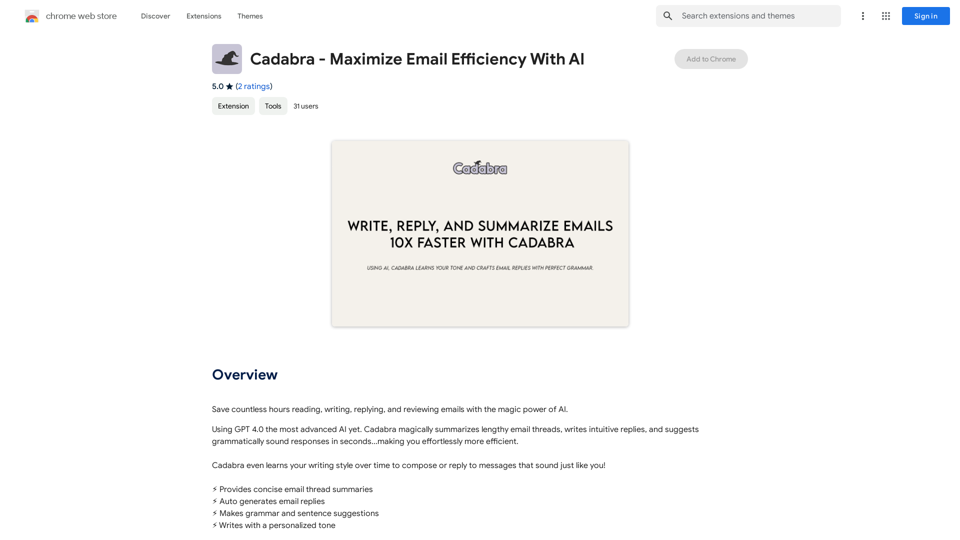
Save countless hours reading, writing, replying to, and reviewing emails with the power of AI.
193.90 M
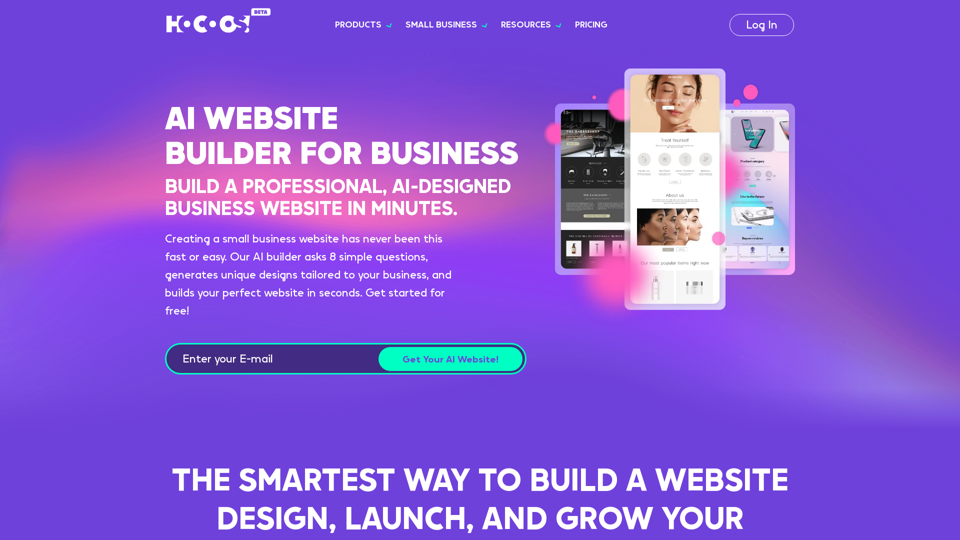
Hocoos AI Website Builder - Create Your Website in 5 Minutes
Hocoos AI Website Builder - Create Your Website in 5 MinutesCreate professional websites in seconds with Hocoos AI website builder. Get all the sales and marketing tools to start & grow your online business now.
111.35 K
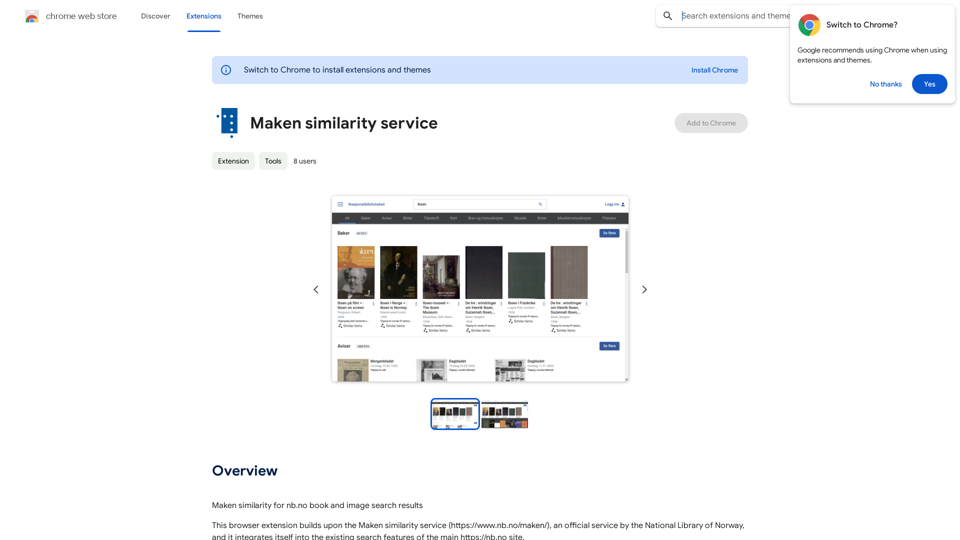
Comparing Similarity for nb.no Book and Image Search Results Let's explore how to measure the similarity between: * Book search results from nb.no (the Norwegian National Library) * Image search results from various sources This comparison can be valuable for understanding: * How well visual representations match textual descriptions. * Potential for using images to enhance book discovery. * Developing new search functionalities that combine text and image data. We can use various techniques to assess similarity, including: * Textual Similarity: Analyzing the keywords, topics, and overall content of book descriptions and image captions. * Visual Similarity: Comparing the visual features of images using algorithms like convolutional neural networks (CNNs). * Hybrid Approaches: Combining textual and visual similarity measures for a more comprehensive evaluation. By comparing similarity scores across different methods, we can gain insights into the strengths and weaknesses of each approach and identify the most effective way to connect books and images.
193.90 M