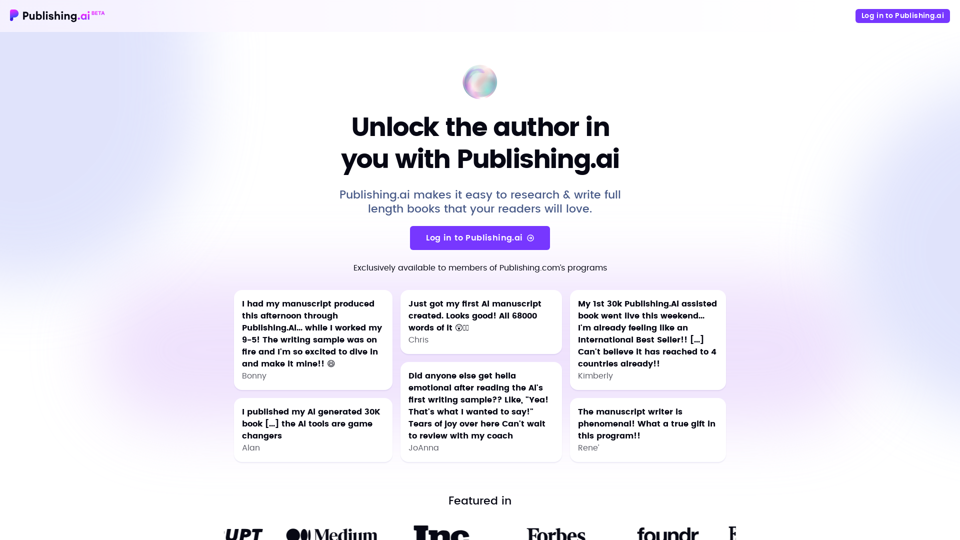
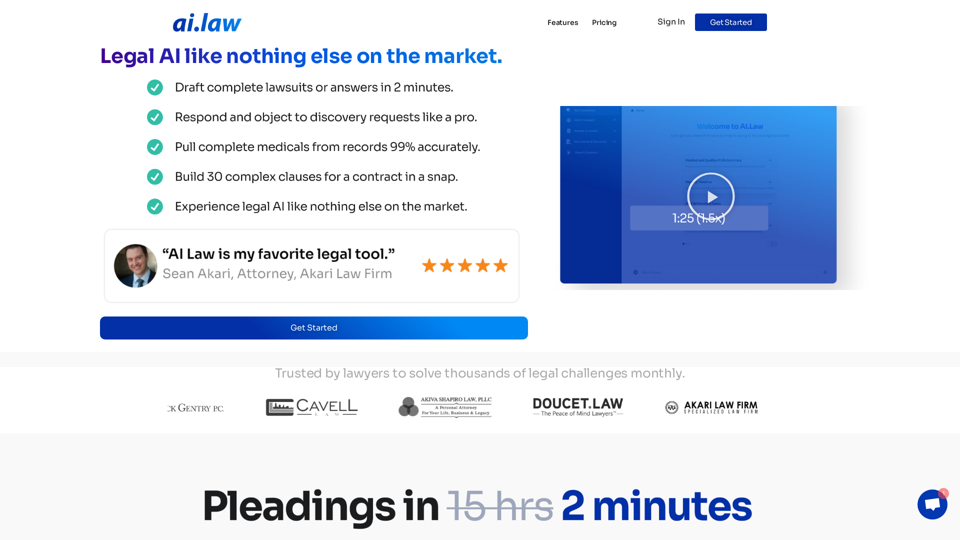
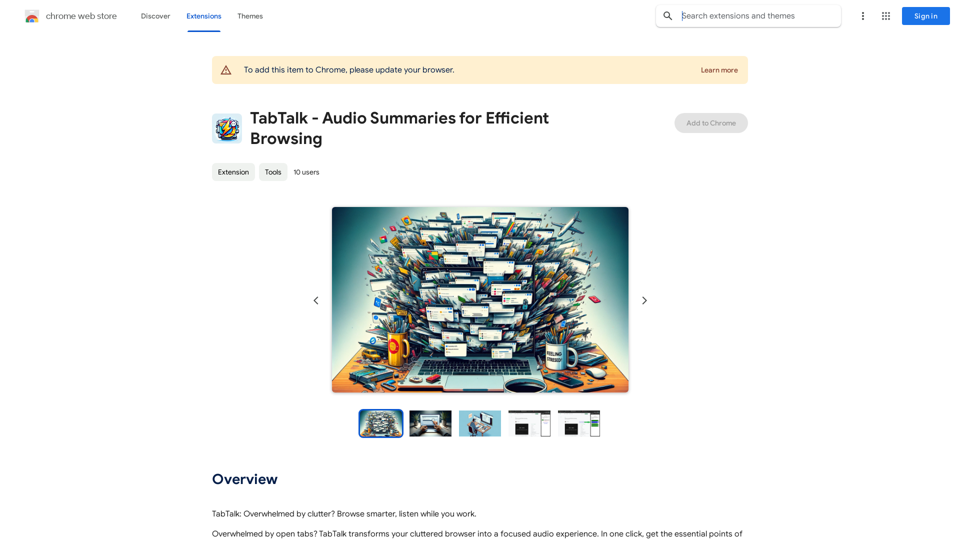
Open-source RightAI Tools Directory
  • Discover AI
  • Submit
  • Startup
  • Blog
Open-source RightAI Tools Directory
Discover the best AI tools of 2025 with the RightAI Tools Directory!

Friend Links

AI Anime GeneratorToolsApp AI

Support

Tap4
Privacy policyTerms & ConditionsContact Us
Loading...
loading...

SEOAIBOT

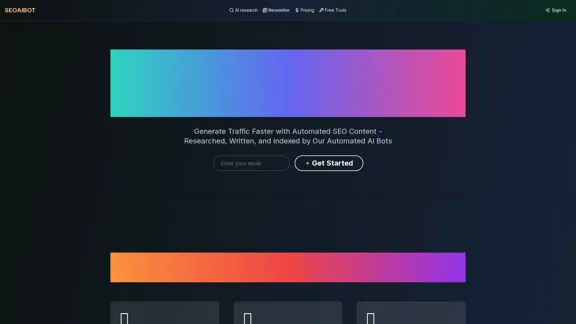
SEOAIBOT is an AI-powered content creation platform designed to automate the process of researching, writing, and indexing high-quality articles for SEO purposes
Visit Website
SEOAIBOT
Visit Website

Introduction

SEOAIBOT is an AI-powered content creation platform designed to automate the process of researching, writing, and indexing high-quality articles for SEO purposes. It aims to help businesses and content creators generate traffic faster by producing in-depth, well-structured content on autopilot.

Feature

  1. AI-Powered Research

    • Conducts thorough investigations on given topics
    • Gathers comprehensive information from diverse, credible sources
    • Saves hours of manual research time
  2. Content Generation

    • Produces well-structured, long-form articles
    • Creates content that provides real value to readers
    • Offers different writing tones (professional, conversational, persuasive, technical)
  3. SEO Optimization

    • Crafts articles with search engines in mind
    • Optimizes keyword placement and HTML structure
    • Performs AI keyword research targeting competitors' keywords
    • Analyzes keyword difficulty and search volume
  4. Automatic WordPress Publishing

    • Seamlessly integrates with WordPress sites
    • Publishes articles directly from creation to the website
    • Supports multiple WordPress sites (varies by plan)
  5. Google Index Submission

    • Automatically submits newly published content to Google for indexing
    • Enables rapid appearance in search engine results pages (SERPs)
    • Allows indexing of any page, even those not created by the system
  6. AI Multi-Agent System

    • Designed to minimize human interaction while maintaining control
    • Enables scalable content generation
  7. Customizable Plans

    • Offers BYOK (Bring Your Own Key) plans for flexibility
    • Provides options to use personal OpenAI API keys
    • Scales from 50 to 500 generations per month

How to Use?

  1. Start by inputting your desired article topics or keywords in batches.

  2. Let the AI conduct thorough research on these keywords.

  3. Review the generated content before publishing to ensure it meets your standards.

  4. Utilize the keyword research feature to target high-potential, long-tail keywords.

  5. Take advantage of the automatic Google indexing to boost your content's visibility quickly.

  6. Experiment with different writing tones to find what resonates best with your audience.

  7. Monitor your organic traffic growth and adjust your content strategy accordingly.

FAQ

How does your service differ from basic AI writing tools?

SEOAIBOT goes beyond basic AI generation by offering a comprehensive system that includes automated research, writing, and submission to Google Index. It uses an AI multi-agent system designed to minimize human interaction while maintaining control throughout the process.

How do you ensure the content is SEO-optimized?

Every article is crafted with search engines in mind. This includes optimal keyword placement, proper HTML structure, and thorough keyword research based on competitors, seed keywords, queries, and local SEO factors. The system also analyzes keyword difficulty and search volume to target the most effective keywords.

Is the WordPress integration secure?

While specific security details aren't provided, the service offers seamless integration with WordPress sites. It's advisable to contact SEOAIBOT directly for more information about their security measures and best practices for safe integration.

Can I review articles before they're published?

The system is designed to minimize human interaction, but it's likely that there are options to review content before publication. It's best to check with SEOAIBOT's support team for specific details on how to implement a review process within their automated system.

Can I connect non-WordPress sites?

Yes, SEOAIBOT offers webhooks for non-WordPress sites, allowing you to integrate the service with other content management systems or custom websites.

Price

  • BYOK Basic: $45/month (50 generations/month)
  • BYOK Starter: $85/month (100 generations/month)
  • BYOK Growth: $203/month (250 generations/month)
  • BYOK Pro: $405/month (500 generations/month)

All plans offer a 10% discount on the regular price as a launch offer.

The price is for reference only, please refer to the latest official data for actual information.

Evaluation

  1. SEOAIBOT offers a comprehensive solution for businesses looking to scale their content creation and SEO efforts. The combination of AI-powered research, writing, and automatic indexing can significantly reduce the time and resources required for content marketing.

  2. The BYOK model, allowing users to use their own OpenAI API keys, provides flexibility and potentially better cost control for businesses with existing API arrangements.

  3. The automatic submission to Google Index is a standout feature, potentially accelerating the visibility of new content in search results.

  4. While the system promises minimal human interaction, this could be a double-edged sword. It may save time, but it also risks producing content that lacks a human touch or fails to capture nuanced brand voices.

  5. The pricing structure, while offering a range of options, may be steep for small businesses or individual bloggers, especially considering the limited number of generations in lower-tier plans.

  6. The platform's effectiveness will largely depend on the quality of the AI-generated content and its ability to truly engage readers and meet Google's increasingly sophisticated content quality standards.

  7. Users should be cautious about over-relying on automated content generation, as search engines like Google have expressed concerns about AI-generated content. It's crucial to ensure that the final output is high-quality, original, and provides genuine value to readers.

Related Websites
Writer - Create high-quality articles in minutes.
View Detail

Writer - Create high-quality articles in minutes.

Writer - Create high-quality articles in minutes.

Create high-quality articles in minutes using an AI-powered writing assistant.

193.90 M
Curatio on the App Store
View Detail

Curatio on the App Store

Curatio on the App Store

Filter your SMS messages using the latest innovations on AI: - Curatio categorizes every new SMS message without any previous instructions. - Curatio filters every unwanted SMS, such as spam or promotional messages, to keep your inbox clean and organized.

124.77 M
Flockjay
View Detail

Flockjay

Flockjay

Chrome extension for the Flockjay Sales Elevation Platform

193.90 M
DecentralizedAI 

This is a general term referring to artificial intelligence (AI) systems that are not controlled by a single, centralized entity. 

Instead of relying on a large corporation or government to manage and govern AI, decentralized AI aims to distribute these capabilities across a network of independent nodes. 

Think of it like a blockchain for AI:

* Transparency:  The decision-making processes of decentralized AI are open and visible to everyone.
* Security:  Since there's no single point of failure, it's harder for malicious actors to take control or manipulate the system.
* Resilience:  Even if some nodes go offline, the network can continue to function.
* Accessibility:  Decentralized AI can make AI technology more accessible to individuals and smaller organizations.


There are many potential applications for decentralized AI, including:

* Data privacy:  Decentralized AI can help protect user data by distributing it across multiple nodes.
* Fairness and bias mitigation:  By involving a wider range of participants in the training process, decentralized AI can help reduce bias in AI systems.
* Autonomous organizations:  Decentralized AI can be used to create self-governing organizations that operate without human intervention.


Decentralized AI is still a relatively new field, but it has the potential to revolutionize the way we develop and use AI.
View Detail

DecentralizedAI This is a general term referring to artificial intelligence (AI) systems that are not controlled by a single, centralized entity. Instead of relying on a large corporation or government to manage and govern AI, decentralized AI aims to distribute these capabilities across a network of independent nodes. Think of it like a blockchain for AI: * Transparency: The decision-making processes of decentralized AI are open and visible to everyone. * Security: Since there's no single point of failure, it's harder for malicious actors to take control or manipulate the system. * Resilience: Even if some nodes go offline, the network can continue to function. * Accessibility: Decentralized AI can make AI technology more accessible to individuals and smaller organizations. There are many potential applications for decentralized AI, including: * Data privacy: Decentralized AI can help protect user data by distributing it across multiple nodes. * Fairness and bias mitigation: By involving a wider range of participants in the training process, decentralized AI can help reduce bias in AI systems. * Autonomous organizations: Decentralized AI can be used to create self-governing organizations that operate without human intervention. Decentralized AI is still a relatively new field, but it has the potential to revolutionize the way we develop and use AI.

DecentralizedAI This is a general term referring to artificial intelligence (AI) systems that are not controlled by a single, centralized entity. Instead of relying on a large corporation or government to manage and govern AI, decentralized AI aims to distribute these capabilities across a network of independent nodes. Think of it like a blockchain for AI: * Transparency: The decision-making processes of decentralized AI are open and visible to everyone. * Security: Since there's no single point of failure, it's harder for malicious actors to take control or manipulate the system. * Resilience: Even if some nodes go offline, the network can continue to function. * Accessibility: Decentralized AI can make AI technology more accessible to individuals and smaller organizations. There are many potential applications for decentralized AI, including: * Data privacy: Decentralized AI can help protect user data by distributing it across multiple nodes. * Fairness and bias mitigation: By involving a wider range of participants in the training process, decentralized AI can help reduce bias in AI systems. * Autonomous organizations: Decentralized AI can be used to create self-governing organizations that operate without human intervention. Decentralized AI is still a relatively new field, but it has the potential to revolutionize the way we develop and use AI.

The AI Layer2 Extension for Google Chrome.

193.90 M
ChatsNow: ChatGPT, Claude SideBar (GPT-4, Web)
View Detail

ChatsNow: ChatGPT, Claude SideBar (GPT-4, Web)

ChatsNow: ChatGPT, Claude SideBar (GPT-4, Web)

ChatsNow is an AI assistant that uses OpenAI's GPT-4 and GPT-3.5, as well as Claude2, to provide various services, such as chat, translation, and Vision.

193.90 M
Converting JPG Images to Text

Converting a JPG image to text is a process known as Optical Character Recognition (OCR). This technology enables you to extract text from images, scanned documents, and photos. Here's how to do it:

Method 1: Online OCR Tools

You can use online OCR tools to convert JPG images to text. Here are the steps:

1. Upload your JPG image: Go to an online OCR tool website, such as Online OCR Tools or OCR.space, and upload your JPG image.
2. Select the language: Choose the language of the text in your image.
3. Click on "Convert": The tool will convert the image to text.
4. Download the text: You can download the extracted text as a Word document, PDF, or plain text file.

Method 2: Google Drive

You can also use Google Drive to convert JPG images to text. Here's how:

1. Upload your JPG image: Upload your JPG image to Google Drive.
2. Right-click on the image: Right-click on the uploaded image and select "Open with" > "Google Docs".
3. The image will be converted: Google Docs will automatically convert the image to text.
4. Edit and download: You can edit the extracted text and download it as a Word document or PDF.

Method 3: Adobe Acrobat

If you have Adobe Acrobat installed on your computer, you can use it to convert JPG images to text. Here's how:

1. Open Adobe Acrobat: Open Adobe Acrobat on your computer.
2. Create a new document: Create a new document and click on "Tools" > "Recognize Text".
3. Select the image: Select the JPG image you want to convert.
4. Click on "Recognize": Adobe Acrobat will convert the image to text.
5. Edit and save: You can edit the extracted text and save it as a Word document or PDF.

These are the three methods to convert JPG images to text. Choose the method that works best for you!
View Detail

Converting JPG Images to Text Converting a JPG image to text is a process known as Optical Character Recognition (OCR). This technology enables you to extract text from images, scanned documents, and photos. Here's how to do it: Method 1: Online OCR Tools You can use online OCR tools to convert JPG images to text. Here are the steps: 1. Upload your JPG image: Go to an online OCR tool website, such as Online OCR Tools or OCR.space, and upload your JPG image. 2. Select the language: Choose the language of the text in your image. 3. Click on "Convert": The tool will convert the image to text. 4. Download the text: You can download the extracted text as a Word document, PDF, or plain text file. Method 2: Google Drive You can also use Google Drive to convert JPG images to text. Here's how: 1. Upload your JPG image: Upload your JPG image to Google Drive. 2. Right-click on the image: Right-click on the uploaded image and select "Open with" > "Google Docs". 3. The image will be converted: Google Docs will automatically convert the image to text. 4. Edit and download: You can edit the extracted text and download it as a Word document or PDF. Method 3: Adobe Acrobat If you have Adobe Acrobat installed on your computer, you can use it to convert JPG images to text. Here's how: 1. Open Adobe Acrobat: Open Adobe Acrobat on your computer. 2. Create a new document: Create a new document and click on "Tools" > "Recognize Text". 3. Select the image: Select the JPG image you want to convert. 4. Click on "Recognize": Adobe Acrobat will convert the image to text. 5. Edit and save: You can edit the extracted text and save it as a Word document or PDF. These are the three methods to convert JPG images to text. Choose the method that works best for you!

Converting JPG Images to Text Converting a JPG image to text is a process known as Optical Character Recognition (OCR). This technology enables you to extract text from images, scanned documents, and photos. Here's how to do it: Method 1: Online OCR Tools You can use online OCR tools to convert JPG images to text. Here are the steps: 1. Upload your JPG image: Go to an online OCR tool website, such as Online OCR Tools or OCR.space, and upload your JPG image. 2. Select the language: Choose the language of the text in your image. 3. Click on "Convert": The tool will convert the image to text. 4. Download the text: You can download the extracted text as a Word document, PDF, or plain text file. Method 2: Google Drive You can also use Google Drive to convert JPG images to text. Here's how: 1. Upload your JPG image: Upload your JPG image to Google Drive. 2. Right-click on the image: Right-click on the uploaded image and select "Open with" > "Google Docs". 3. The image will be converted: Google Docs will automatically convert the image to text. 4. Edit and download: You can edit the extracted text and download it as a Word document or PDF. Method 3: Adobe Acrobat If you have Adobe Acrobat installed on your computer, you can use it to convert JPG images to text. Here's how: 1. Open Adobe Acrobat: Open Adobe Acrobat on your computer. 2. Create a new document: Create a new document and click on "Tools" > "Recognize Text". 3. Select the image: Select the JPG image you want to convert. 4. Click on "Recognize": Adobe Acrobat will convert the image to text. 5. Edit and save: You can edit the extracted text and save it as a Word document or PDF. These are the three methods to convert JPG images to text. Choose the method that works best for you!

It is an online tool that uses Optical Character Recognition (OCR) to make it possible to extract text from images in JPG format.

193.90 M
Warm and friendly
View Detail

Warm and friendly

Warm and friendly

Write the free spirit everywhere on the web with Cordial!

193.90 M
AI video generator - TikTok Instagram Youtube
View Detail

AI video generator - TikTok Instagram Youtube

AI video generator - TikTok Instagram Youtube

AI video generator

0