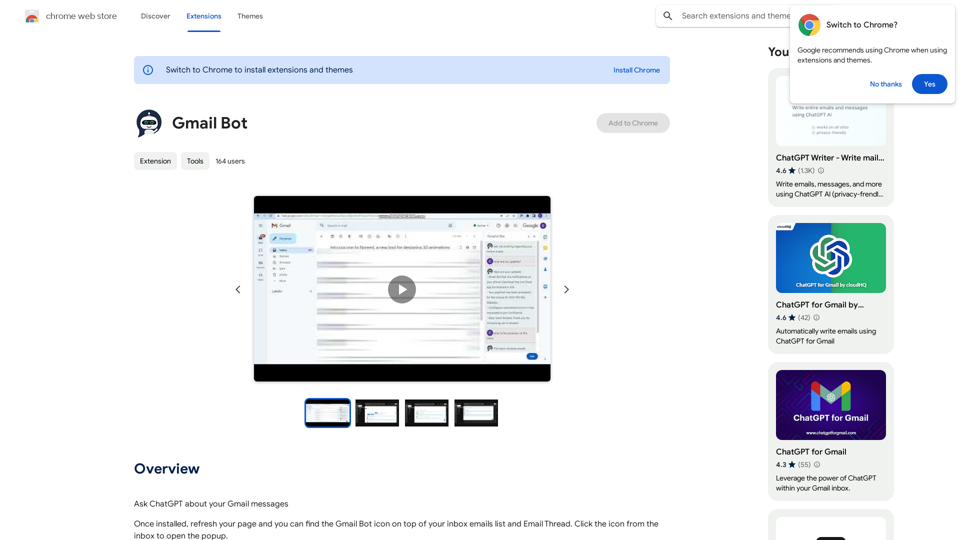
Gmail Bot ist eine KI-gestützte Chrome-Erweiterung, die entwickelt wurde, um die Verwaltung des Gmail-Posteingangs zu verbessern. Sie bietet Funktionen wie Informationsextraktion, Gesprächszusammenfassung und Nachrichtenerstellung, die alle durch fortschrittliche KI-Fähigkeiten unterstützt werden. Dieses Tool integriert sich nahtlos in Gmail und bietet Benutzern eine effiziente und benutzerfreundliche Möglichkeit, ihre E-Mails zu verwalten.
Gmail Bot
Frage ChatGPT nach deinen Gmail-Nachrichten.
Einführung
Funktion
KI-gestützte Posteingangs-Verwaltung
Gmail Bot nutzt künstliche Intelligenz, um Ihren Posteingang zu analysieren und liefert relevante Informationen wie Updates, Zusammenfassungen und wichtige Details. Diese Funktion hilft Benutzern, schnell den Kern ihrer E-Mail-Kommunikation zu erfassen.
Intelligente Nachrichtenerstellung
Die Erweiterung enthält eine "Generieren"-Schaltfläche, mit der Benutzer geeignete Nachrichten für ihre E-Mails erstellen können. Diese KI-gesteuerte Funktion spart Zeit und Mühe beim Verfassen von Antworten oder beim Initiieren neuer Gespräche.
Nahtlose Gmail-Integration
Gmail Bot integriert sich reibungslos in Gmail-Konten und bietet eine bequeme Oberfläche für die E-Mail-Verwaltung. Benutzer können direkt in ihrer vertrauten Gmail-Umgebung auf die Funktionen des Tools zugreifen.
Informationsextraktion und Zusammenfassung
Die Erweiterung kann wichtige Informationen aus E-Mails extrahieren und lange Gespräche zusammenfassen. Diese Funktion ist besonders nützlich, um schnell die Kernpunkte komplexer E-Mail-Threads zu verstehen.
Benutzerfreundliche Oberfläche
Gmail Bot bietet eine einfach zu bedienende Popup-Oberfläche. Benutzer können darauf zugreifen, indem sie auf das Gmail Bot-Symbol oben in ihrer Posteingangs-E-Mail-Liste klicken.
Kostenlos nutzbar
Gmail Bot wird als kostenlose Erweiterung angeboten, sodass Benutzer von seinen KI-gestützten Funktionen profitieren können, ohne Abonnement- oder Zahlungsanforderungen.
Häufig gestellte Fragen
Wie installiere und benutze ich Gmail Bot?
Um Gmail Bot zu verwenden:
- Installieren Sie die Erweiterung aus dem Chrome Web Store
- Aktualisieren Sie Ihre Gmail-Seite
- Klicken Sie auf das Gmail Bot-Symbol über Ihrer Posteingangs-E-Mail-Liste, um das Popup zu öffnen
- Verwenden Sie das Popup, um Fragen zu kürzlich erhaltenen E-Mails zu stellen, Informationen zu extrahieren oder Gespräche zusammenzufassen
- Beim Verfassen oder Antworten verwenden Sie die Schaltfläche "Generieren" neben "Senden", um geeignete Nachrichten zu erstellen
Ist Gmail Bot mit anderen E-Mail-Anbietern kompatibel?
Nein, Gmail Bot ist speziell für Google Gmail entwickelt und funktioniert möglicherweise nicht mit anderen E-Mail-Anbietern.
Was sind einige hilfreiche Tipps für die Verwendung von Gmail Bot?
- Nutzen Sie die Zusammenfassungsfunktion für lange Gespräche
- Verwenden Sie die "Generieren"-Schaltfläche, um beim Verfassen von Nachrichten Zeit zu sparen
- Experimentieren Sie mit verschiedenen KI-gestützten Funktionen, um Ihre Gmail-Erfahrung zu optimieren
Verwandte Webseiten
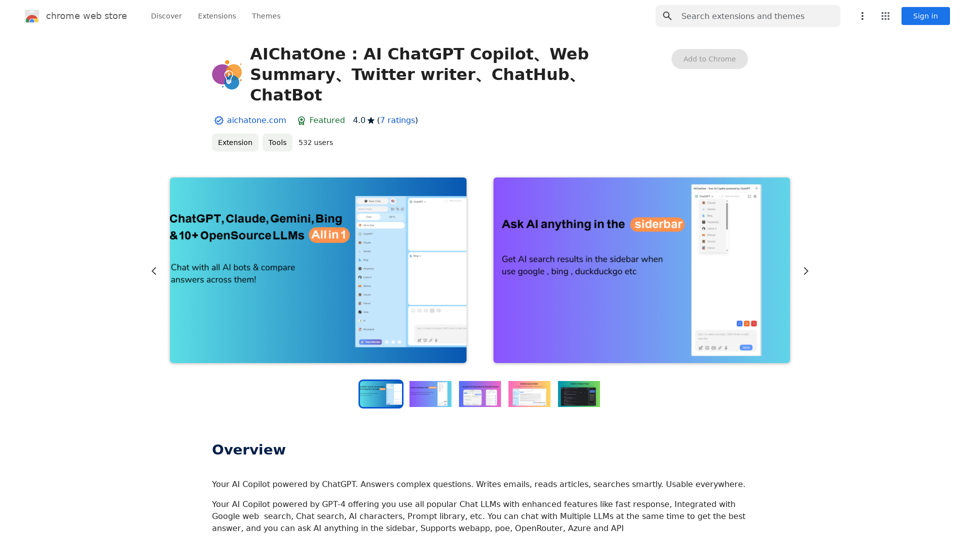
AIChatOne: KI ChatGPT Copilot, Web Zusammenfassung, Twitter-Autor, ChatHub, ChatBot
AIChatOne: KI ChatGPT Copilot, Web Zusammenfassung, Twitter-Autor, ChatHub, ChatBotIhr KI-Copilot, angetrieben von ChatGPT. Beantwortet komplexe Fragen. Verfassen von E-Mails, Lesen von Artikeln, intelligente Suche. Verwendet überall.
193.90 M
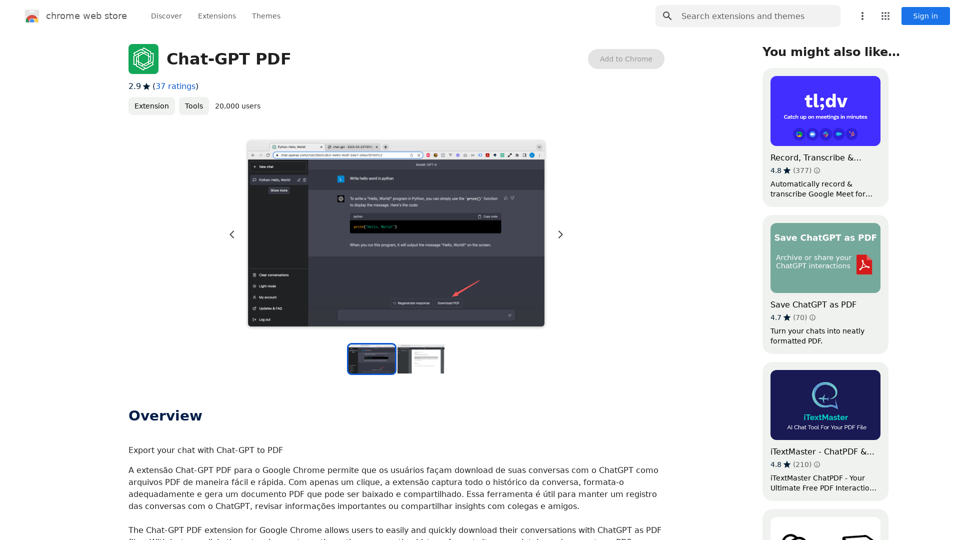
Chat-GPT-PDF Was ist Chat-GPT-PDF? Chat-GPT-PDF ist eine Kombination aus zwei Technologien: Chat-GPT und PDF. Chat-GPT ist ein künstlich intelligenter Chatbot, der in der Lage ist, menschliche Konversationen zu simulieren, während PDF (Portable Document Format) ein Dateiformat ist, das es ermöglicht, Dokumente auf verschiedenen Geräten und Plattformen zu lesen und zu teilen. Funktionen von Chat-GPT-PDF Chat-GPT-PDF bietet eine Vielzahl von Funktionen, die es ermöglichen, Dokumente zu erstellen, zu bearbeiten und zu teilen. Einige der Hauptfunktionen sind: * Dokumentenerstellung: Chat-GPT-PDF ermöglicht es, Dokumente aus Texten zu erstellen, die von Chat-GPT generiert werden. * Dokumentenbearbeitung: Chat-GPT-PDF ermöglicht es, bestehende Dokumente zu bearbeiten und anzupassen. * Dokumententeilung: Chat-GPT-PDF ermöglicht es, Dokumente auf verschiedenen Plattformen und Geräten zu teilen. Anwendungsbereiche von Chat-GPT-PDF Chat-GPT-PDF hat eine Vielzahl von Anwendungsbereichen, darunter: * Bildung: Chat-GPT-PDF kann in der Bildung eingesetzt werden, um interaktive Lernmaterialien zu erstellen. * Geschäft: Chat-GPT-PDF kann in Unternehmen eingesetzt werden, um Dokumente zu erstellen und zu teilen. * Kommunikation: Chat-GPT-PDF kann in der Kommunikation eingesetzt werden, um Nachrichten und Dokumente zu teilen. Vorteile von Chat-GPT-PDF Chat-GPT-PDF bietet eine Vielzahl von Vorteilen, darunter: * Zeitersparnis: Chat-GPT-PDF ermöglicht es, Dokumente schnell und effizient zu erstellen und zu bearbeiten. * Kostenersparnis: Chat-GPT-PDF ermöglicht es, Kosten für die Erstellung und Bearbeitung von Dokumenten zu reduzieren. * Flexibilität: Chat-GPT-PDF ermöglicht es, Dokumente auf verschiedenen Plattformen und Geräten zu teilen und zu bearbeiten.
Chat-GPT-PDF Was ist Chat-GPT-PDF? Chat-GPT-PDF ist eine Kombination aus zwei Technologien: Chat-GPT und PDF. Chat-GPT ist ein künstlich intelligenter Chatbot, der in der Lage ist, menschliche Konversationen zu simulieren, während PDF (Portable Document Format) ein Dateiformat ist, das es ermöglicht, Dokumente auf verschiedenen Geräten und Plattformen zu lesen und zu teilen. Funktionen von Chat-GPT-PDF Chat-GPT-PDF bietet eine Vielzahl von Funktionen, die es ermöglichen, Dokumente zu erstellen, zu bearbeiten und zu teilen. Einige der Hauptfunktionen sind: * Dokumentenerstellung: Chat-GPT-PDF ermöglicht es, Dokumente aus Texten zu erstellen, die von Chat-GPT generiert werden. * Dokumentenbearbeitung: Chat-GPT-PDF ermöglicht es, bestehende Dokumente zu bearbeiten und anzupassen. * Dokumententeilung: Chat-GPT-PDF ermöglicht es, Dokumente auf verschiedenen Plattformen und Geräten zu teilen. Anwendungsbereiche von Chat-GPT-PDF Chat-GPT-PDF hat eine Vielzahl von Anwendungsbereichen, darunter: * Bildung: Chat-GPT-PDF kann in der Bildung eingesetzt werden, um interaktive Lernmaterialien zu erstellen. * Geschäft: Chat-GPT-PDF kann in Unternehmen eingesetzt werden, um Dokumente zu erstellen und zu teilen. * Kommunikation: Chat-GPT-PDF kann in der Kommunikation eingesetzt werden, um Nachrichten und Dokumente zu teilen. Vorteile von Chat-GPT-PDF Chat-GPT-PDF bietet eine Vielzahl von Vorteilen, darunter: * Zeitersparnis: Chat-GPT-PDF ermöglicht es, Dokumente schnell und effizient zu erstellen und zu bearbeiten. * Kostenersparnis: Chat-GPT-PDF ermöglicht es, Kosten für die Erstellung und Bearbeitung von Dokumenten zu reduzieren. * Flexibilität: Chat-GPT-PDF ermöglicht es, Dokumente auf verschiedenen Plattformen und Geräten zu teilen und zu bearbeiten.Exportieren Sie Ihr Chat-Protokoll mit Chat-GPT zu PDF
193.90 M