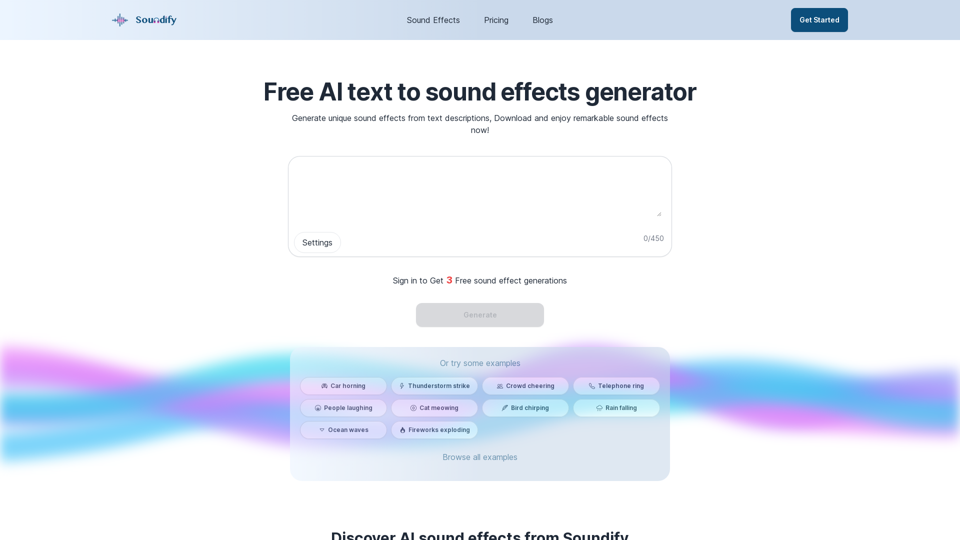
Soundify ist ein innovativer KI-gesteuerter Soundeffekt-Generator, der entwickelt wurde, um maßgeschneiderte Audios für verschiedene Projekte zu erstellen. Es vereinfacht den Prozess des Findens oder Erstellens perfekter Soundeffekte, indem Benutzer Textbeschreibungen eingeben können, die die KI dann in einzigartige Audioclips umwandelt. Dieses Tool bedient eine breite Palette von Bedürfnissen, von Hintergrundmusik und Umgebungsgeräuschen bis hin zu spezifischen Spezialeffekten, und ist damit unschätzbar wertvoll für Content-Ersteller, Filmemacher, Spieleentwickler und Audio-Enthusiasten.
Beste KI-Soundeffekte-Generator | Soundify.
Entdecken Sie den besten kostenlosen AI-Soundeffekte-Generator. Erstellen Sie einzigartige Soundeffekte für Ihre Videos und Memes mühelos mit unseren AI-Tools!
Einführung
Funktion
Text-zu-Sound-Generierung
Soundify nutzt fortschrittliche KI-Technologie, um Textbeschreibungen zu interpretieren und entsprechende Soundeffekte zu generieren. Benutzer können einfach ihre gewünschten Audioeigenschaften eintippen, und die KI erstellt basierend auf der Eingabe einen einzigartigen Soundclip.
Anpassbare Audiolänge
Benutzer haben die Flexibilität, die Dauer ihrer generierten Soundeffekte anzupassen, um sicherzustellen, dass das Audio perfekt zu ihren Projektanforderungen passt.
Vordefinierte Prompts
Für schnelle Inspiration oder einfache Verwendung bietet Soundify eine Auswahl an vordefinierten Prompts, aus denen Benutzer wählen können, um Soundeffekte zu generieren.
Soundeffekt-Bibliothek
Soundify bietet eine umfassende Bibliothek von vorgenerierten KI-Soundeffekten. Diese Funktion ermöglicht es Benutzern, zu durchsuchen, sich inspirieren zu lassen oder direkt fertige Soundeffekte für ihre Projekte herunterzuladen.
Echtzeit-Generierung
Die KI generiert Soundeffekte in Echtzeit, sodass Benutzer den Audioclip sofort nach der Erstellung hören können, was schnelle Iterationen und Anpassungen erleichtert.
Social Media Sharing
Benutzer können ihre erstellten Soundeffekte einfach auf beliebten Social-Media-Plattformen wie Facebook, Twitter und Instagram teilen, was die Zusammenarbeit verbessert und ihre Arbeit präsentiert.
Lizenzfreier Inhalt
Alle von Soundify generierten Soundeffekte sind lizenzfrei, was den Benutzern die Freiheit gibt, das Audio in ihren Projekten ohne urheberrechtliche Bedenken zu verwenden.
Häufig gestellte Fragen
Wie funktioniert Soundify?
Soundify verwendet KI-Technologie, die auf vielfältigen Sounddatensätzen trainiert wurde, um Textaufforderungen zu analysieren und entsprechende Soundeffekte zu generieren. Die KI interpretiert die Beschreibung und erstellt einen einzigartigen Audioclip, der den Anforderungen des Benutzers entspricht.
Welche Arten von Projekten können von Soundify profitieren?
Soundify kann für eine Vielzahl von Projekten nützlich sein, einschließlich:
- Film- und Videoproduktion
- Spieleentwicklung
- Podcast-Erstellung
- Social-Media-Inhalte
- Musikproduktion
- Virtual-Reality-Erlebnisse
- Hörbuchproduktion
Welche Preisoptionen gibt es für Soundify?
Soundify bietet eine gestaffelte Preisstruktur:
| Plan | Funktionen | Preis |
|---|---|---|
| Kostenlos | Begrenzte Anzahl von Generierungen | 0 € |
| Bezahlt | Mehr Generierungen, Premium-Funktionen | Variiert |
Spezifische Preisdetails für bezahlte Pläne sind in den gegebenen Informationen nicht enthalten.
Wie lade ich die generierten Soundeffekte herunter?
Um einen generierten Soundeffekt herunterzuladen:
- Stellen Sie sicher, dass Sie in Ihrem Soundify-Konto angemeldet sind
- Lokalisieren Sie den Audio-Player für Ihren generierten Sound
- Klicken Sie auf die Download-Schaltfläche am Audio-Player
Gibt es Einschränkungen, wie ich die generierten Soundeffekte verwenden kann?
Nein, es gibt keine Einschränkungen für die Verwendung von Soundeffekten, die von Soundify generiert wurden. Alle Audioclips sind lizenzfrei, was bedeutet, dass Sie sie in jedem Projekt verwenden können, ohne sich um Urheberrechtsfragen oder zusätzliche Gebühren sorgen zu müssen.
Verwandte Webseiten
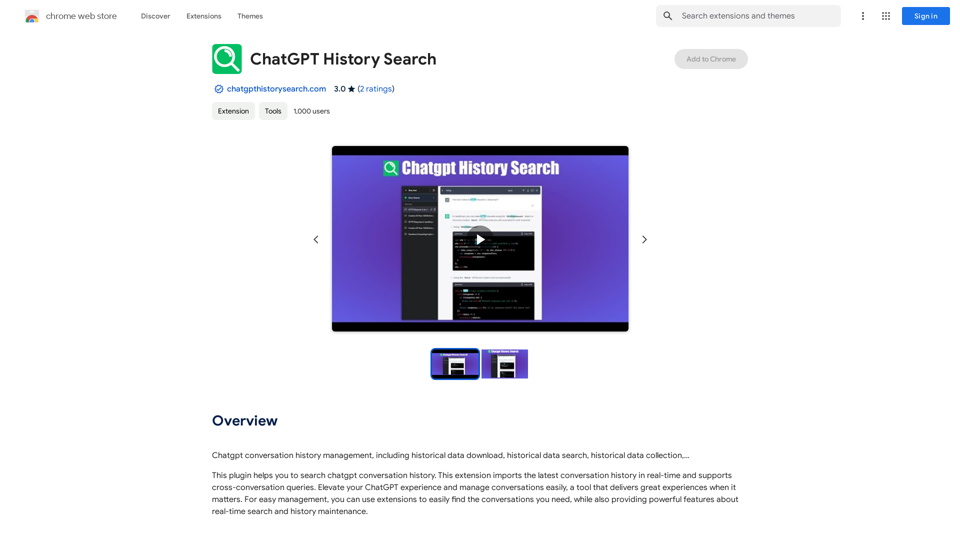
ChatGPT-Gesprächsverlaufsverwaltung, einschließlich Herunterladen historischer Daten, Durchsuchen historischer Daten, Sammeln historischer Daten, …
193.90 M
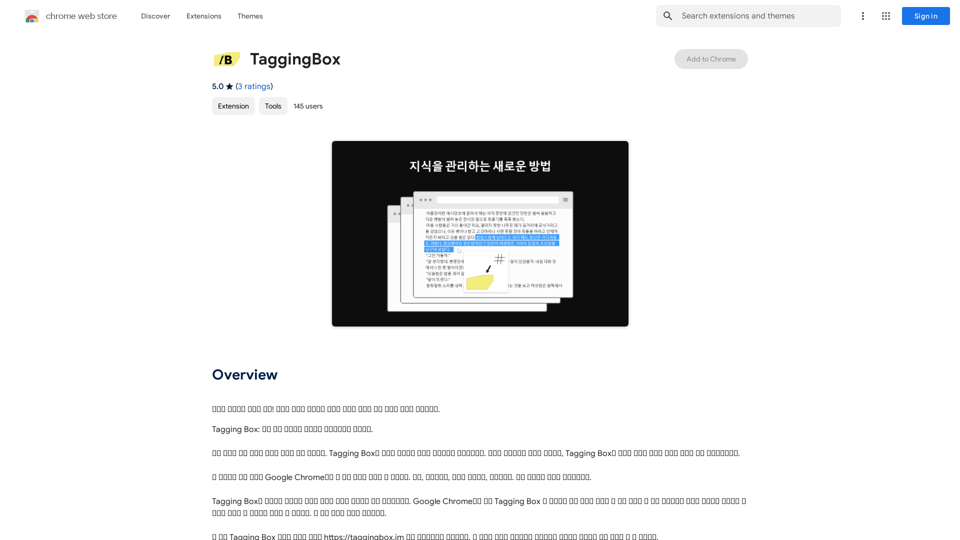
Neue Art des Wissensmanagements! Befestigen Sie wichtige Notizen mit Stiften - wir empfehlen die passenden Tags für Ihre Informationen.
193.90 M
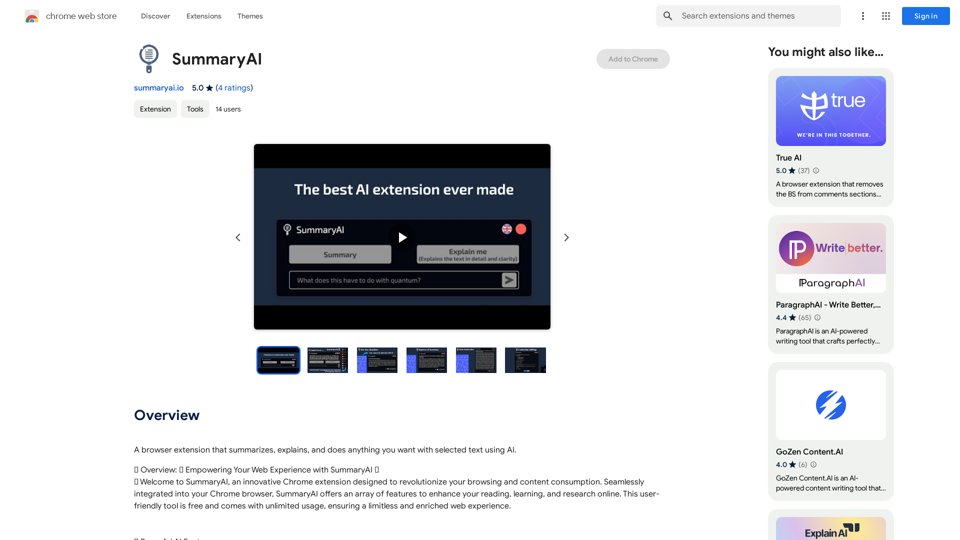
Eine Browser-Erweiterung, die ausgewählten Text mit KI zusammenfasst, erklärt und alles damit macht, was du möchtest.
193.90 M
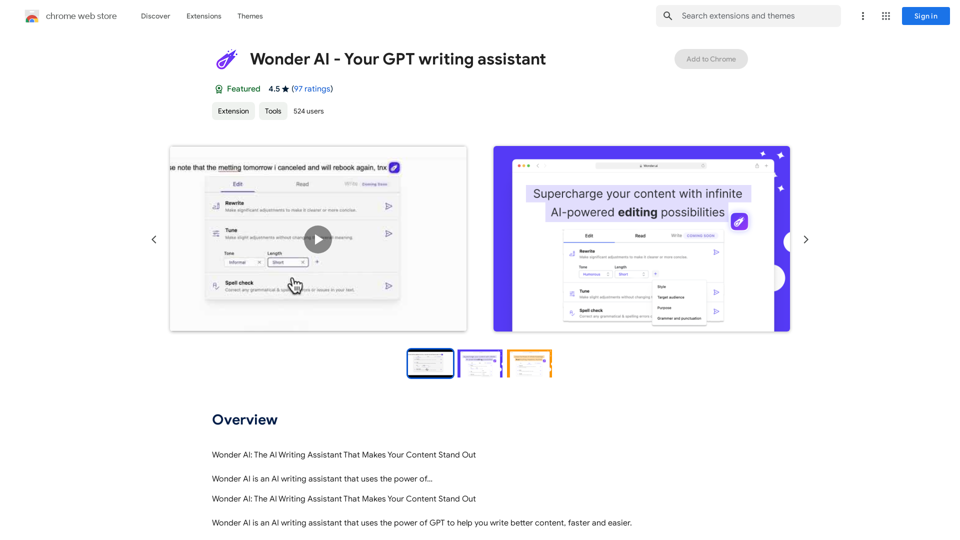
Wunder AI: Der AI-Schreibassistent, der Ihr Inhalt heraussticht Wunder AI ist ein AI-Schreibassistent, der die Macht von…
193.90 M
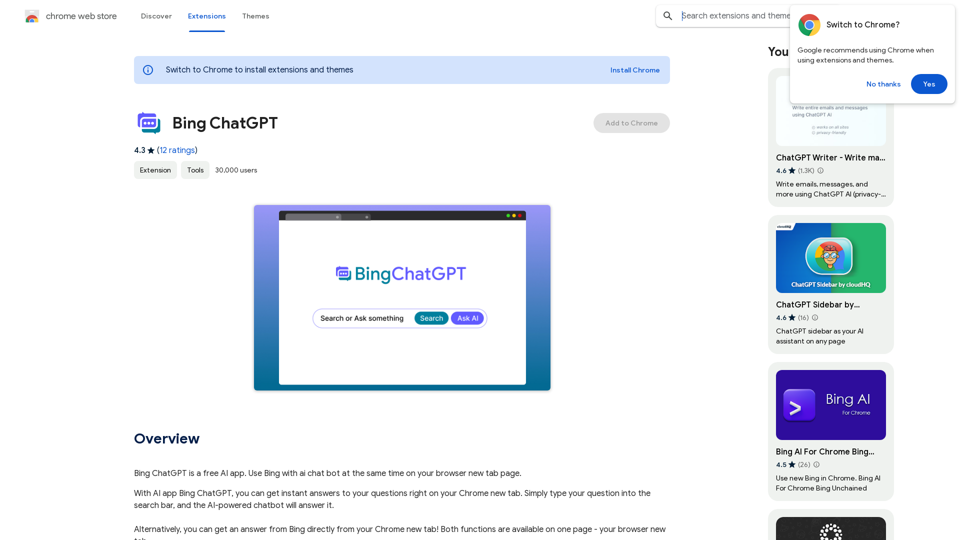
Bing ChatGPT ist eine kostenlose KI-App. Verwenden Sie Bing mit einem AI-Chat-Bot gleichzeitig auf der neuen Registerkarte Ihrer Browser-Seite.
193.90 M