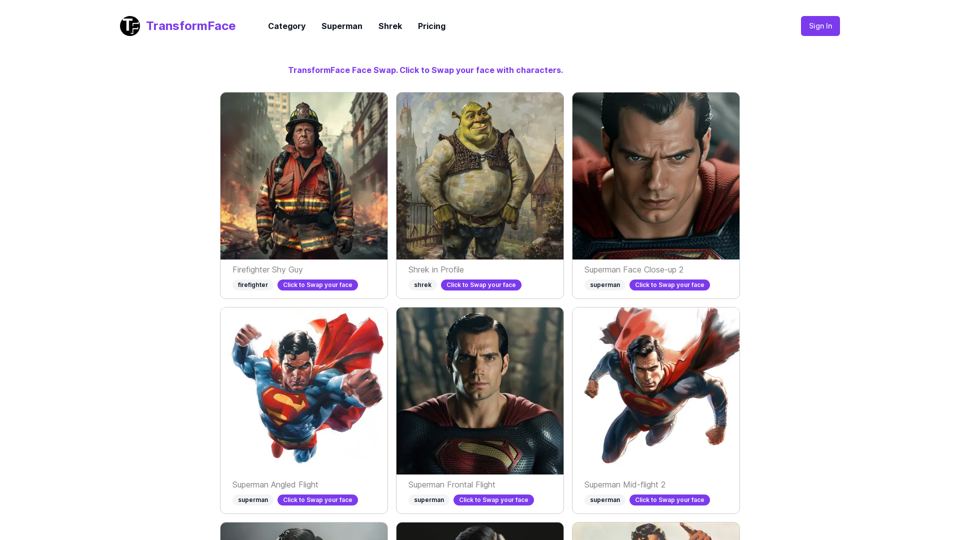
TransformFace is an innovative online face swap tool that utilizes advanced AI technology to allow users to easily swap their faces onto various templates. This user-friendly platform offers creative expression opportunities, visual effects, and potential applications in scientific and medical fields. Powered by the latest developments in computer vision and deep learning, TransformFace provides a robust solution for face swapping needs.
TransformFace Swap with AI. Click to add your photo/face. or in a more natural English tone: Transform Your Face Swap with AI. Click to Upload Your Photo!
Upload your face or photo and swap faces with TransformFace. Free Download Image. TransformFace
Introduction
Feature
Easy-to-Use Interface
TransformFace offers a simple, step-by-step process for face swapping:
- Select a template or target image
- Upload your photo
- Click the Start button
- Download or generate another swapped image
Wide Range of Templates
Users can choose from a variety of templates, including:
- Superheroes
- Professionals
- And many more
Credit System
| Feature | Details |
|---|---|
| Free Credits | 3 for new users |
| Cost per Swap | 1 credit |
| Failed Swaps | No charge |
| Downloads | Free |
Mobile-Friendly
The tool is accessible from any device with a web browser, making it convenient for users on-the-go.
Quick Processing
Face swaps are typically completed in under 1 minute, with processing times varying based on server load and internet connection.
Supported File Formats
TransformFace currently accepts JPG and PNG image formats for uploading.
FAQ
What file formats can I upload for the face swap?
TransformFace currently supports JPG and PNG image formats.
Can I swap multiple faces in one image?
No, the face swap tool can only process one face per image. If your uploaded image has multiple faces, one will be selected randomly.
How long does the face swap process take?
The face swap is usually completed in under 1 minute, but processing times may vary depending on server load and your internet connection speed.
Can I use the face swap tool on my mobile device?
Yes, the TransformFace tool is mobile-friendly and can be accessed from any device with a web browser.
Do you offer any advanced editing tools?
Currently, the face swap is the primary feature. TransformFace does not have integrated editing tools, but users can download the result and use their preferred photo editing software for further modifications.
Related Websites
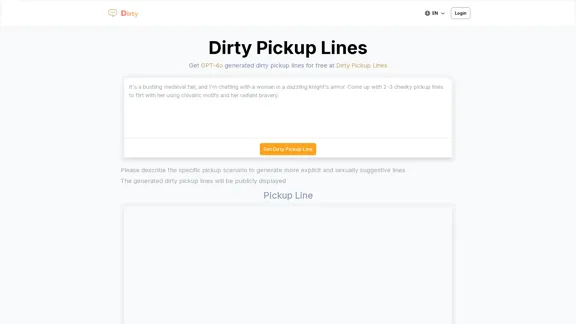
Dirty Pickup Lines - Online AI Raunchy Pickup Line Generator
Dirty Pickup Lines - Online AI Raunchy Pickup Line GeneratorDirty Pickup Lines is an online AI tool that generates explicit, sexually suggestive pickup lines for various scenarios, at no cost. Simply input a specific pickup scenario, and the AI will produce humorous, original, risqué pickup lines filled with sexual innuendos.
0
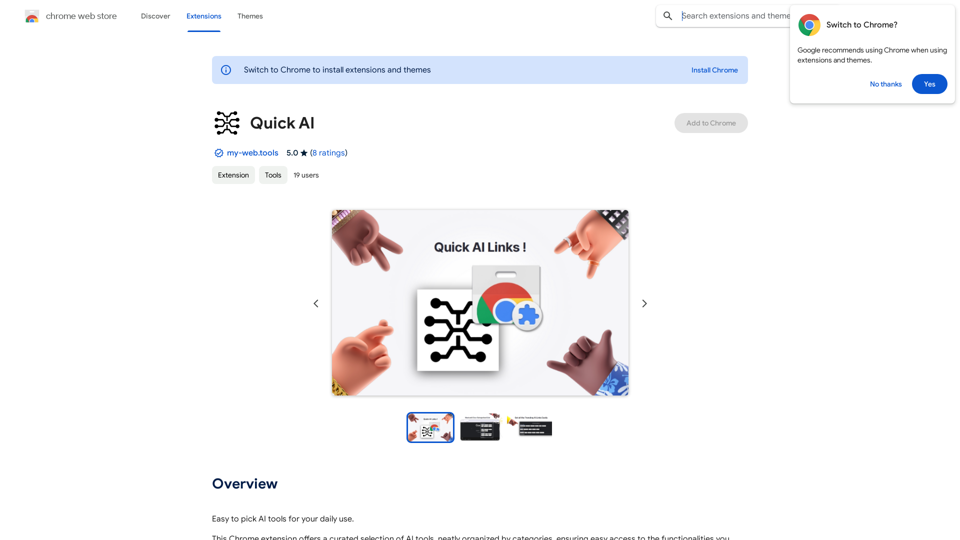
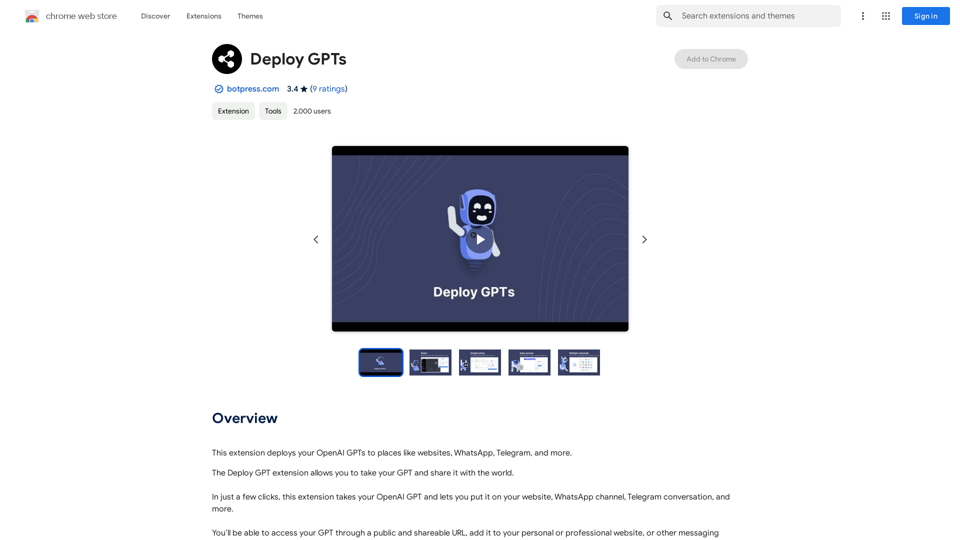
This extension deploys your OpenAI GPTs to places like websites, WhatsApp, Telegram, and more.
193.90 M
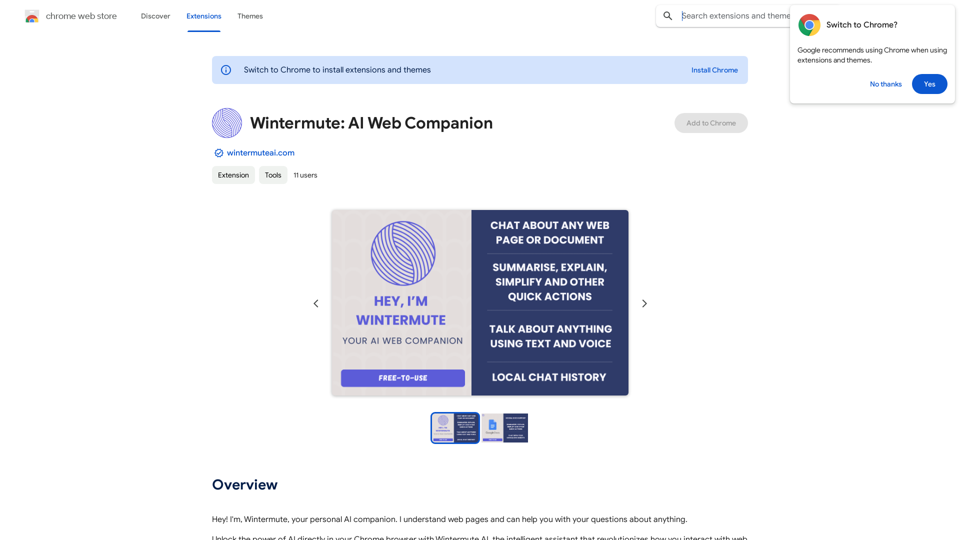
Hey! I'm Wintermute, your personal AI companion. I understand web pages and can help you with your questions about anything.
193.90 M
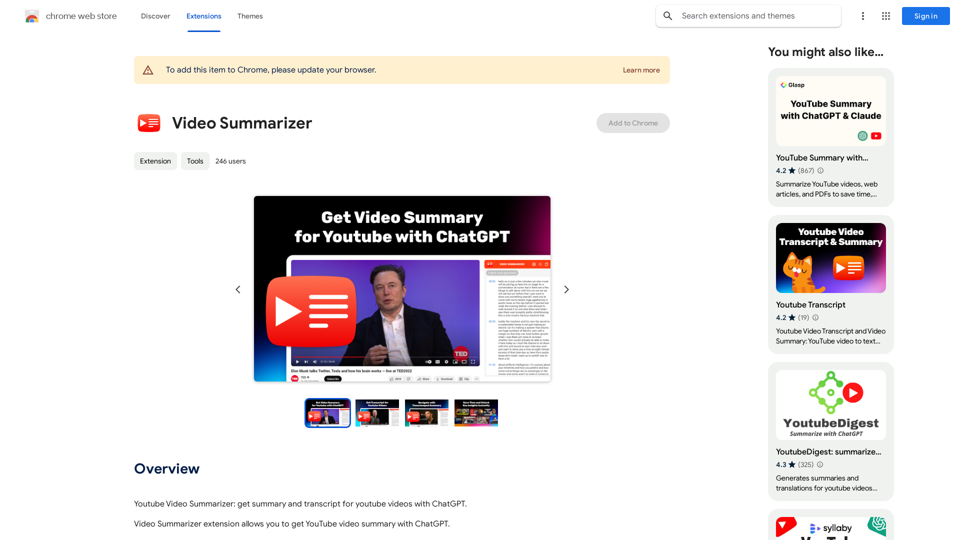
Youtube Video Summarizer: Get Summaries and Transcripts for YouTube Videos with ChatGPT This tool helps you quickly understand YouTube videos by providing: * Summaries: Concise overviews of the video's main points. * Transcripts: Full text versions of what is spoken in the video. Both summaries and transcripts are powered by ChatGPT, allowing for accurate and insightful analysis.
193.90 M
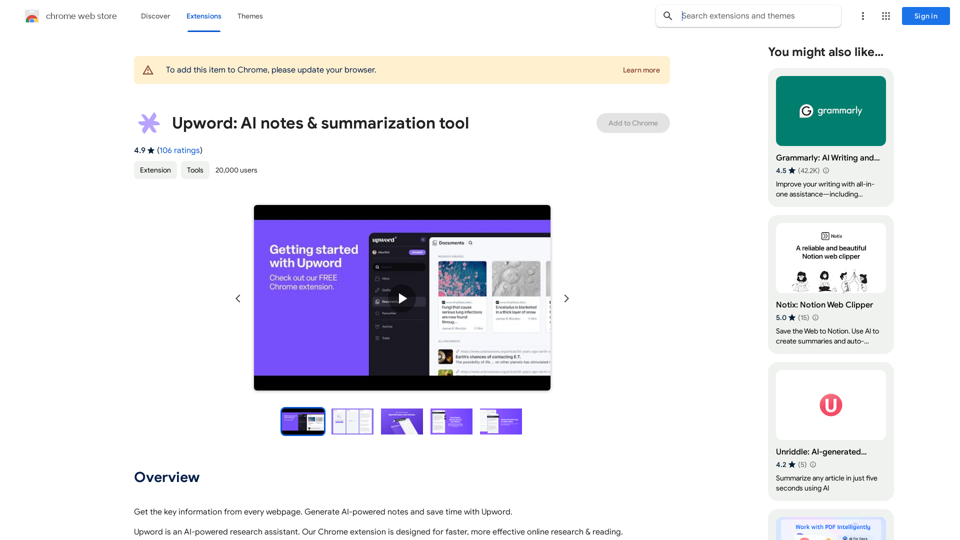
Get the key information from every webpage. Generate AI-powered notes and save time with Upword.
193.90 M
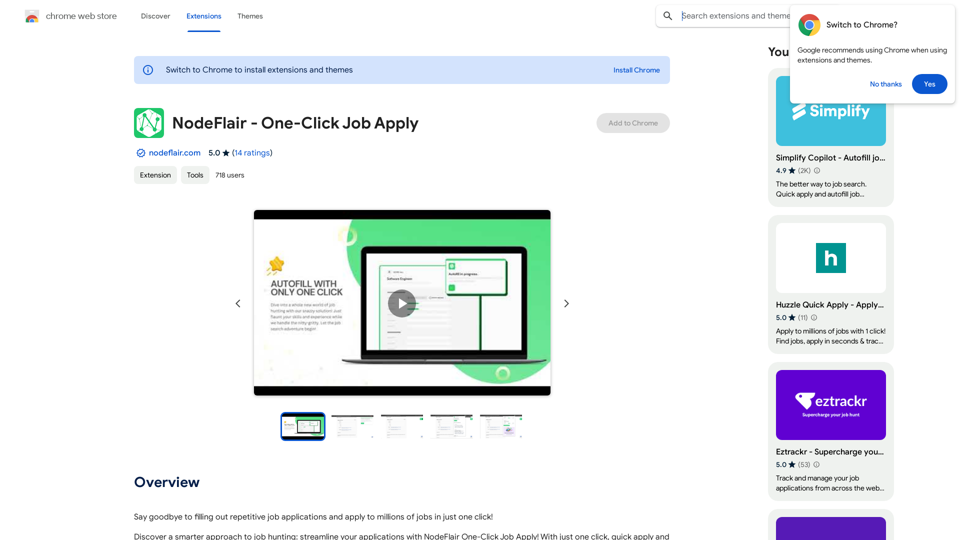
Say goodbye to filling out repetitive job applications and apply to millions of jobs with just one click!
193.90 M

Addlly AI: 1st Complete AI Playground for Content Creation
Addlly AI: 1st Complete AI Playground for Content CreationThe best all-in-one, no-prompt Gen AI Playground for enterprises. Generate SEO blogs, social media posts, ad copy, press releases, newsletters & more.
46.81 K